

CULTIVATED TO PERFECTION
TISSUE CULTURE AQUARIUM PLANTS BY ULTUM NATURE SYSTEMS
①
Free of algae, pests and pesticides
Tissue culture aquarium plants are cultivated in a closed, sanitary laboratory to ensure quality control. Cultivation via in-vitro methods eliminates the possible the disruption of natural eco-systems from wild aquarium plant harvesting.
②
Divide and conquer
A single cup of tissue culture aquarium plants yields more and offers more coverage in the aquarium. Depending on the species, tissue culture plants are typically more generous than their potted counterparts!
③
Plenty of choices
The availability of species is growing rapidly. Many popular aquatic plant forms and species are now readily available and we are adding to our catalog every year.
Preparation and Usage Guide
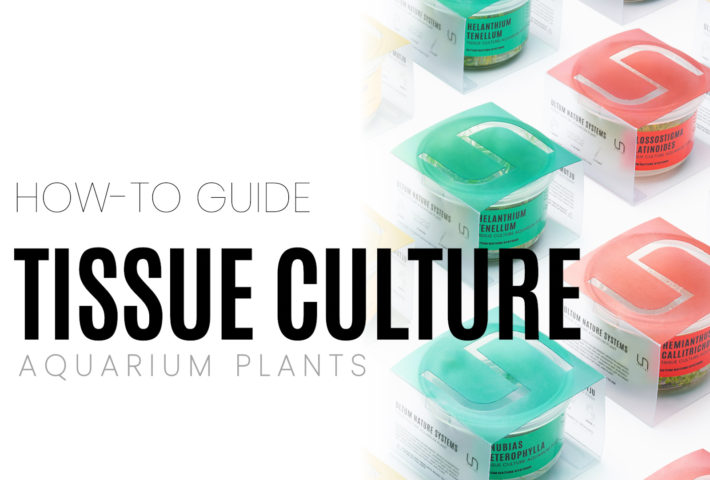
TISSUE CULTURE PLANT LINEUP
EASY
INTERMEDIATE
ADVANCED

Alternanthera Bettzickiana Green
Characterized by glossy, lance-shaped leaves that curl upwards. Coloration is a rich green that works well in planted setups. This cultivar is commonly submerged in aquariums, but this plant is not truly aquatic and will only last a few weeks. This plant is suitable for terrariums, paludariums, or similar enclosures.
DIFFICULTY:
LIGHTING:
PLACEMENT:
TYPE:
STEM
Alternanthera Bettzickiana Red
A terrarium plant with red stems and wavy, coin-shaped leaves. The leaves are often initially greenish-yellow, but under the right conditions such as high light and CO2, the leaves turn into a lively red color. Although this plant is commonly kept in aquariums, it is not truly aquatic and will not survive submerged for more than a couple of weeks. Alternanthera Bettzickiana 'Red' is best suited for terrariums, paludariums, or similar enclosures.
DIFFICULTY:
LIGHTING:
PLACEMENT:
TYPE:
STEM
Alternanthera Ficoidea White
A terrarium plant characterized by short, wavy leaves that are green with unique white patterns on them. The plant is best grown in a paludarium or similar setup and is even commonly kept in gardens.
DIFFICULTY:
LIGHTING:
PLACEMENT:
TYPE:
STEM
Alternanthera Lilacina
One of the variants of Alternanthera Reineckii. Alternanthera Lilacina is an aquatic stem plant that grows reddish pink leaves under proper lighting and CO2. Compared to other variants of Alternanthera Reineckii, this one has longer and narrower leaves.
DIFFICULTY:
LIGHTING:
PLACEMENT:
TYPE:
STEM
Alternanthera Red Broad Leaf
A rare aquatic stem plant in the Alternanthera family. It has red stems and veins, and wider green leaves. It can grow to be 4–12 inches tall and is highly adaptable, responding well to pruning.
DIFFICULTY:
LIGHTING:
PLACEMENT:
TYPE:
STEM
Alternanthera Reineckii
An easy aquatic stem plant that produces compact red leaves. It is popular for being used as a contrast to green plants in aquascapes. This plant does best under high light and CO2, which really bring out the red coloration of the plant. This plant has many variations, with this one having medium, diamond-shaped leaves.
DIFFICULTY:
LIGHTING:
PLACEMENT:
TYPE:
STEM
Alternanthera Reineckii Green
A unique variant of Alternanthera Reineckii with a bright red stem and soft green leaves, featuring hints of pink underneath for a striking color contrast. Ideal for Dutch aquascapes, it thrives with medium to high light and CO2. Suitable for both emersed and submerged growth, it's a great addition to planted aquariums or paludariums.
DIFFICULTY:
LIGHTING:
PLACEMENT:
TYPE:
STEM
Alternanthera Rosaefolia
Also known as Alternanthera Reineckii Pink, is a stem plant that is often used in Dutch aquascapes. It can grow to be 30–50 cm (11.81–19.69 in) tall and has medium to large leaves with a striking pink underside. It is characterized by white vein-like patterns on the leaves.
DIFFICULTY:
LIGHTING:
PLACEMENT:
TYPE:
STEM
Alternanthera Rosanervig
Has vivid pink leaves with lightly colored veins. Similar to other Alternanthera species, it thrives with good aquarium lighting and regular fertilizer. With a softer stem, handle it carefully. Ideal as a striking background in smaller tanks or midground in larger setups.
DIFFICULTY:
LIGHTING:
PLACEMENT:
TYPE:
STEM
Alternanthera Variegatus
A unique variety with ruffled edges on bright green leaves. Under ideal conditions, stems turn variegated bright pink to reddish-brown, adding texture and color to aquarium scapes.
DIFFICULTY:
LIGHTING:
PLACEMENT:
TYPE:
STEM
Ammania Gracilis
A colorful stem plant for your aquarium. With proper light and nutrients, it displays wavy leaves ranging from blush red to pale green. Suitable for midground or background, it contrasts well with green foliage. Requires lots of light and grows quickly.
DIFFICULTY:
LIGHTING:
PLACEMENT:
TYPE:
STEM
Ammania Senegalensis
A red-stem plant that is recommended as a background or mid-ground plant due to its impressive height. When grown in ideal conditions, the plant produces orange-red leaves with yellow and green streaks, making it an especially eye-catching background plant. This plant is somewhat difficult to care for without high lighting and high CO2, which are highly recommended for optimal growth.
DIFFICULTY:
LIGHTING:
PLACEMENT:
TYPE:
STEM
Ammannia Nesaea Crassicaulis
A stem plant for planted aquariums, showcasing striking colors under optimal conditions. It requires quality LED lighting, CO2 injection, and specific water parameters, making it more suitable for advanced hobbyists. Plant in quality aquarium soil with spacing to ensure lower portions receive enough light. Lack of lighting can dull color and lead to rotting. Can also be grown emersed, resembling an Ammania plant. Ideal for midground placement in Nature or Dutch Style aquariums, offering contrast to red, magenta, and green stem plants.
DIFFICULTY:
LIGHTING:
PLACEMENT:
TYPE:
STEM
Ammannia Sulawesi
Stem plant from Indonesia, still relatively rare in the hobby. It displays vibrant orange, green, and pink tones in optimal conditions, best suited for midground to background planting among other stems. Not overly difficult, but recommended for experienced hobbyists with mature, balanced tanks, CO2 injection, moderate to high lighting, and nutrient dosing.
DIFFICULTY:
LIGHTING:
PLACEMENT:
TYPE:
STEM
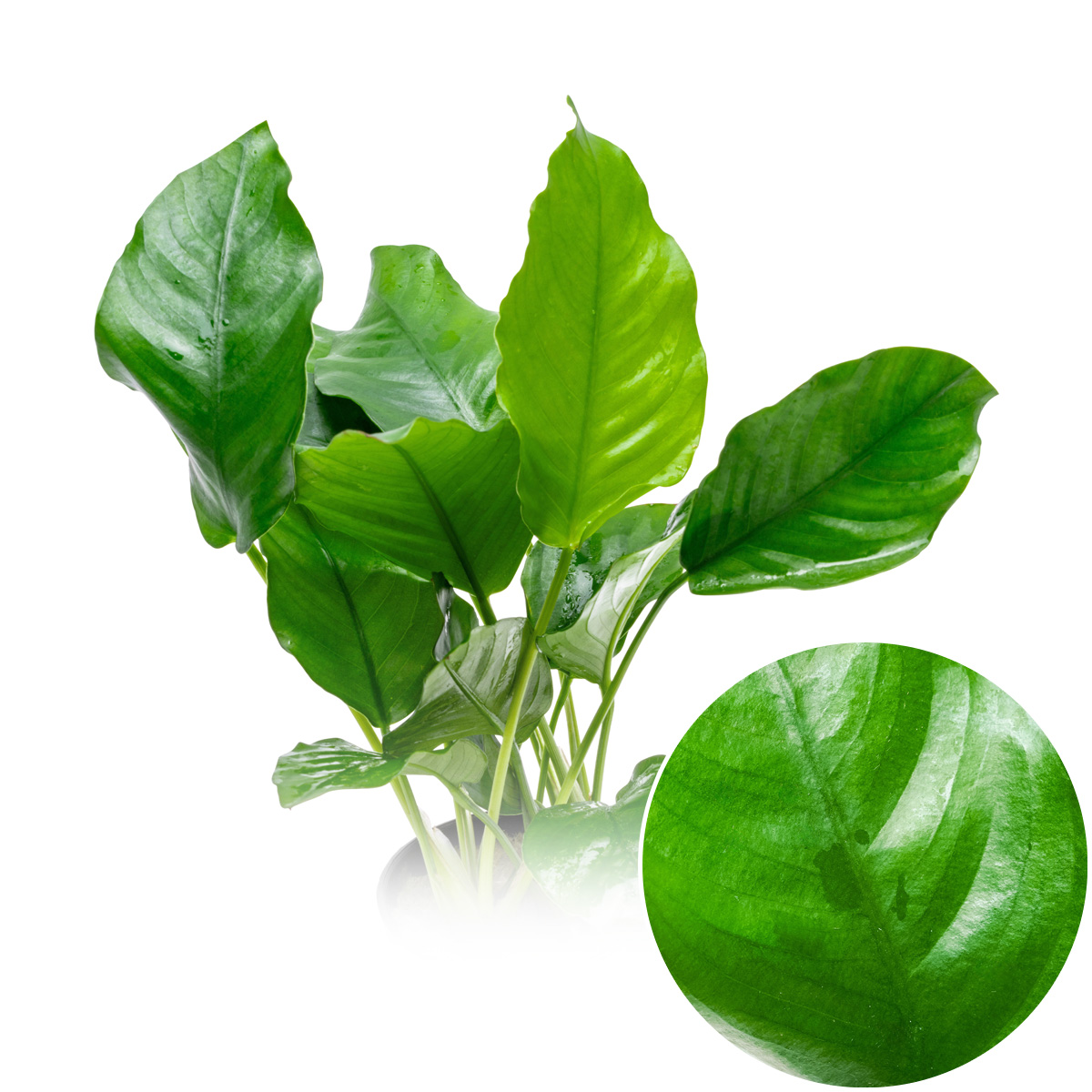
Anubias Barteri
One of the most popular aquarium plants among hobbyists as it is a fairly undemanding plant to grow well. Anubias Barteri is a medium-sized plant and is characterized by broad, dark green leaves that are shaped as spades. Anubias Barteri is a good midground plant that grows well when attached to driftwood or rocks. With all types of anubias, it is important not to bury the rhizome in the substrate as they get most of their nutrients from the water column. Instead, attach the anubias to a rock or piece of driftwood allowing the roots to be exposed.
DIFFICULTY:
LIGHTING:
PLACEMENT:
TYPE:
RHIZOME
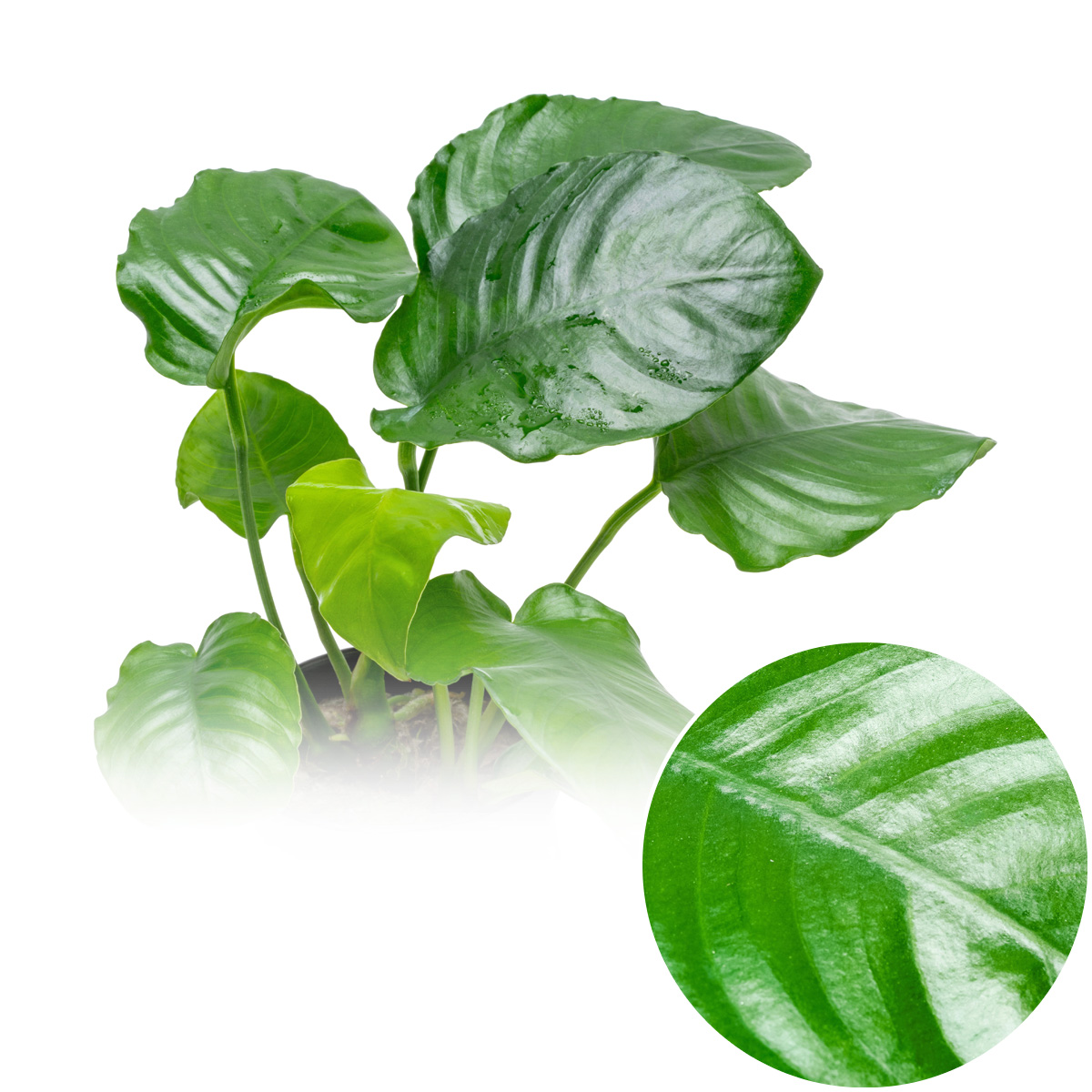
Anubias Barteri 'Wrinkle Leaf'
One of the most popular aquarium plants among hobbyists as it is a fairly undemanding plant to grow well. Anubias Barteri 'Wrinkle Leaf' is a is a medium-large sized plant and has a similar appearance to Anubias Barteri.
DIFFICULTY:
LIGHTING:
PLACEMENT:
TYPE:
RHIZOME
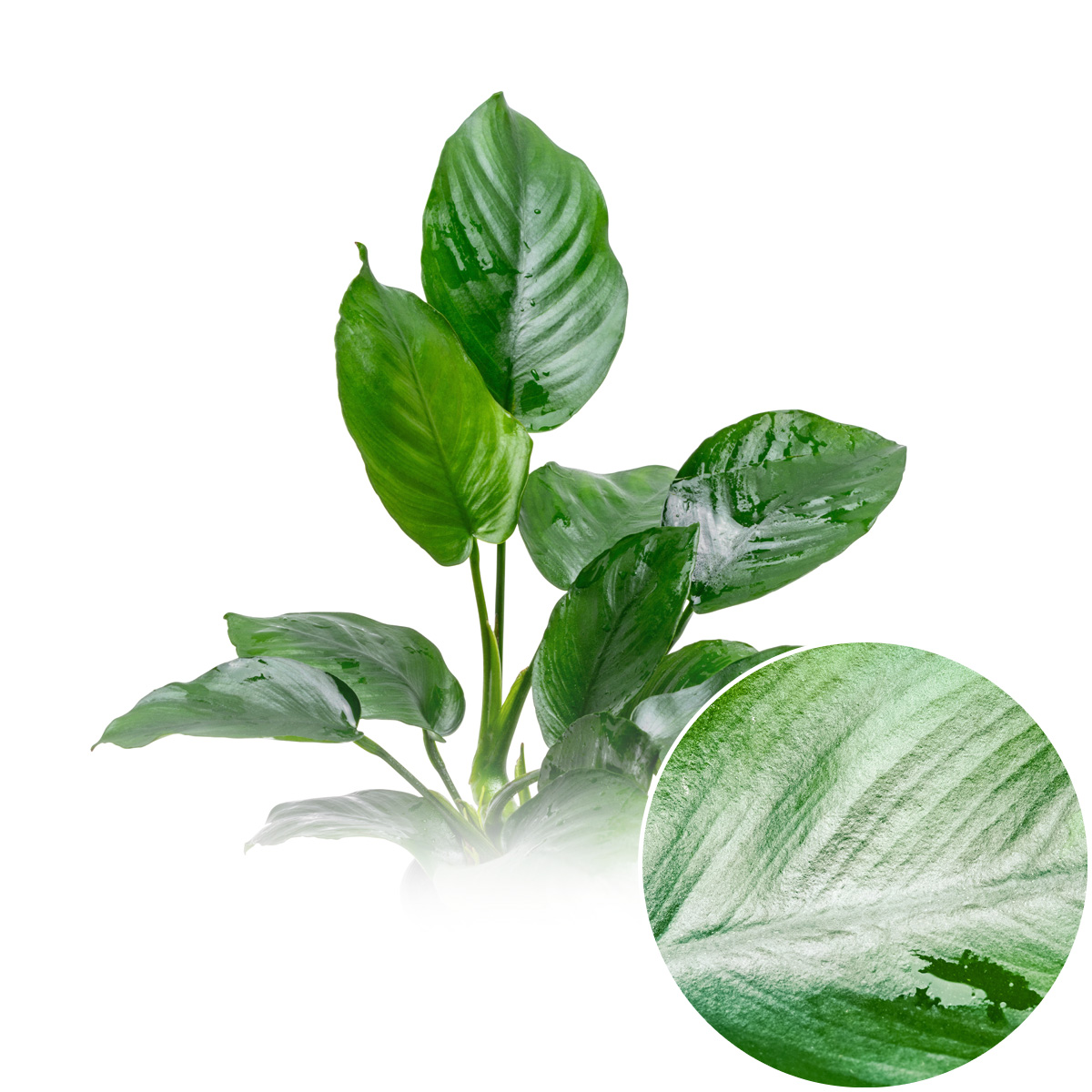
Anubias Barteri Broad Leaf
A larger variant, suitable for both aquariums and terrariums. It can grow submerged or emersed, featuring long stems and leaves nearly double the size of standard Anubias. Ideal for midground and background, with leaves reaching up to 3 inches.
DIFFICULTY:
LIGHTING:
PLACEMENT:
TYPE:
RHIZOME
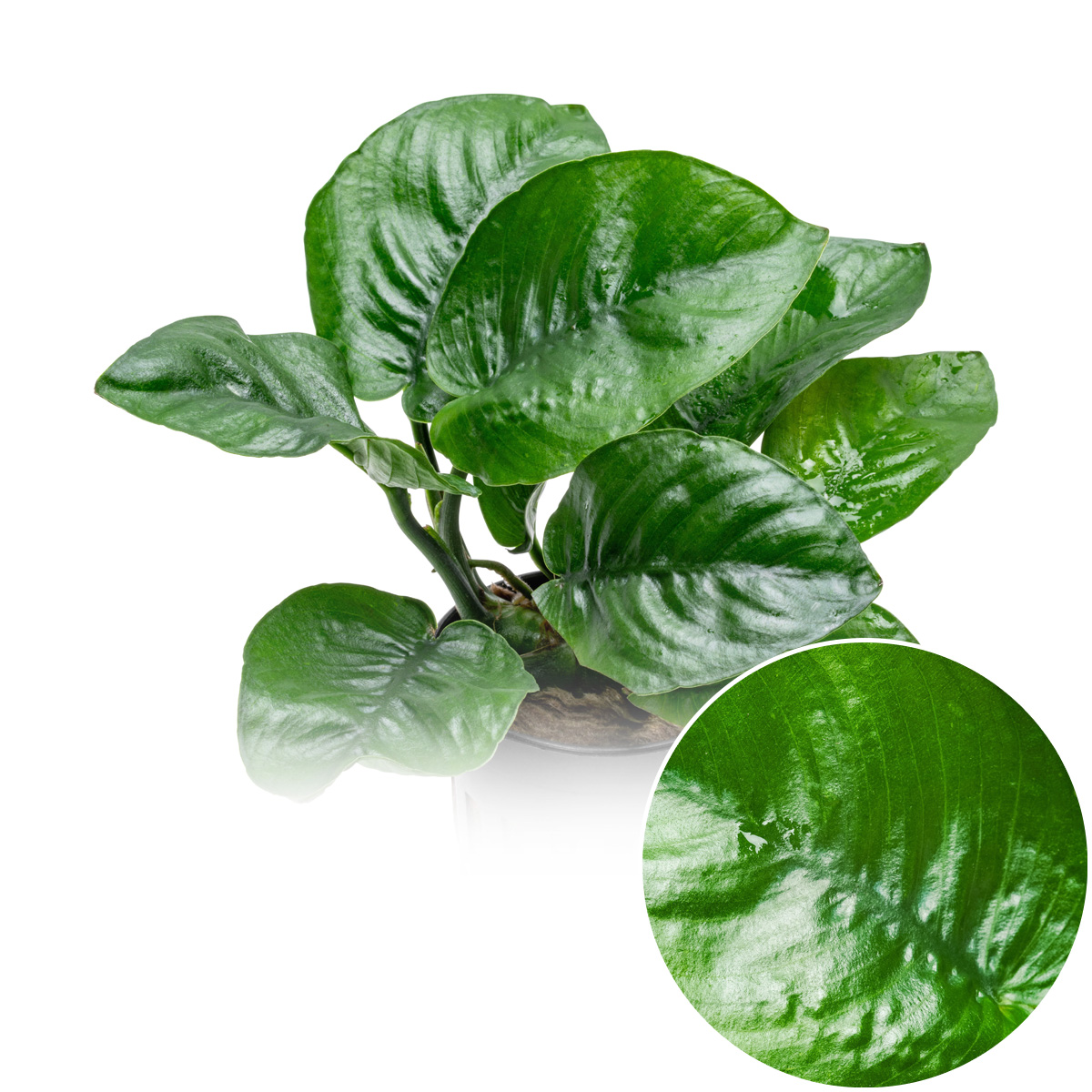
Anubias Barteri Butterfly
Favored by aquarists for its large, hardy, and resilient dark green leaves. Beginner-friendly, it thrives in various conditions, including low-light and low-nutrient water. Suitable for fore-, mid-, or background placement depending on size. Typically, its rhizomes attach to decorations, but it can float or be planted. Popular in tanks without substrate, it appreciates good water flow. Can be grown submerged or emersed. Compatible with various tank mates, including active and aggressive fish species.
DIFFICULTY:
LIGHTING:
PLACEMENT:
TYPE:
RHIZOME
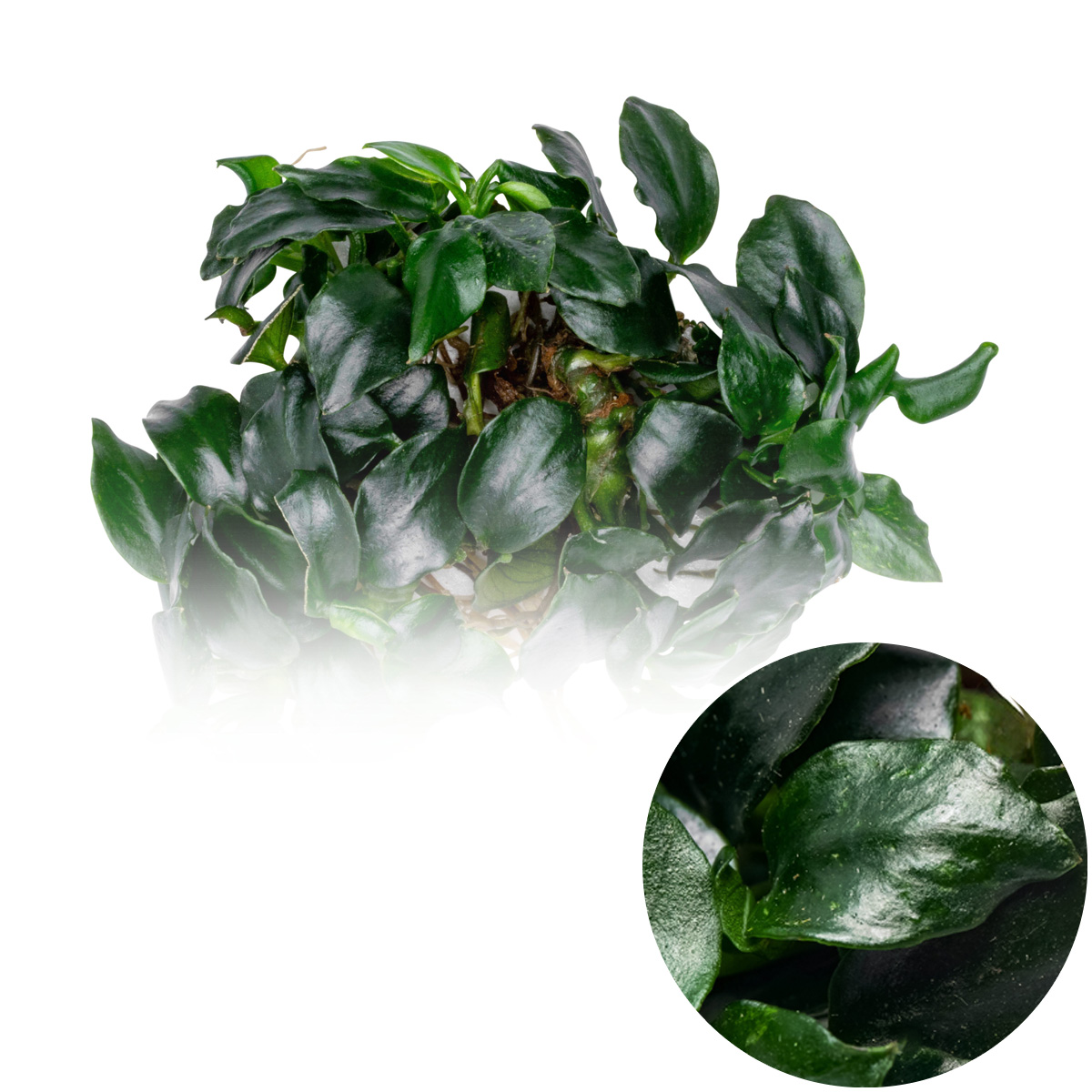
Anubias Barteri Dark Angel
A compact, smaller variety with darker green, ovate leaves featuring mild ruffles along the edges. The dark leaves contrast well with lighter hardscape and other plants.
DIFFICULTY:
LIGHTING:
PLACEMENT:
TYPE:
RHIZOME
Anubias Barteri Petite Round
A compact, smaller Anubias variety with deep green, ovate leaves featuring smooth edges. The leaf pattern provides contrast to edgy aquascapes, and lighting conditions influence leaf colors, with lower light intensifying the dark green.
DIFFICULTY:
LIGHTING:
PLACEMENT:
TYPE:
RHIZOME
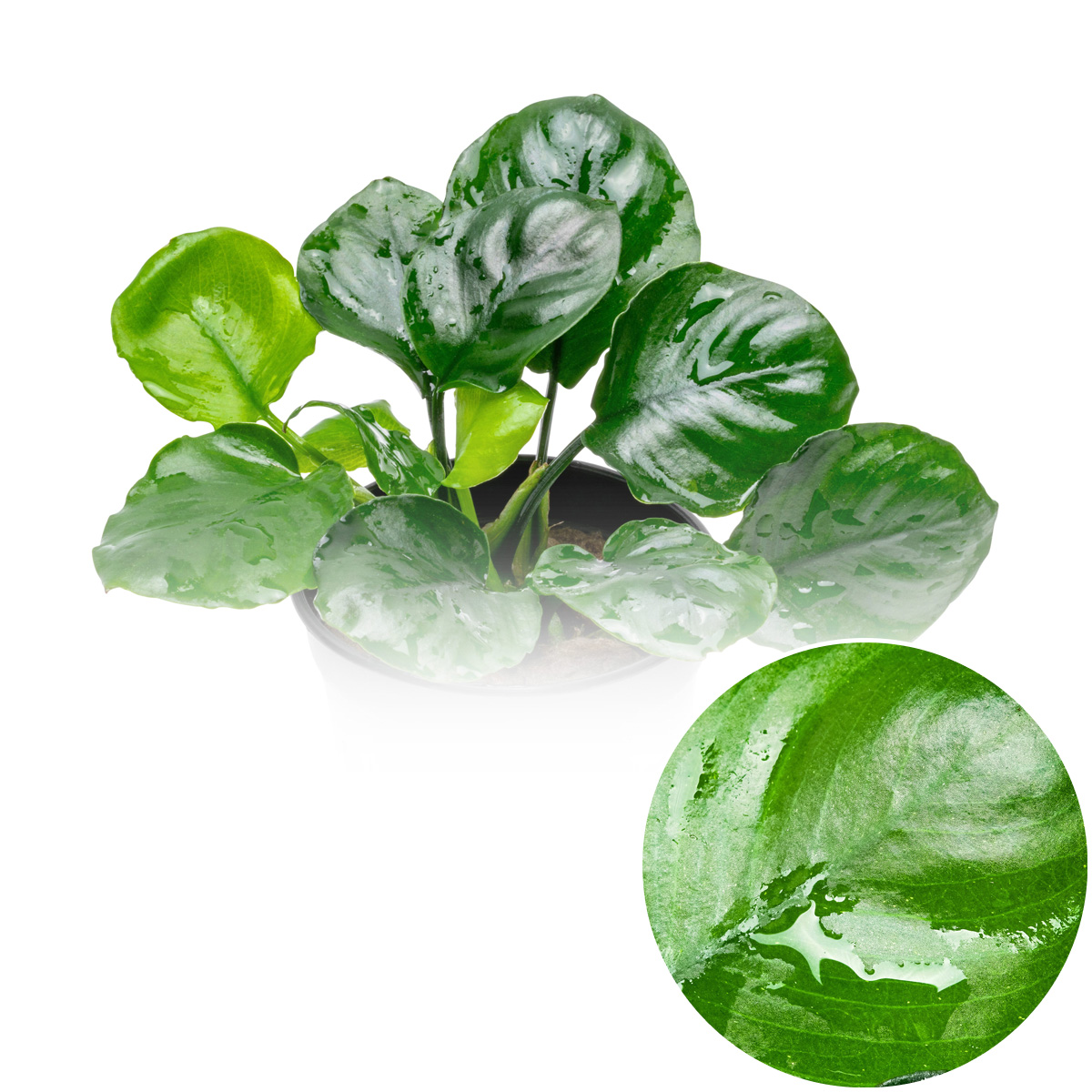
Anubias Barteri Round 'Golden Coin'
A less common but increasingly popular Anubias variant. It's easy to grow and adaptable to various water parameters. With round and circular leaves on long stems, it suits the midground and background in your aquascape.
DIFFICULTY:
LIGHTING:
PLACEMENT:
TYPE:
RHIZOME
Anubias Barteri Striped
A variant with sharp, ruffled leaves, suitable for midground and background placement in aquariums or terrariums. It thrives when attached to hard surfaces like wood or stones. Low to medium light suffices, and regular fertilization helps. While CO2 isn't necessary, it can enhance growth. Caution is needed with high lighting to prevent algae growth due to its slow growth rate.
DIFFICULTY:
LIGHTING:
PLACEMENT:
TYPE:
RHIZOME
Anubias Barteri Var 'Nana'
A dwarf variant of Anubias, ideal for various aquariums. It grows in both aquariums and terrariums, submerged or emersed. With slightly longer stems than Anubias Nana, it suits midground and background placements, with leaves reaching up to 3” in length.
DIFFICULTY:
LIGHTING:
PLACEMENT:
TYPE:
RHIZOME
Anubias Broad White
A rare and sought-after species developed through artificial selection. Its almost entirely white leaves, propagated from a darker green variant, need more light to maintain their color. Ideal for nano aquariums, this slow grower offers striking contrast against dark rocks and roots.
DIFFICULTY:
LIGHTING:
PLACEMENT:
TYPE:
RHIZOME
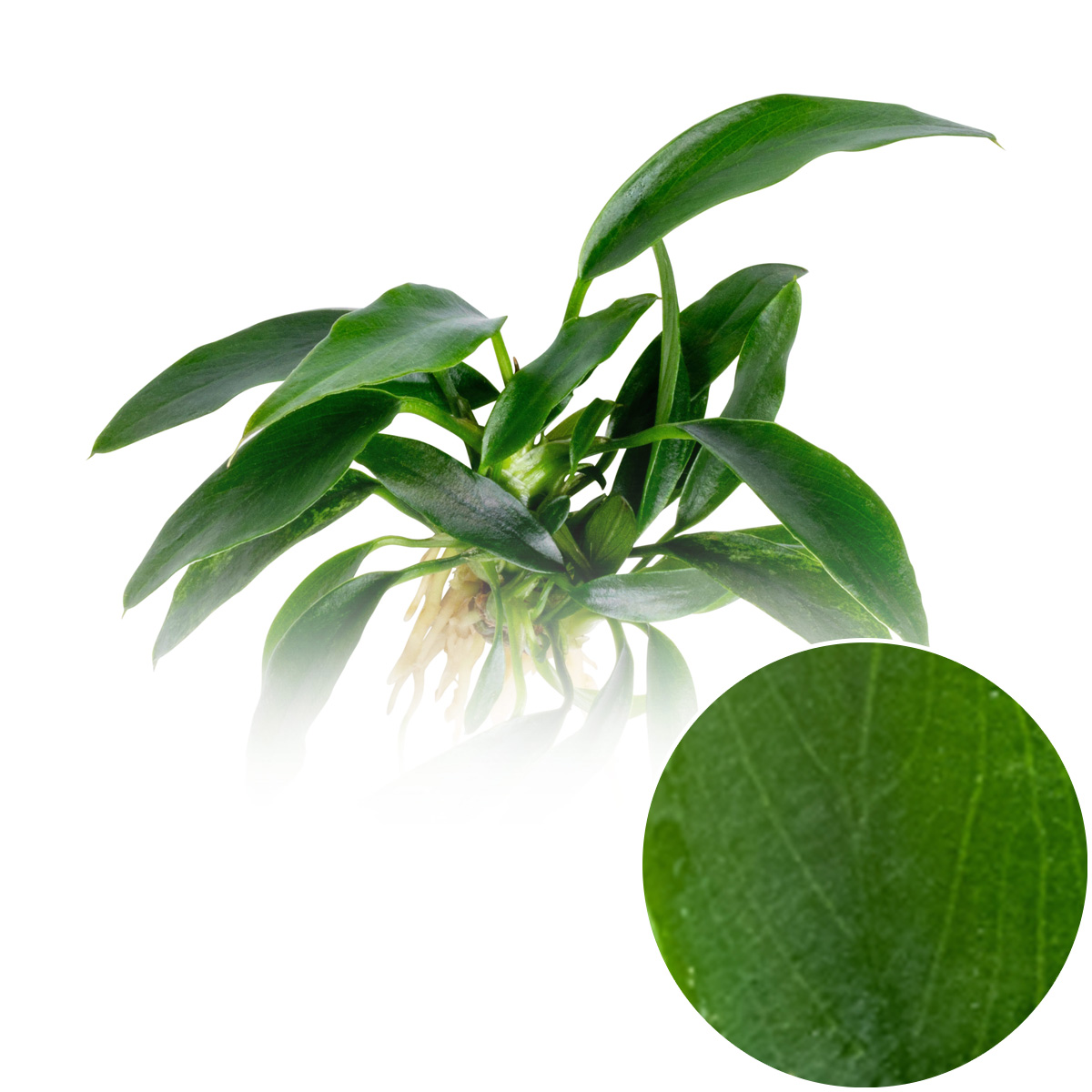
Anubias Chili Jalapeno
A rare hybrid of Anubias Chili and Anubias Minima. With small, jalapeño-shaped leaves and a vibrant green color, it's ideal for mid-ground placement in nano-planted aquariums. This low-maintenance plant tolerates various aquarium conditions, growing submerged or emersed in terrarium-like setups with sufficient moisture. Anubias Chili Jalapeño is a slow grower, best attached to driftwood or within aquascape gaps.
DIFFICULTY:
LIGHTING:
PLACEMENT:
TYPE:
RHIZOME
Anubias Chili Mini
A rare variation with small chili pepper-shaped leaves, perfect for mid-ground placement in nano-planted aquariums. This undemanding Anubias tolerates various conditions, growing submerged or emersed in terrarium-like setups with adequate moisture. Note its slow growth, requiring patience. Attach Anubias Chili Mini to driftwood or aquascape gaps for optimal display.
DIFFICULTY:
LIGHTING:
PLACEMENT:
TYPE:
RHIZOME
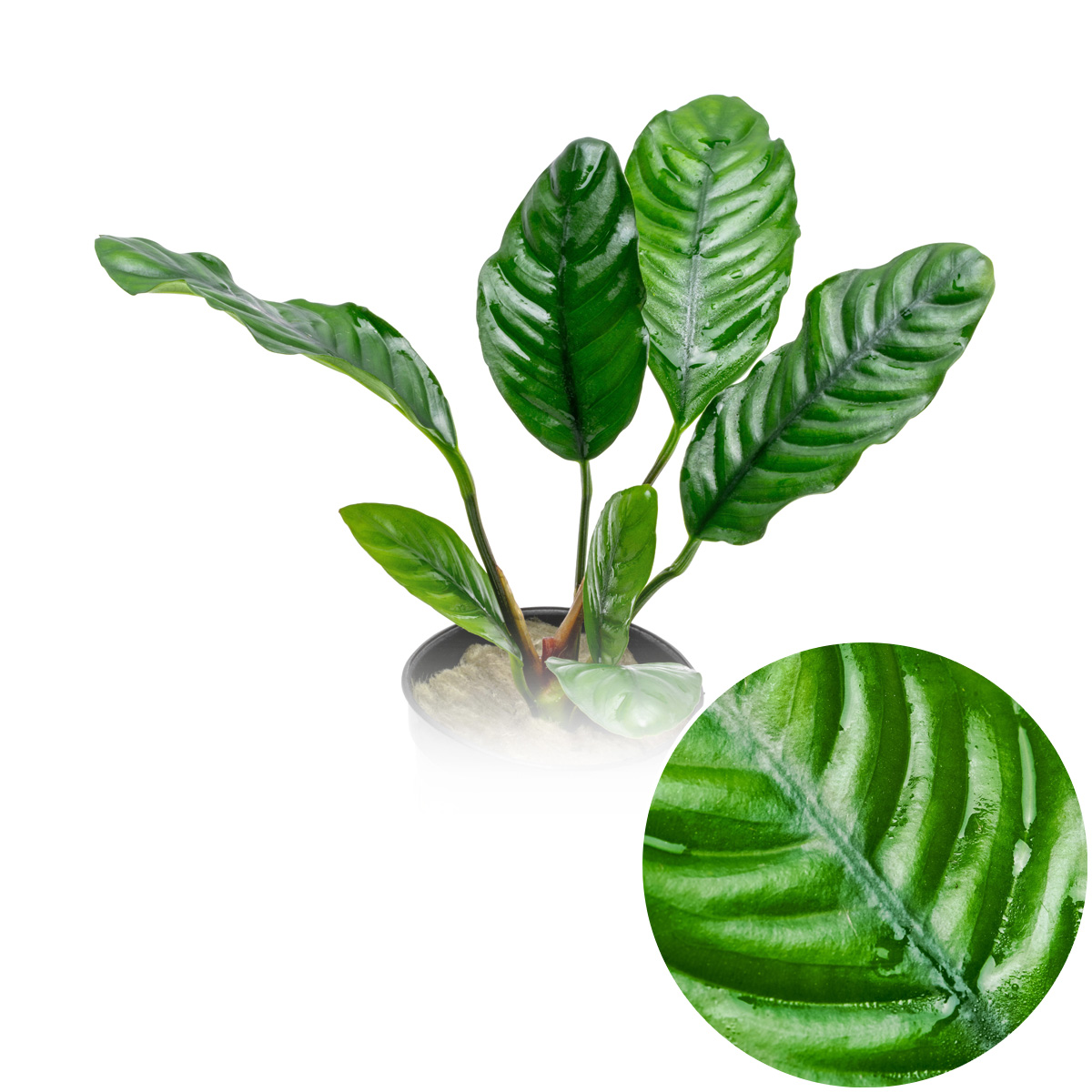
Anubias Coffeefolia
A variant of the Anubias Barteri plant. It can grow to about 12 inches tall and has long stems and oval-shaped leaves with a ruffled texture. The leaves are bronze-colored when young and eventually turn green.
DIFFICULTY:
LIGHTING:
PLACEMENT:
TYPE:
RHIZOME
Anubias Congensis Broad
A tall, hardy Anubias with dark green, oblong leaves, ideal for a background plant. Perfect for beginners, its rhizomes can be attached to decor using thread or fishing line. Avoid burying the rhizomes to prevent rot. Suited for bare-bottomed tanks, it thrives submerged or emersed. Compatible with various tank mates, it withstands active fish.
DIFFICULTY:
LIGHTING:
PLACEMENT:
TYPE:
RHIZOME
Anubias Congensis Mini
An excellent plant for beginners, featuring small, dark green, oblong leaves that accentuate aquascapes with wood or rocks. Attach its rhizomes to decor using thread or fishing line, avoiding burial to prevent rot. Whether submerged or emersed, plant the roots in the substrate, not the rhizome.
DIFFICULTY:
LIGHTING:
PLACEMENT:
TYPE:
RHIZOME
Anubias Frazeri
A slow-growing plant that can be used in the middle ground of an aquarium. It has oval-wavy green leaves that can grow up to 3 inches long.
It is native to the slow-moving, low-lit streams, rivers, and marshes of Africa. It can be propagated by cutting the rhizome and attaching it to another surface or rock.
DIFFICULTY:
LIGHTING:
PLACEMENT:
TYPE:
RHIZOME
Anubias Giant Stardust
A rare, large aquarium plant with white veins along its leaves, adding a distinctive touch to any tank.
DIFFICULTY:
LIGHTING:
PLACEMENT:
TYPE:
RHIZOME
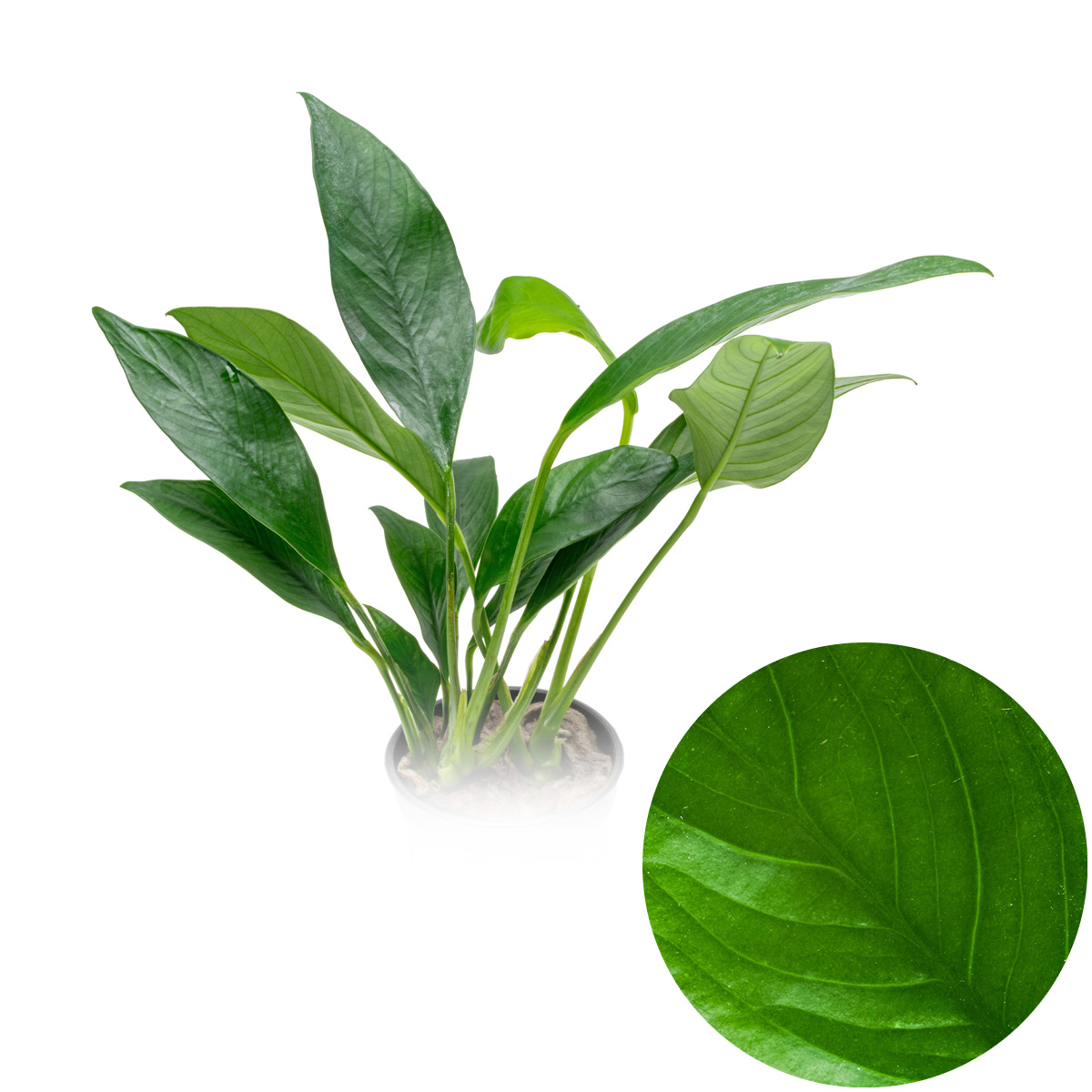
Anubias Glabra
A medium-sized variant with narrow, wavy lanceolate leaves, originating from West African rainforest streams. Hardy and adaptable, it suits various aquarium sizes, from nano to larger tanks.
DIFFICULTY:
LIGHTING:
PLACEMENT:
TYPE:
RHIZOME

Anubias Hastifolia
A large, hardy aquarium plant native to the rainforests of West Africa. It's known for its large, arrowhead-shaped leaves and long stems. The plant's leaves are set on a creeping and rooting rhizome that is 5 to 15 mm thick. Anubias hastifolia is a popular aquarium plant that is considered easy to care for and ideal for beginners. It is a hardy and adaptable plant that can tolerate low-light conditions.
DIFFICULTY:
LIGHTING:
PLACEMENT:
TYPE:
RHIZOME
Anubias Heterophylla
Also known as Congo Anubias, is a medium-large plant native to the tropical rainforests of Central Africa. It's a variant of Anubias Nana, but has broad, pointy leaves that can grow up to approximately 15 inches long and 5 inches wide. The leaves are set on a creeping rhizome that is 0.2 to 0.7 inches thick, and the leaf stems are generally longer than the blade, reaching up to 26 inches in length.
DIFFICULTY:
LIGHTING:
PLACEMENT:
TYPE:
RHIZOME
Anubias Heterophylla Supernova
A rarer variant with vibrant green foliage almost twice the standard length, thrives in both aquariums and terrariums. Its substantial leaves make it suitable for midground and background placement. Low to moderate lighting suffices, and while CO2 isn't necessary, it can enhance growth. Propagation involves dividing rhizomes, ensuring they remain above the substrate to prevent rotting.
DIFFICULTY:
LIGHTING:
PLACEMENT:
TYPE:
RHIZOME
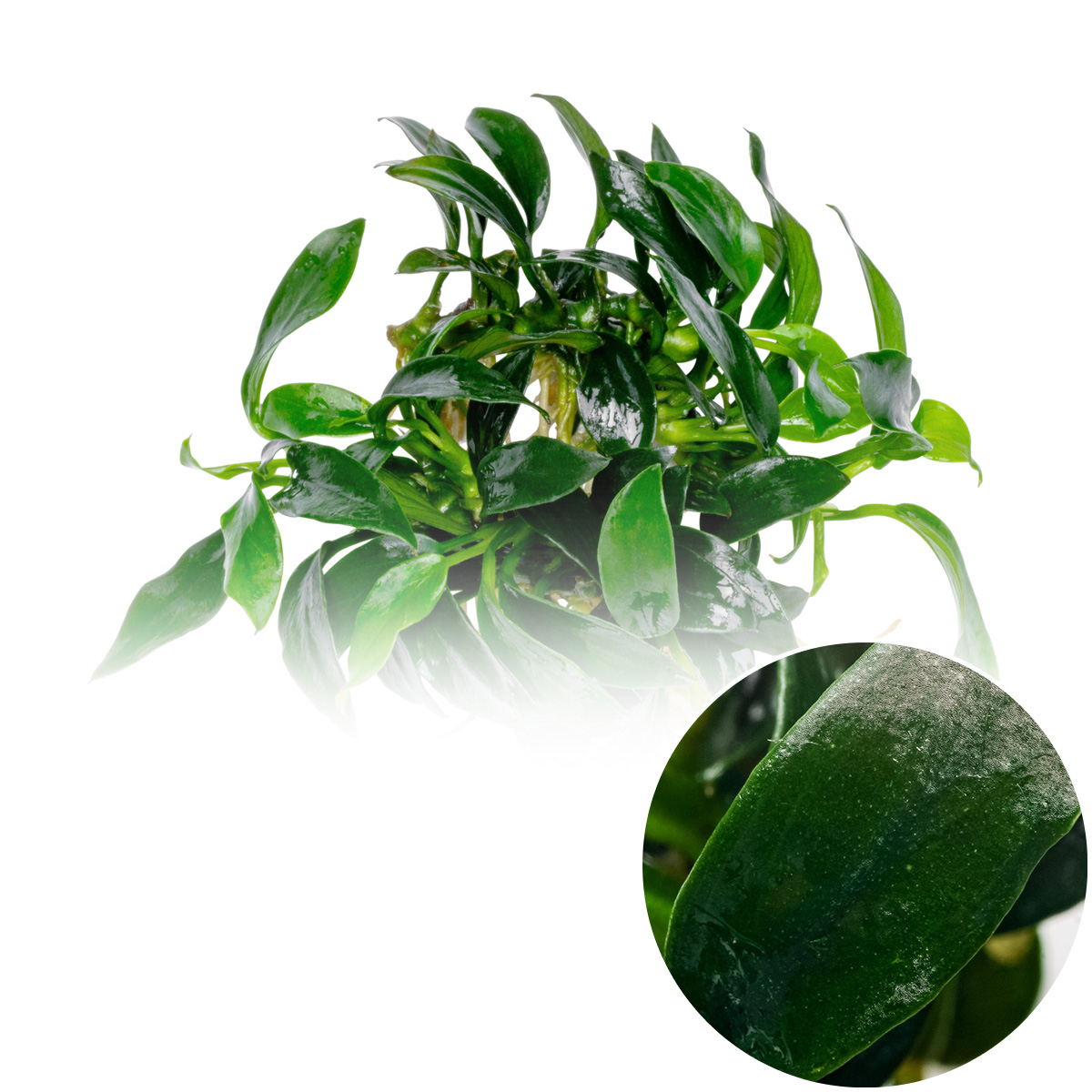
Anubias Jungle Star
A rare variety with deep green, rounded-edged leaves, presenting a small to medium-sized appearance. The dark tones provide excellent contrast against lighter hardscapes and plants.
DIFFICULTY:
LIGHTING:
PLACEMENT:
TYPE:
RHIZOME
Anubias Lanceolata
An easy-to-grow plant, thrives in various water conditions. Its slender and sharp leaves distinguish it from other Anubias varieties, and it can flourish in both aquariums and terrariums, submerged or emersed.
DIFFICULTY:
LIGHTING:
PLACEMENT:
TYPE:
RHIZOME
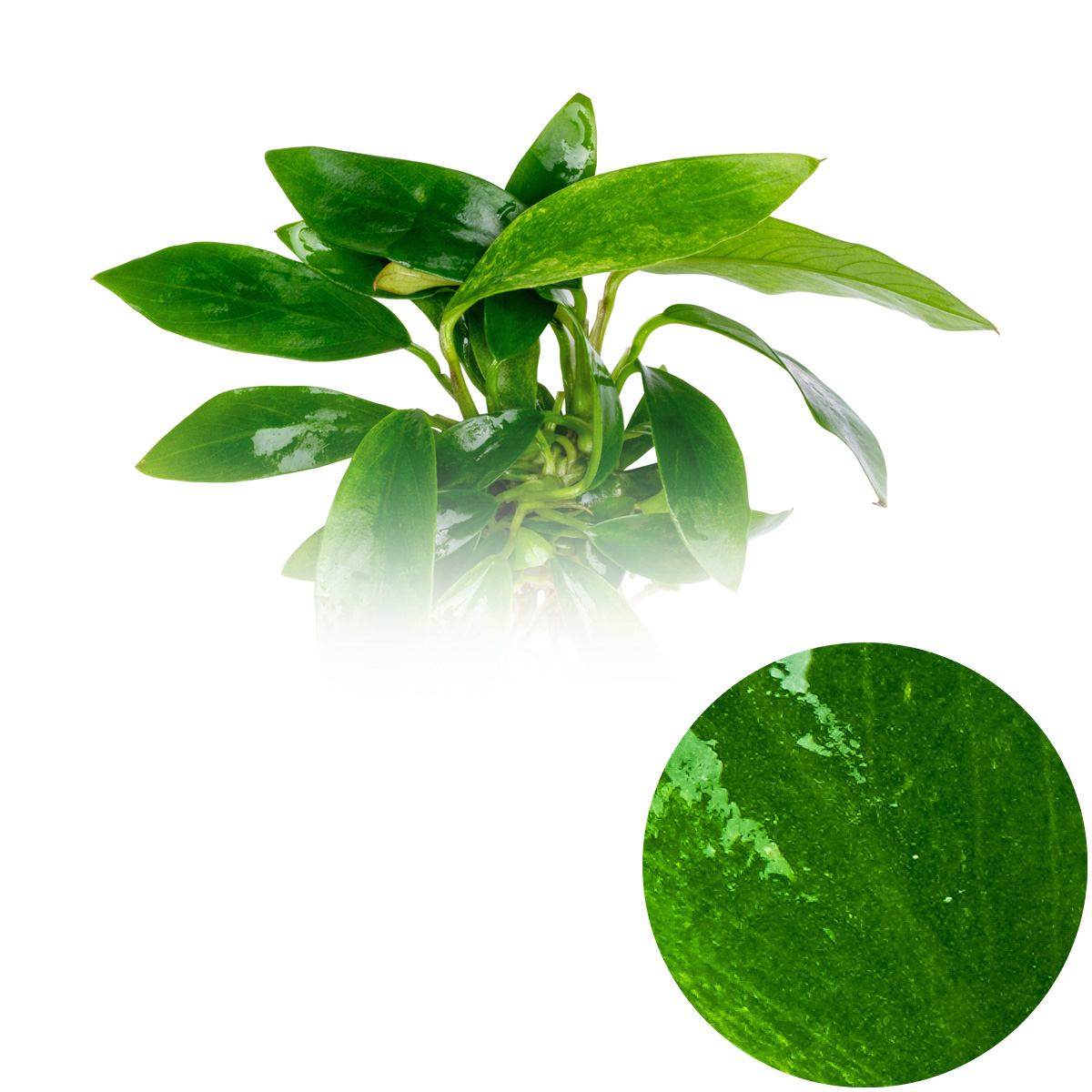
Anubias Minima
A small aquatic plant with long, slender, deep green leaves. The leaves are thin and pointed, with a slight wavy texture at the edges. Anubias minima is a popular plant for aquariums, where it can be used as a midground or background plant. It's easy to grow and often attached to driftwood.
DIFFICULTY:
LIGHTING:
PLACEMENT:
TYPE:
RHIZOME
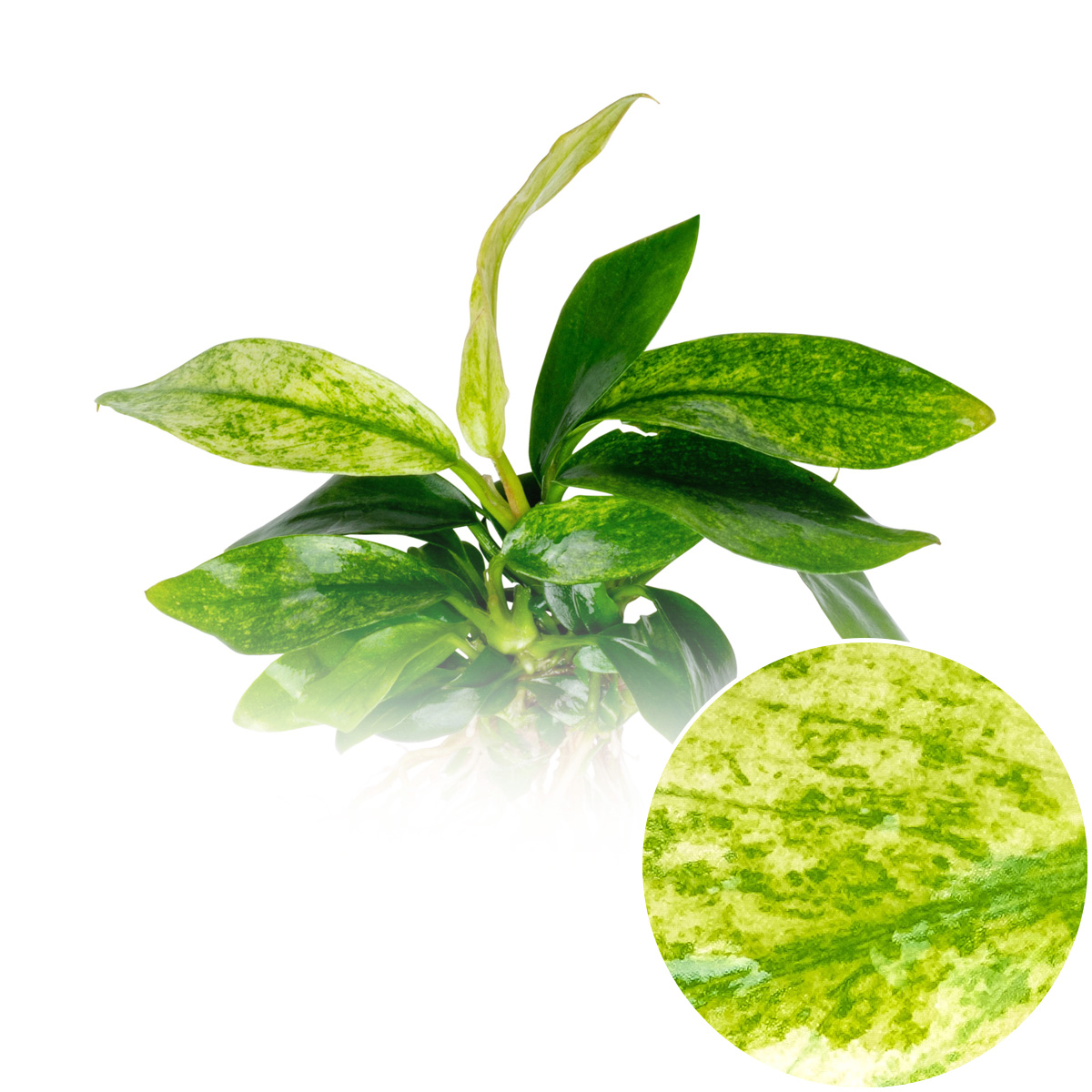
Anubias Minima Variegated
A plant with variegated leaves that are a mix of green and white or yellow patterns. It can grow in a variety of environments, including aquariums and terrariums. It can grow to be 12 inches tall and can provide cover for fish from predators.
DIFFICULTY:
LIGHTING:
PLACEMENT:
TYPE:
RHIZOME
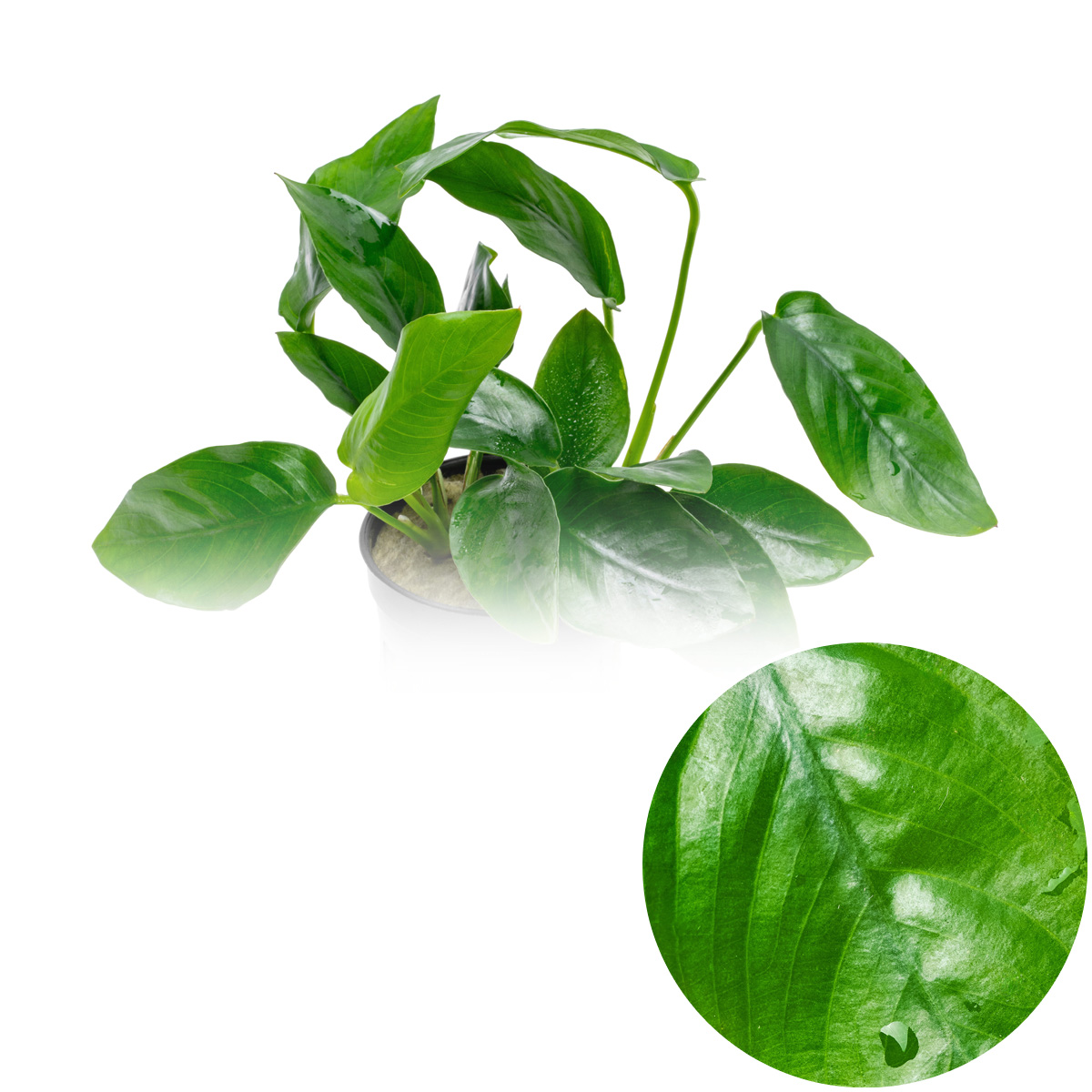
Anubias Nana
Also known as Anubias barteri var. nana, is a small, hardy plant that can grow in a variety of water conditions. It is native to Cameroon and can grow to be approximately 2–4 inches tall, with a rhizome of 4–6 inches or more. Anubias nana has dark green leaves that can grow up to 5 inches long. Anubias nana can thrive in a range of water conditions, from low to high light and from soft to hard water. It can be attached to driftwood, rocks, or planted directly into the substrate. Anubias nana can benefit from regular fertilization, and CO2 can promote faster growth and more robust leaves.
DIFFICULTY:
LIGHTING:
PLACEMENT:
TYPE:
RHIZOME
Anubias Nana 'Long Wavy'
A rare variation, ideal for your tank's foreground. With small, dark green, oblong, and wavy leaves, this hardy plant suits various water conditions, making it beginner-friendly. Ensure good water circulation, moderate lighting, and consider CO2 injection for optimal growth. Propagate through rhizome side shoots, tying them down or allowing them to float for a new Anubias plant.
DIFFICULTY:
LIGHTING:
PLACEMENT:
TYPE:
RHIZOME
Anubias Nana Bonsai
A mid-sized Anubias variant, is suitable for beginners due to its easy care and resilience. Ideal for any planted aquarium, it thrives in various conditions but excels with optimal care. Attach it to stones or wood for a mid-ground accent or centerpiece, making it versatile for any tank size.
DIFFICULTY:
LIGHTING:
PLACEMENT:
TYPE:
RHIZOME
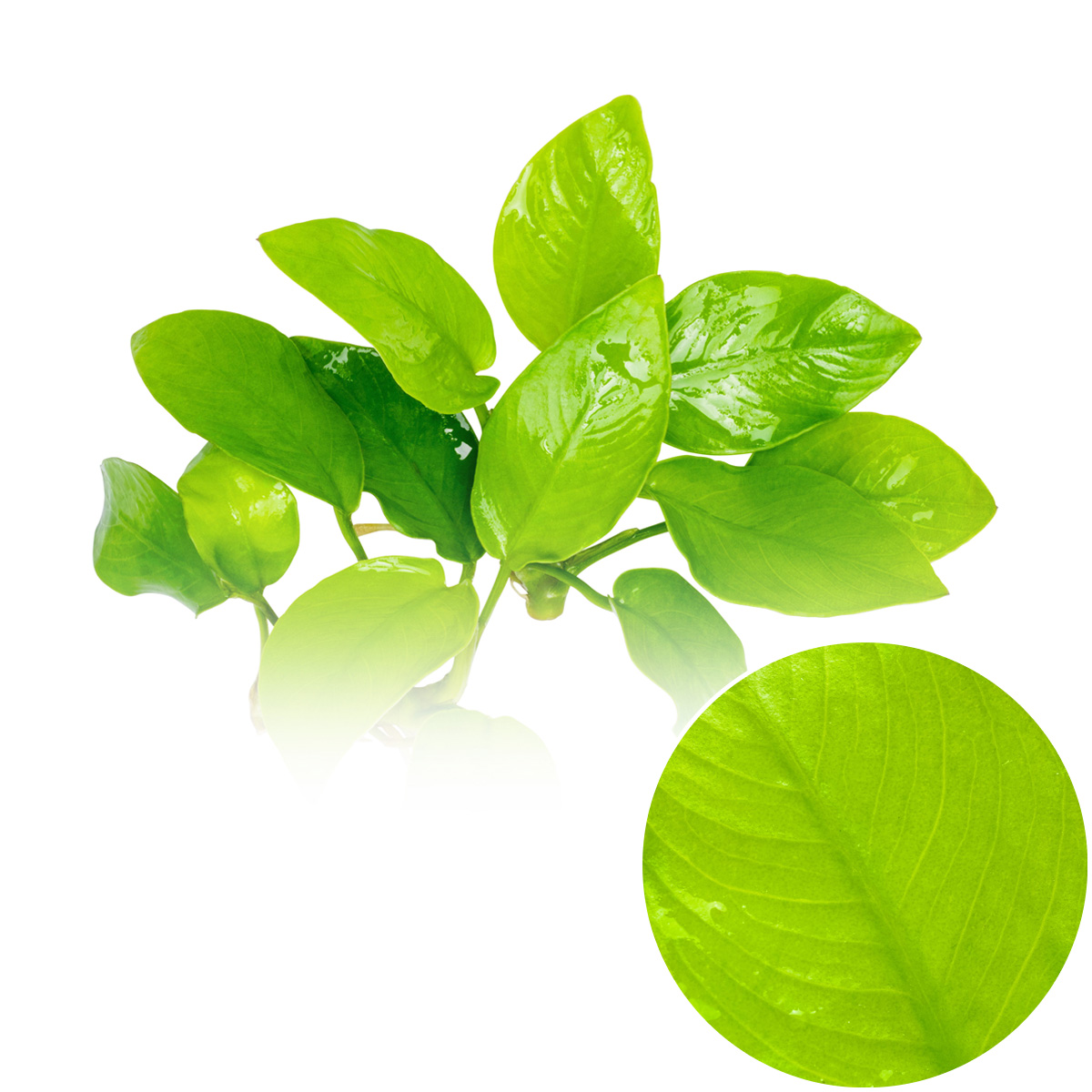
Anubias Nana Golden
A golden variation of Anubias Nana, is beginner-friendly, easy to care for, and adapts well to both aquariums and terrariums.
DIFFICULTY:
LIGHTING:
PLACEMENT:
TYPE:
RHIZOME
Anubias Nana Ovalis
A cultivar of the classic mini "Nana" form of the flowering plant Anubias nana. It has elongated petioles and somewhat rounded foliage.
DIFFICULTY:
LIGHTING:
PLACEMENT:
TYPE:
RHIZOME
Anubias Nana Paxing
A newer species, has small, glossy green leaves that grow almost flat in planted aquariums. Hardy and undemanding, it's ideal for beginners, adapting to various conditions submerged or emerged. Similar in size to Anubias Nana.
DIFFICULTY:
LIGHTING:
PLACEMENT:
TYPE:
RHIZOME
Anubias Nana Paxing Compact
A newer species, features small, glossy, robust leaves in various green shades. Hardy and undemanding, it's perfect for beginners, adapting to various submerged or emerged conditions in aquariums or terrarium setups.
DIFFICULTY:
LIGHTING:
PLACEMENT:
TYPE:
RHIZOME
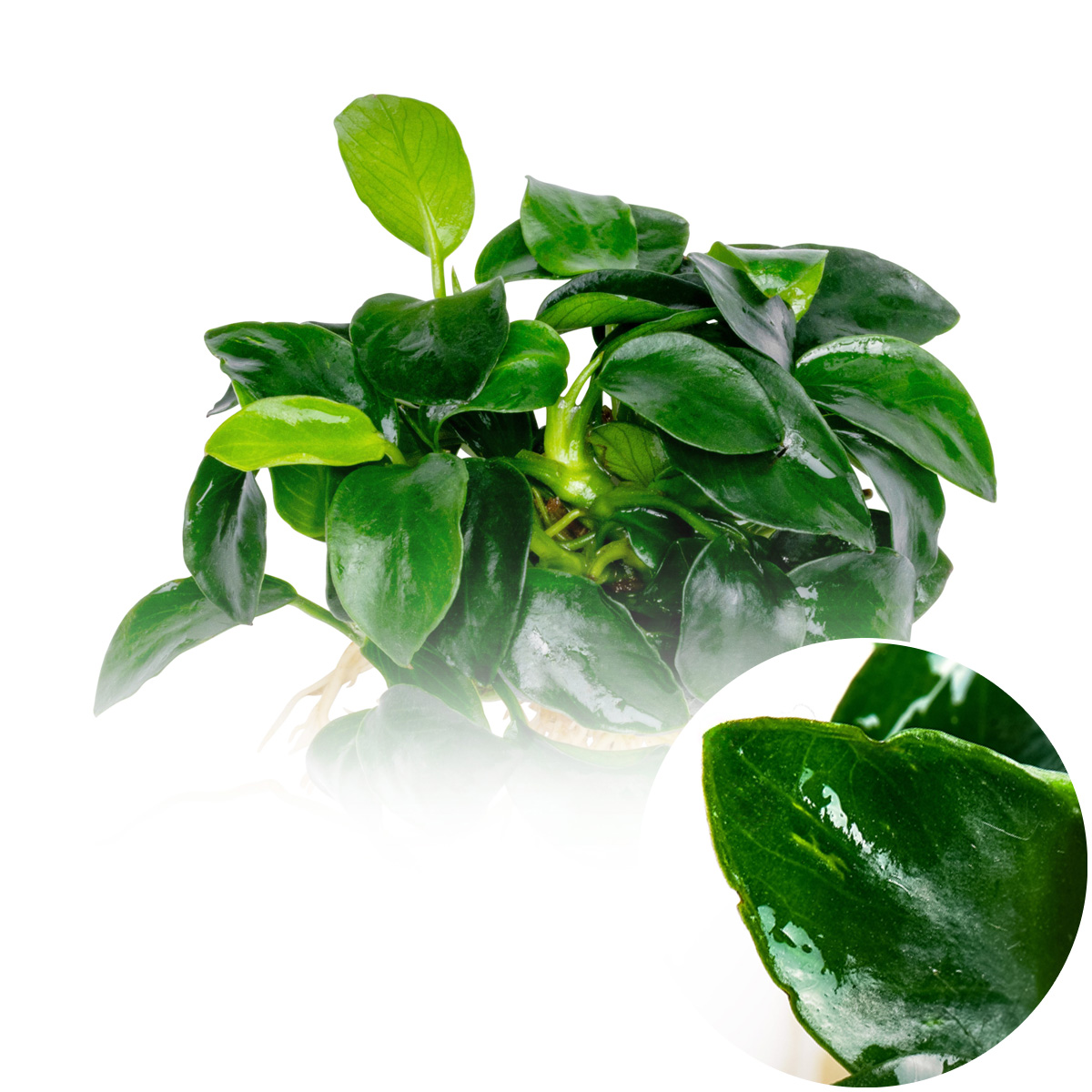
Anubias Nana Petite
A popular choice in planted aquariums, is known for its small size and vibrant green hues. Highly resilient, it's ideal for beginners and admired by seasoned aquarists. Requiring minimal care, it thrives in various aquarium and terrarium conditions.
DIFFICULTY:
LIGHTING:
PLACEMENT:
TYPE:
RHIZOME
Anubias Nana Petite White
A rare variant, features unique white coloration due to a chlorophyll mutation. Leaf patterns vary, and high light and CO2 promote whiter leaves.
DIFFICULTY:
LIGHTING:
PLACEMENT:
TYPE:
RHIZOME
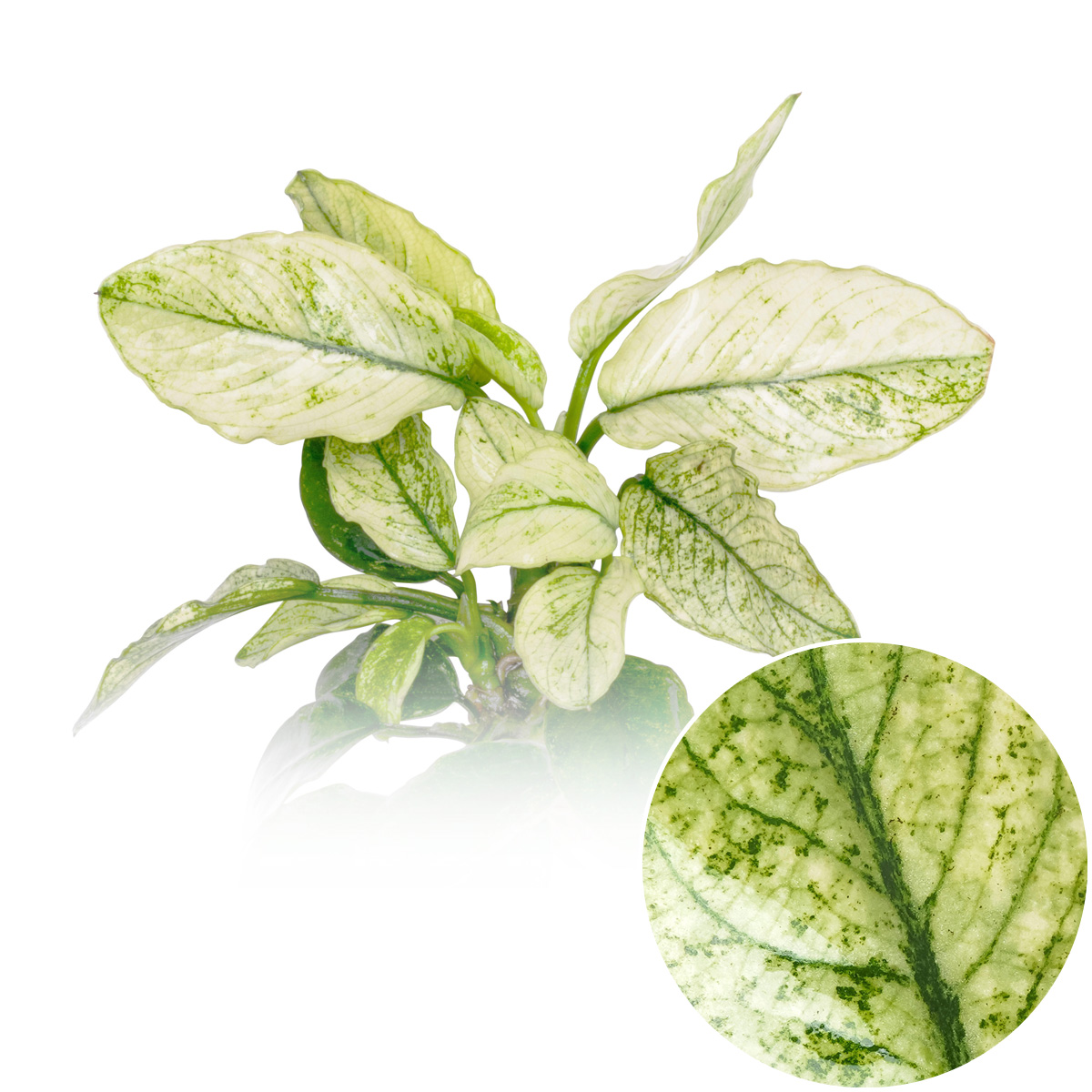
Anubias Nana Pinto
A unique variant with marbled white coloring, adds a distinct touch to aquariums. Slow-growing, it requires more light than other Anubias types. Suitable for nano to standard-sized tanks, it contrasts well with darker hardscape and other plants.
DIFFICULTY:
LIGHTING:
PLACEMENT:
TYPE:
RHIZOME
Anubias Nana Short
A miniature version of the popular Anubias nana plant. It's a low-maintenance, slow-growing plant with a short stature and deep green coloring.
DIFFICULTY:
LIGHTING:
PLACEMENT:
TYPE:
RHIZOME
Anubias Nana Thick Leaf
A less common variant with short, rounded wavy leaves, making it ideal for a striking foreground. Hardy and adaptable, it suits beginners. Suitable for submersed or emersed growth, it thrives in various water conditions. Slow-growing, it works well in bare-bottomed tanks. Thriving in low to moderate lighting, it doesn't require CO2 but benefits from it. Rhizomes can attach to decor or float, and propagation is achieved through healthy rhizomes producing side shoots.
DIFFICULTY:
LIGHTING:
PLACEMENT:
TYPE:
RHIZOME
Anubias Nana Tropica
A beginner-friendly plant that's easy to grow. Attach it to hardscape or plant in soil with the rhizome exposed, avoiding burial. The rhizome stores the plant's food reserve. It's suitable for demanding or low-maintenance aquariums, adapts to various conditions, and supports diverse aquatic life.
DIFFICULTY:
LIGHTING:
PLACEMENT:
TYPE:
RHIZOME
Anubias Nana Variegated
Also known as Anubias Pinto, features unique marbled white coloring derived from a specific selection process. With slight leaf variations, its slow growth requires more light than other Anubias. Attach to driftwood or stones in the aquarium for a distinctive touch.
DIFFICULTY:
LIGHTING:
PLACEMENT:
TYPE:
RHIZOME
Anubias Short and Sharp
Despite its name, grows to 8-10" in height, making it suitable for tanks larger than 7 gallons. With sharp and slender leaves, it's an attractive, easy-to-care-for choice for beginners, perfect as a mid-ground plant attached to stones or wood in various tank sizes.
DIFFICULTY:
LIGHTING:
PLACEMENT:
TYPE:
RHIZOME

Anubias Stardust Mini
A rare variant resembling Anubias Nana Petite, features distinctive leaves with light veins and white specks. With proper lighting, it adds a unique touch to aquariums. Easy to care for like other Anubias, it requires a bit more light for its signature appearance. A hardy and adaptable choice that complements diverse aquatic plants and tank setups. Ideal for planted aquariums.
DIFFICULTY:
LIGHTING:
PLACEMENT:
TYPE:
RHIZOME
Bacopa Amplexicaulis
Also known as Bacopa Caroliniana or Water Hyssop, is a popular aquatic plant in planted aquarium tanks. It's also known as lemon bacopa and giant red bacopa. Lemon Bacopa is a lovely midground stem plant with delicate, flower-like clusters of light green leaves. It can be grown submersed or emersed and will bloom tiny purple and blue flowers above water. Pleasantly, it has the smell of lemon when crushed or cut.
DIFFICULTY:
LIGHTING:
PLACEMENT:
TYPE:
STEM
Bacopa Araguai
Aso known as Bacopa Araguaia or Bacopa Purple, is a stunning variant for planted aquariums. It exhibits a unique color palette with pink, violet, and purple tones, dependent on aquarium conditions. Suitable for both submerged and emersed growth, it's ideal for terrariums and paludariums. Vibrant purple notes are achieved in submerged conditions, requiring CO2 and nutrient dosing. Recommended for hobbyists with experience in caring for CO2-dependent aquatic plants.
DIFFICULTY:
LIGHTING:
PLACEMENT:
TYPE:
STEM
Bacopa Caroliniana Red
A North American stem plant native to the Everglades. Growing in brackish water, it transforms from green to red with iron and micronutrients. Its color varies with light levels, appearing green in lower light, bronze to pink in higher light, and reddish-brown in bright light, earning it the name Giant Red Bacopa.
DIFFICULTY:
LIGHTING:
PLACEMENT:
TYPE:
STEM
Bacopa Lanigera
Commonly known as Hairy Bacopa, is a larger Brazilian variation similar to Bacopa Caroliniana but distinguished by rounder leaves and white hair-like fibers on the stem. With noticeable venation, it provides natural contrast. Suited for larger aquariums, it can be pruned for smaller tanks.
DIFFICULTY:
LIGHTING:
PLACEMENT:
TYPE:
STEM
Bacopa Madagascariensis
A rarer variation that adapts to both submerged and emersed conditions, displaying fleshy, serrated leaves above water and a more upright growth pattern in the aquarium. Considered advanced, it thrives with intense lighting and comprehensive nutrient supply. Flourishing in softer, heated water, regular trimming is essential for optimal growth. Its decorative appeal and uniform growth make it suitable for Dutch-style planted aquariums.
DIFFICULTY:
LIGHTING:
PLACEMENT:
TYPE:
STEM
Bacopa Monniera Variegatus
Aso known as Moneywort, is a vibrant midground stem plant with light green and variegated leaves, adding a joyful touch to aquariums. Commonly used in Ayurveda, it's beginner-friendly, thriving without CO2 injection, requiring only a nutrient-rich and clean water environment. Adequate lighting is essential to prevent rot. It adapts well to both submersed and emersed growth, showcasing tiny pink and white flowers above water.
DIFFICULTY:
LIGHTING:
PLACEMENT:
TYPE:
STEM
Bacopa Monnieri
Also known as Brahmi or Water Hyssop, is a stem plant that can grow submerged or emersed. It's a good choice for beginners because it's easy to grow and requires little attention. This plant features a thick central stem and round, bright green leaves measuring approximately 0.4–1 inch in length. The leaves are obovate with a round tip and narrow base.
DIFFICULTY:
LIGHTING:
PLACEMENT:
TYPE:
STEM
Bolbitis Heteroclita
Known as the Asian Water Fern or Bolbitis Broadleaf, is a low-maintenance and visually appealing plant suitable for both beginners and experienced aquascapers. Thriving in emersed settings, it adapts well to terrariums, vivariums, paludariums, or enclosed container gardens with sufficient humidity. Featuring broad, textured foliage and new growth from its rhizome, this epiphytic plant easily self-attaches to porous surfaces like aquascaping stones and aquarium driftwood.
DIFFICULTY:
LIGHTING:
PLACEMENT:
TYPE:
STEM
Bolbitis Heteroclita Difformis - Mini Bolbitis (Baby Leaf)
Also known as "mini bolbitis", is a dwarf variety of fern that is similar to Bolbitis Heudelotii but has smaller leaves. It grows slowly and doesn't grow taller than 4 inches, making it ideal for smaller terrariums.
DIFFICULTY:
LIGHTING:
PLACEMENT:
TYPE:
STEM
Bolbitis Heudelotii Difformis
Also known as the African Water Fern, is an epiphyte found in tropical, shady water sources with strong currents. It's a stable and easy-to-maintain plant, favored by both aquascaping beginners and experts. Similar to Buce, Anubias, and Crypts, it won't quickly overrun your tank. With intricately shaped, luscious, and jungle-like fern leaves ranging from light to dark green, it adds visual appeal to your aquarium.
DIFFICULTY:
LIGHTING:
PLACEMENT:
TYPE:
STEM
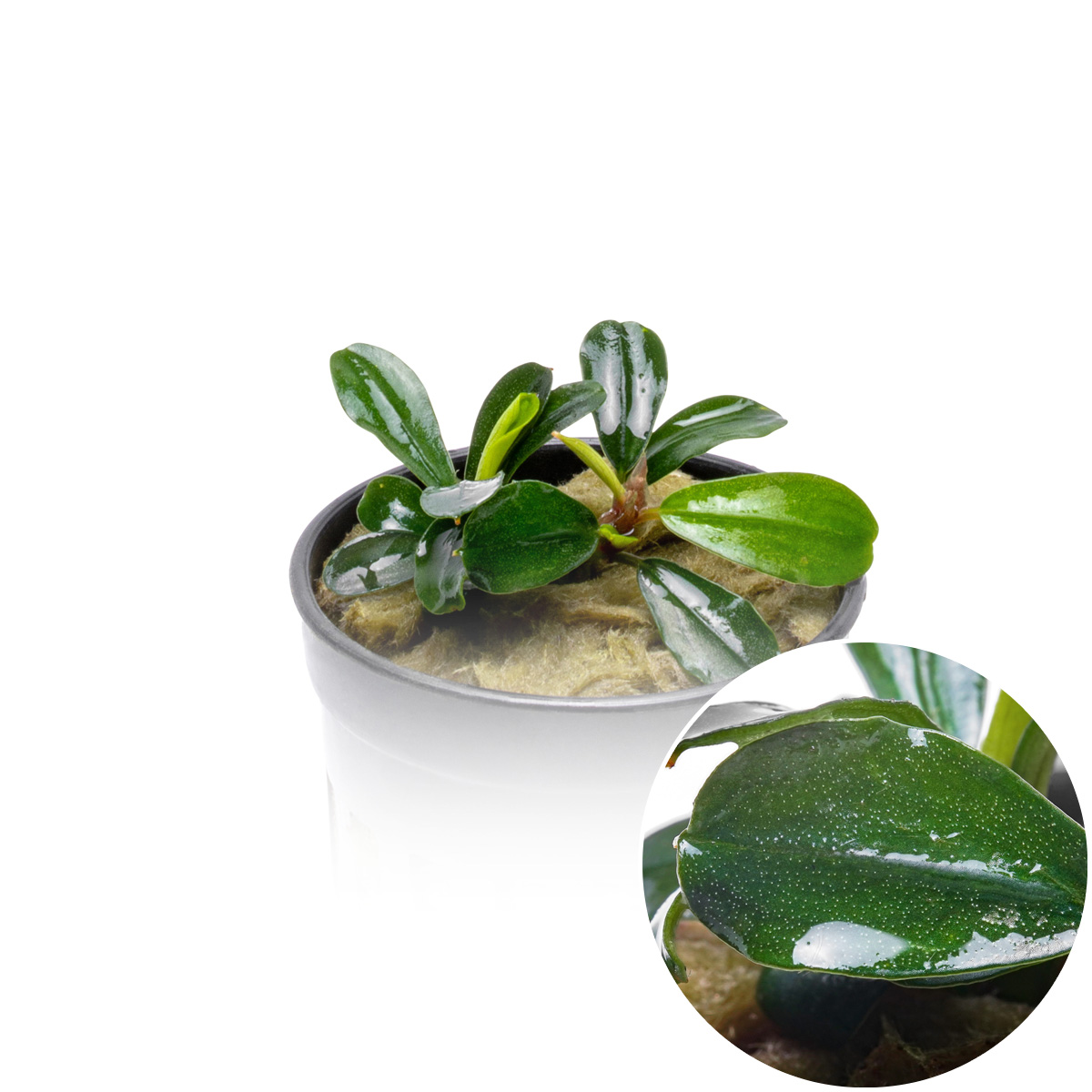
Bucephalandra Apple Leaf
A small species, features rounded, green leaves with a speckled appearance. It matures into darker tones and stands out under quality aquarium LED lighting. As an epiphytic plant, it thrives when attached to driftwood or stones. Ideal for low to medium lighting, good flow, and regular aquarium plant nutrition.
DIFFICULTY:
LIGHTING:
PLACEMENT:
TYPE:
RHIZOME
Bucephalandra Biblis Blue Sky
A charming member of the Bucephalandra family, is a compact species ideal for nano aquariums. Its small, curly leaves display varying shades of green and reddish-brown. Growing in dense clumps, this Bucephalandra adds beauty to planted tanks with steady growth.
DIFFICULTY:
LIGHTING:
PLACEMENT:
TYPE:
RHIZOME
Bucephalandra Boyan Narrow Mini
A rare find in the planted aquarium hobby, features small to medium-sized green leaves with subtle purple undertones. Ideal for the midground, it adapts to both low and high-tech setups. Prone to algae growth without consistent maintenance, it benefits from shading in well-lit areas. Best attached to driftwood or stones, it thrives with low to medium lighting, good flow, and quality plant nutrition. While CO2 injection isn't necessary, it enhances vibrant colors in this unique Bucephalandra species.
DIFFICULTY:
LIGHTING:
PLACEMENT:
TYPE:
RHIZOME
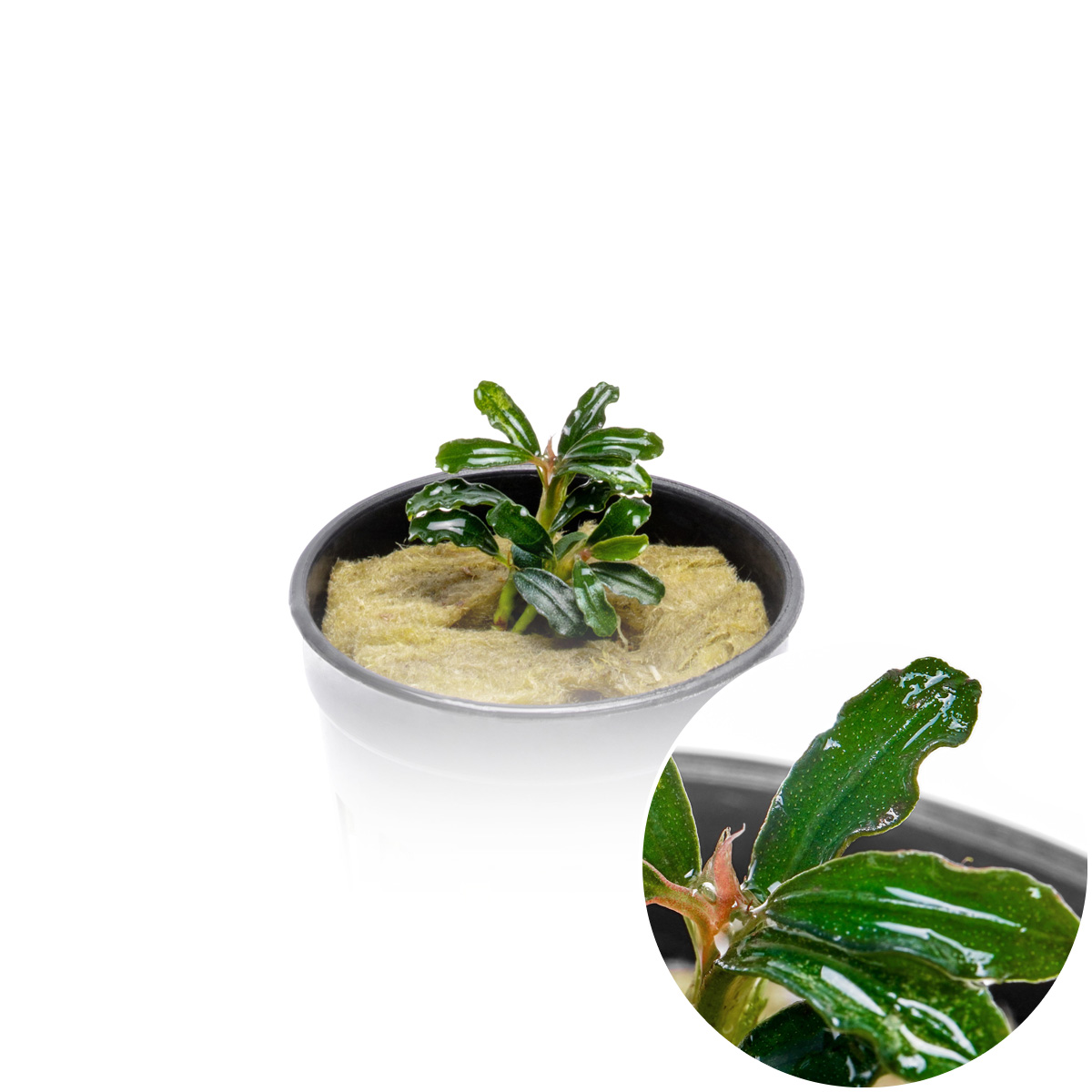
Bucephalandra Brownie Adinda
A stunning addition to any aquarium. With green leaves featuring waved central veins, its color may vary based on tank conditions. As an epiphytic plant, it grows from the rhizome, making it ideal for attachment to hardscape or driftwood. Achieve optimal results with low to medium lighting, a consistent dosing schedule, and proper tank maintenance.
DIFFICULTY:
LIGHTING:
PLACEMENT:
TYPE:
RHIZOME
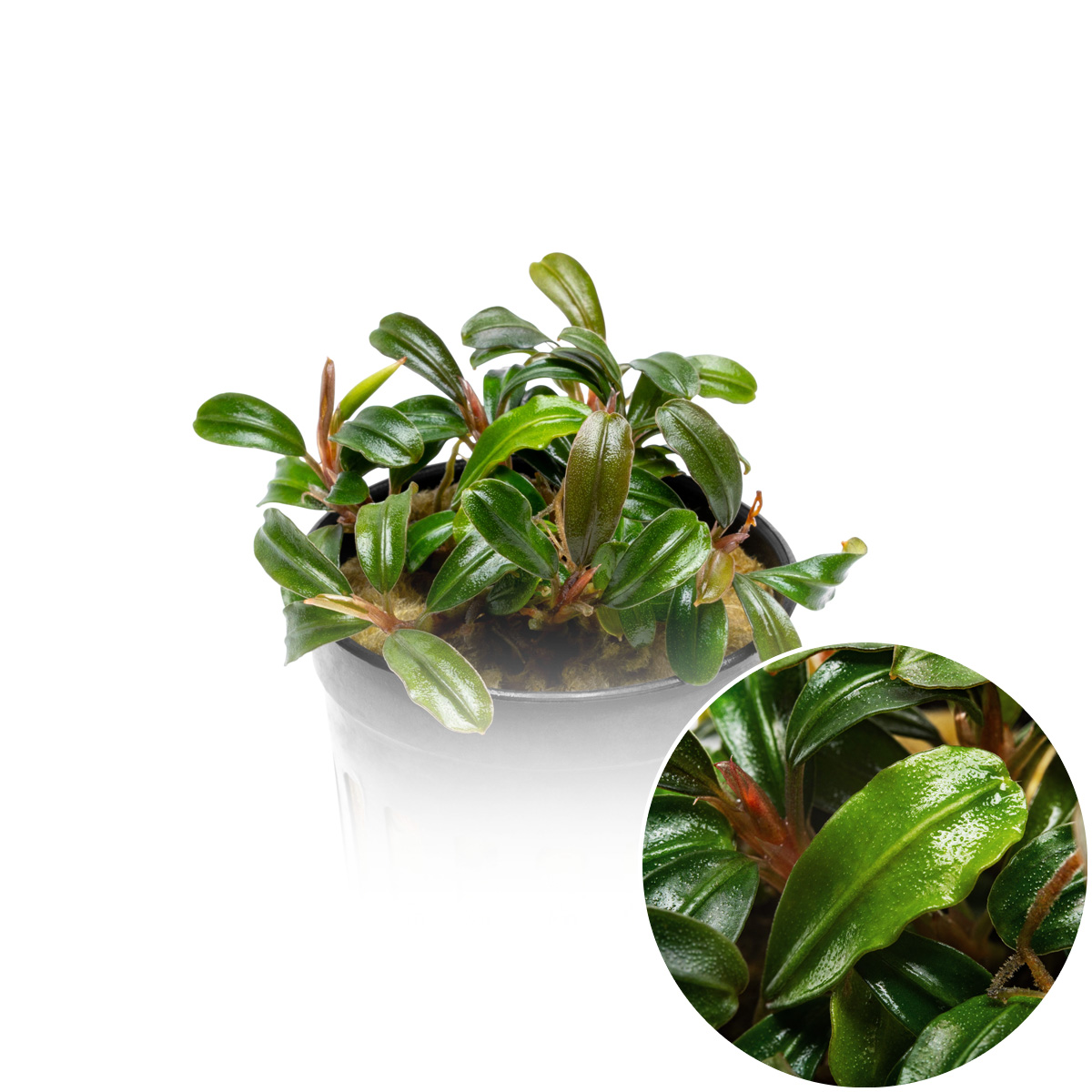
Bucephalandra Brownie Phoenix
A stunning plant with shiny brownish-green colors, adding beauty and texture to the mid-ground of your aquarium. Pair it with similar-sized Bucephalandra for a vibrant display.
DIFFICULTY:
LIGHTING:
PLACEMENT:
TYPE:
RHIZOME
Bucephalandra Brownie Phoenix Brown
Great for beginners. It has deep colors and small to medium-rounded leaves. Easy to grow submerged or immersed, it's slow-growing and can be propagated by cutting and replanting. Attach to driftwood or rocks with super glue or thread, and use low to medium lighting. Adding CO2 will enhance growth and color variations.
DIFFICULTY:
LIGHTING:
PLACEMENT:
TYPE:
RHIZOME
Bucephalandra Catherine
A popular aquatic plant with ruffled leaves and vibrant colors. Easy for beginners, it thrives in low-tech aquariums. With optimal conditions, it grows dense and bright red, making a stunning addition to any tank. Care is similar to Anubias and Java Ferns, and it doesn't need to be planted in substrate. Great for both looks and simplicity in aquariums.
DIFFICULTY:
LIGHTING:
PLACEMENT:
TYPE:
RHIZOME
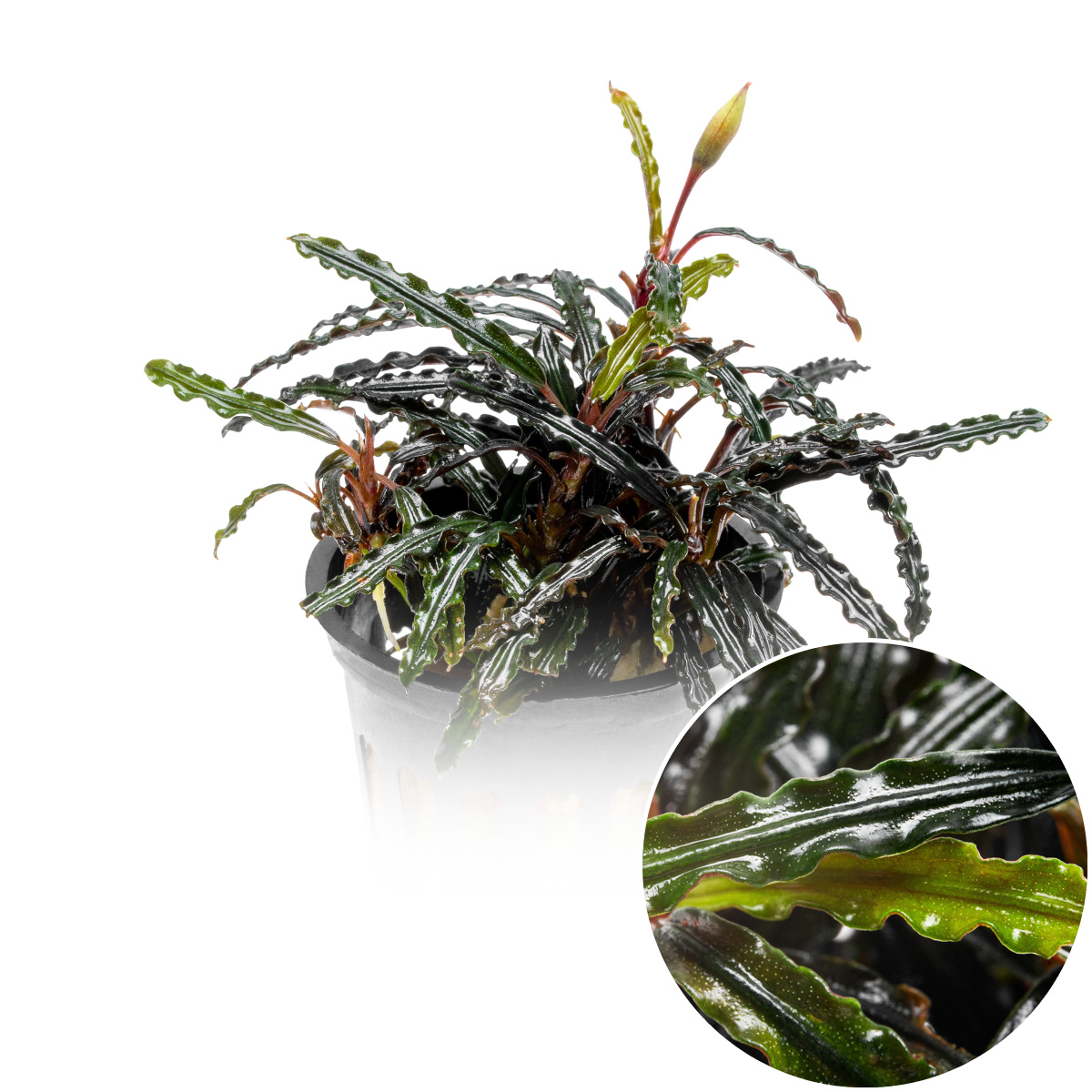
Bucephalandra Catherine Red
A popular aquatic plant with ruffled leaves and vibrant colors. Easy for beginners, it thrives in low-tech aquariums. With optimal conditions, it grows dense and bright red, making a stunning addition to any tank. Care is similar to Anubias and Java Ferns, and it doesn't need to be planted in substrate. Great for both looks and simplicity in aquariums.
DIFFICULTY:
LIGHTING:
PLACEMENT:
TYPE:
RHIZOME
Bucephalandra Dwarf Green Wavy
A mutation from the classic Buce Green Wavy, features small rounded leaves and rich coloration. Easy for beginners, it thrives in various aquarium conditions, even with low lighting. While slow-growing, it can benefit from CO2 and clean water. A great addition for planted tanks with its signature ruffled leaves.
DIFFICULTY:
LIGHTING:
PLACEMENT:
TYPE:
RHIZOME
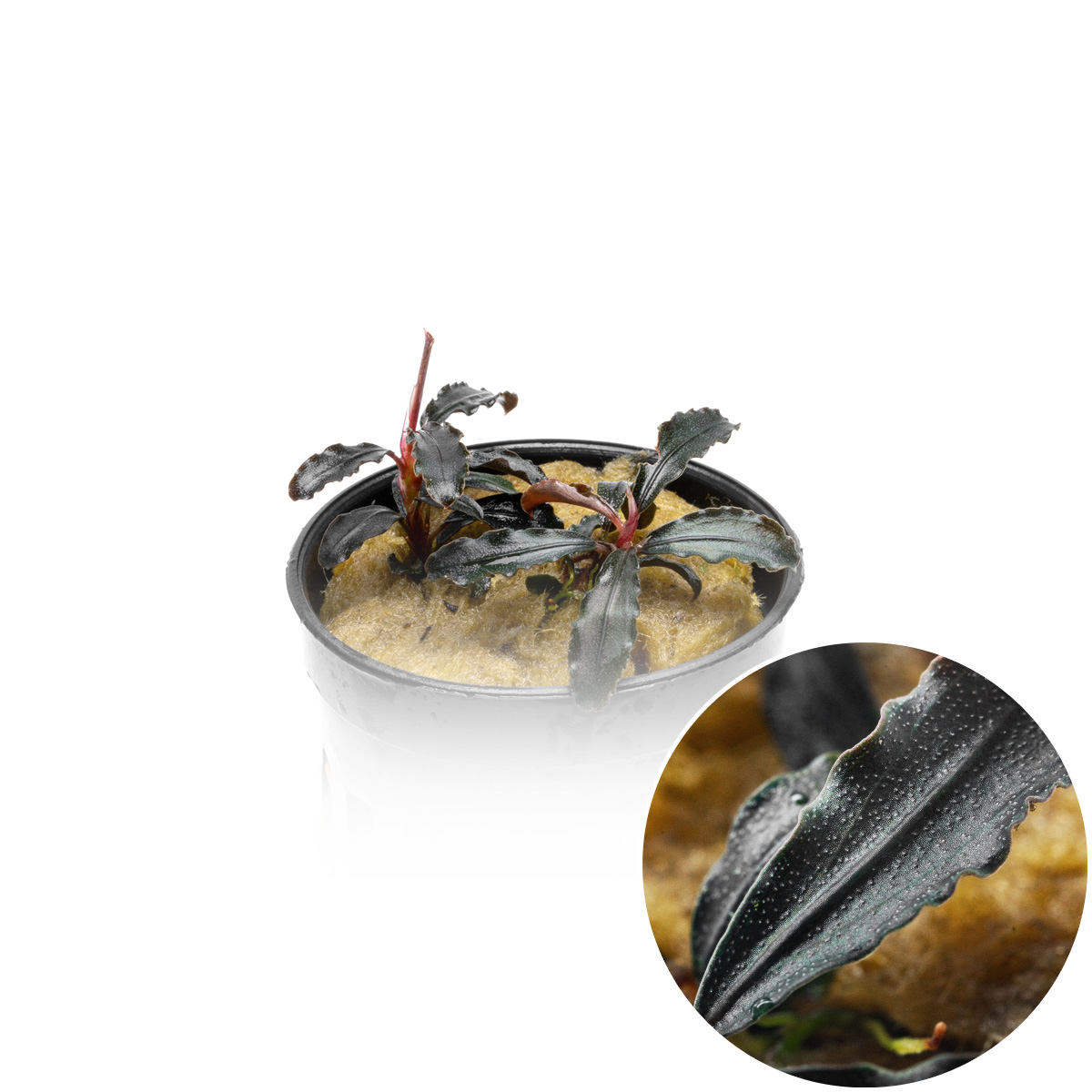
Bucephalandra Godzilla (Kedagang Red)
Known for its striking ruffled leaves in bold reddish-brown tones, matures into deeper colors and blooms with optimal care. As an epiphytic plant, it thrives attached to driftwood or stones. Suitable for beginners, it prefers low to medium lighting and benefits from CO2 injection and nutrient-rich conditions for vibrant hues and growth. Ensure the stem and rhizome are not covered or glued during planting to avoid damage.
DIFFICULTY:
LIGHTING:
PLACEMENT:
TYPE:
RHIZOME
Bucephalandra Green Broad Leaf
Features larger ruffled leaves with a bold green hue. Ideal for the midground, it adds a lovely contrast to planted aquariums.
DIFFICULTY:
LIGHTING:
PLACEMENT:
TYPE:
RHIZOME
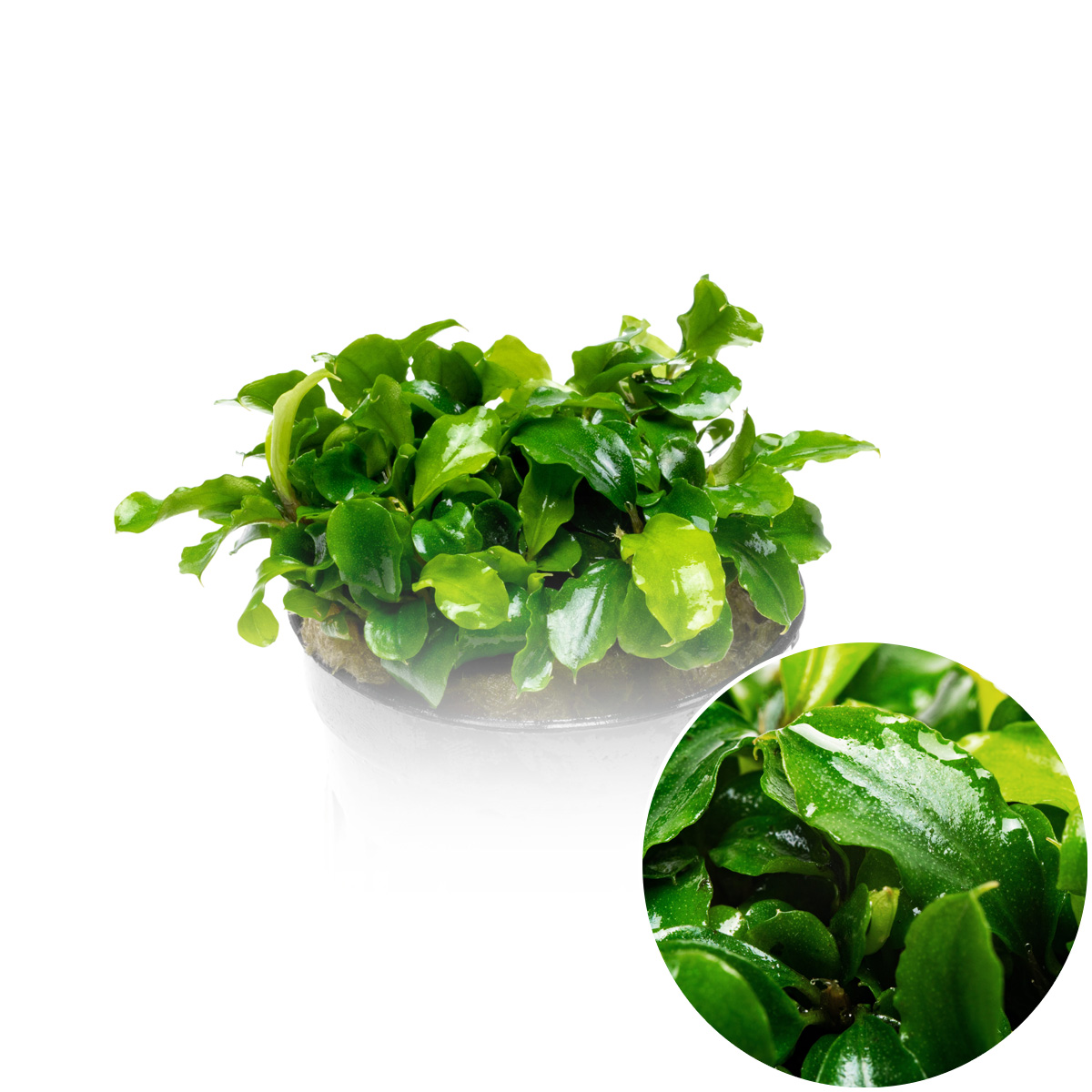
Bucephalandra Green Wavy
A classic in the planted aquarium hobby, boasts rich green, ruffled leaves. Farm-grown and easily obtainable, it thrives when attached to driftwood or stones, thriving in low to medium lighting with CO2 injection for vibrant hues.
DIFFICULTY:
LIGHTING:
PLACEMENT:
TYPE:
RHIZOME
Bucephalandra Kedagang Green Long
A variant with longer, ruffled leaves and bold green color, is beginner-friendly. It thrives submerged or immersed in terrarium-like setups with adequate humidity. Known for slow growth, it benefits from CO2 injection and medium lighting for quicker propagation. Attach it to driftwood or rocks using thread or super glue.
DIFFICULTY:
LIGHTING:
PLACEMENT:
TYPE:
RHIZOME
Bucephalandra Kedagang Round
Ideal for nano aquariums with its smaller, narrower leaves compared to the regular Kedagang Round. Easy to grow, it thrives in various setups like aquariums, terrariums, paludariums, and vivariums. Submerged or emerged, it doesn't demand CO2 or high light but benefits from them. Simple to place, attach to hardscape or decor using super glue or thread.
DIFFICULTY:
LIGHTING:
PLACEMENT:
TYPE:
RHIZOME
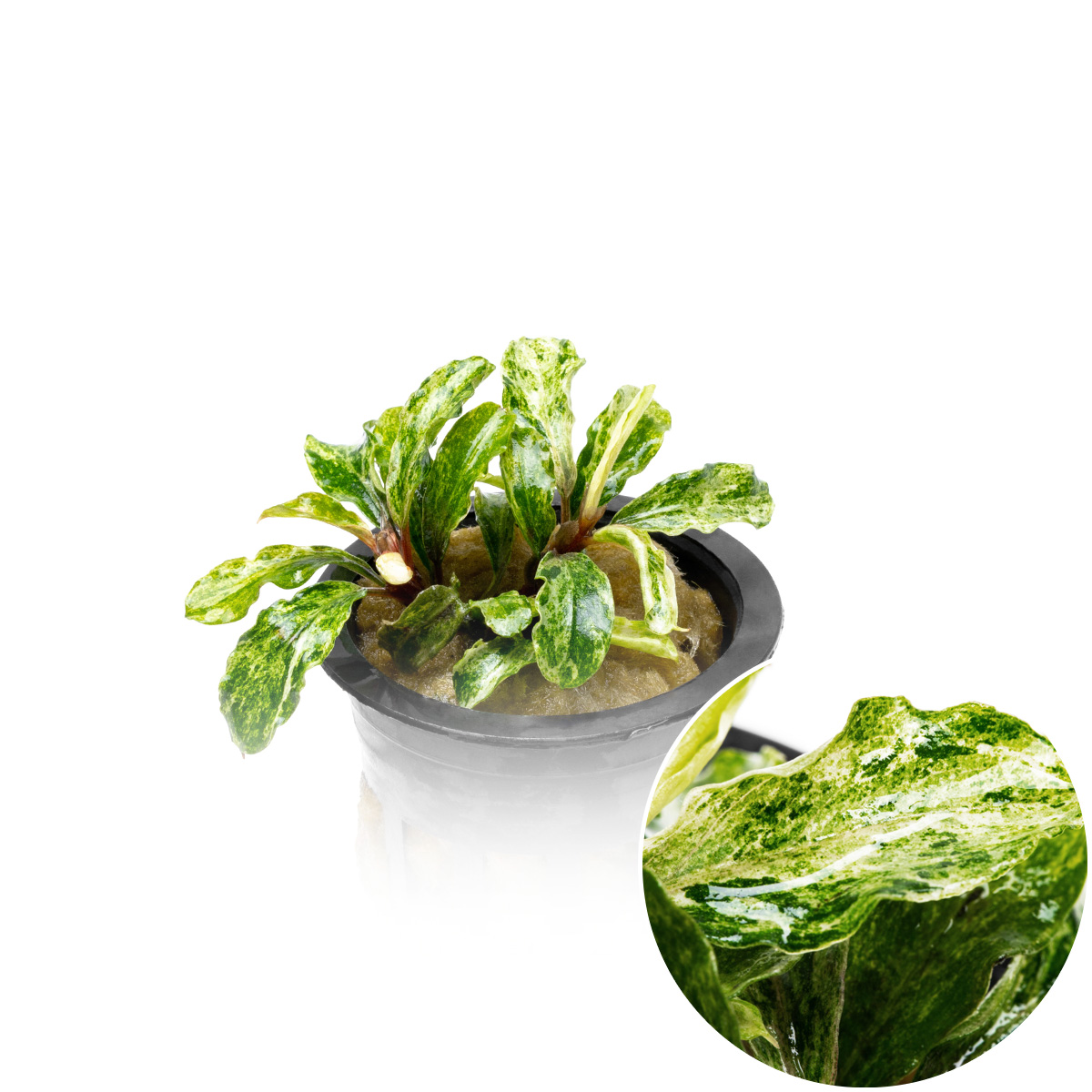
Bucephalandra Marble Variegated
A rare mutation with unique white marbling on its green, ruffled leaves. Ideal for beginners, this Bucephalandra variant is easy to care for, undemanding, and adapts well to various aquarium conditions. Its distinctive appearance makes it a standout choice for planted aquariums.
DIFFICULTY:
LIGHTING:
PLACEMENT:
TYPE:
RHIZOME
Bucephalandra Rainbow Marble
Features small, curly leaves with a unique marbling effect, creating a visually striking rainbow pattern. Highly prized for iridescent coloration, it can be grown submerged or emersed under full-spectrum LED lighting. Slow-growing, it can be propagated by cutting the rhizome and attaching it to driftwood or rocks using super glue gel or thread.
DIFFICULTY:
LIGHTING:
PLACEMENT:
TYPE:
RHIZOME

Bucephalandra Red Mini
A rare farm-grown Bucephalandra variant with small leaves that develop a reddish-purple tint over time when grown submerged. It grows very slowly and can be propagated by cutting the rhizome, attaching it to driftwood or rocks using super glue gel or thread.
DIFFICULTY:
LIGHTING:
PLACEMENT:
TYPE:
RHIZOME
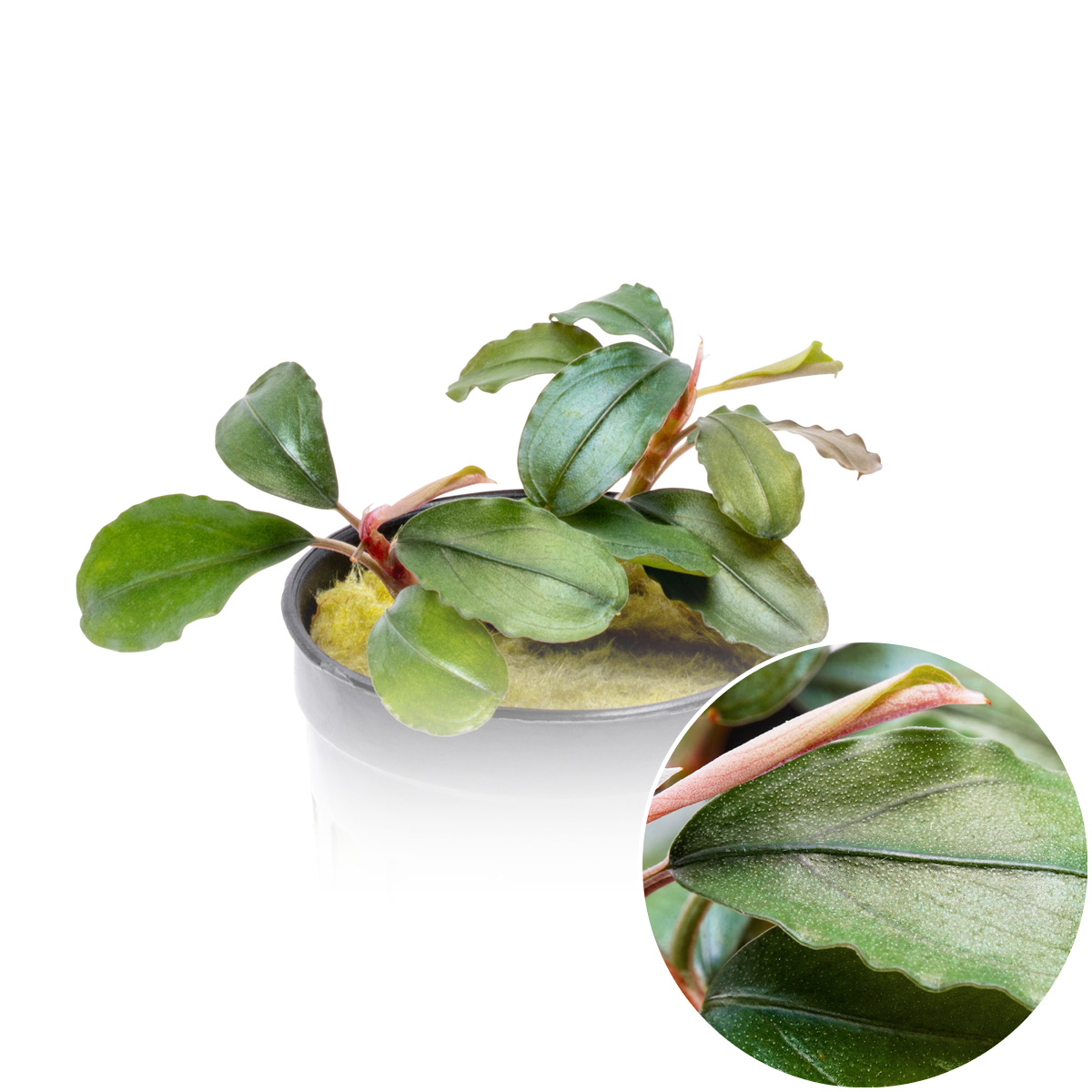
Bucephalandra Theia
A variant with long, slightly wavy leaves and bold coloration. It can be grown submerged in aquariums or emersed in terrariums. Hardy and adaptable, it resembles a larger leaf version of Bucephalandra Catherinae. Easy to care for, it doesn't require excessive light, making it suitable for both expert enthusiasts and beginners. Similar to Anubias, it doesn't need to be planted in aquarium soil to thrive.
DIFFICULTY:
LIGHTING:
PLACEMENT:
TYPE:
RHIZOME
Bucephalandra Titan
A small to medium-sized variant with ruffled leaves, featuring olive green, bronze, and reddish hues. With proper care and LED lighting, it displays vibrant colors. As an epiphytic plant, it sprouts new growth from its rhizome.
DIFFICULTY:
LIGHTING:
PLACEMENT:
TYPE:
RHIZOME
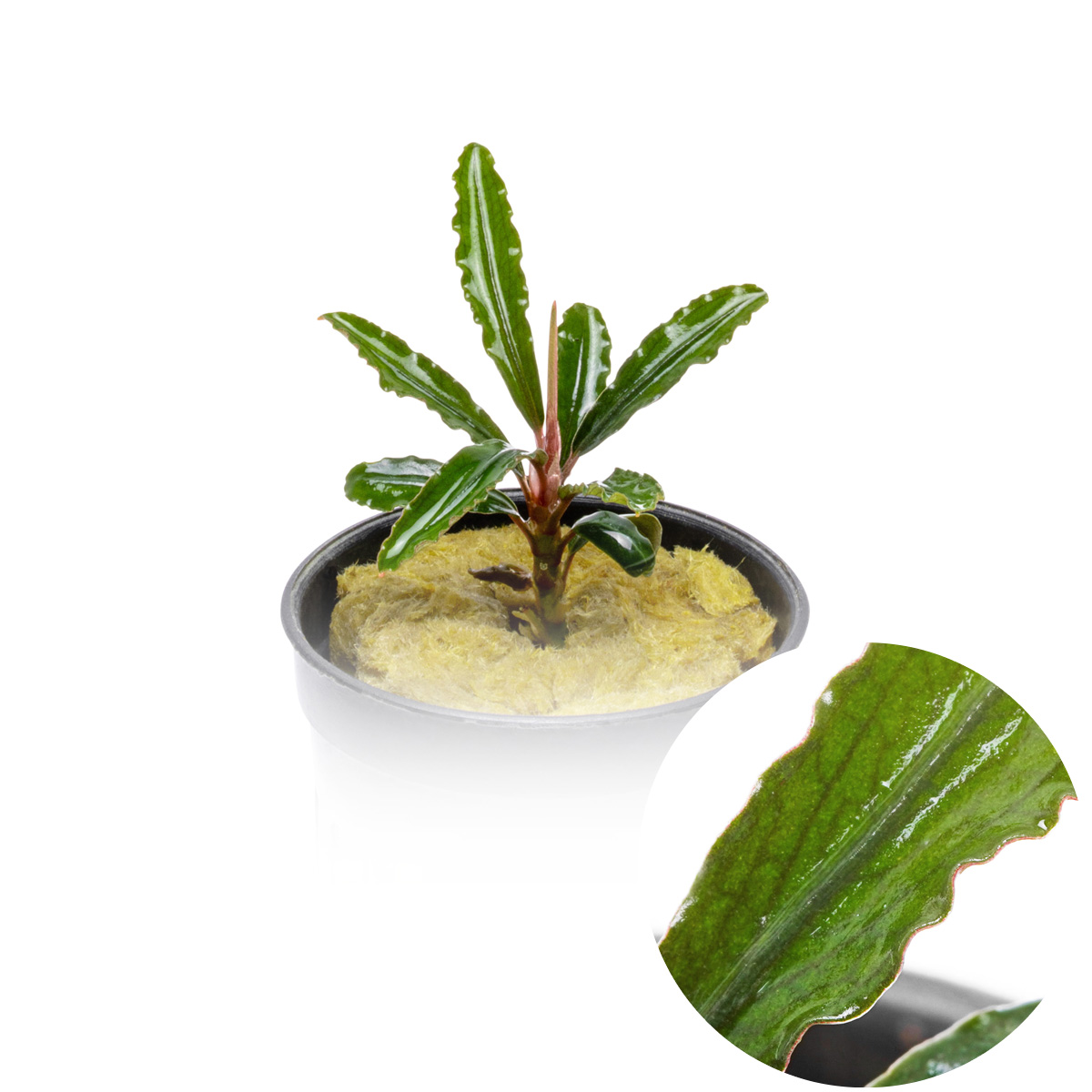
Bucephalandra Velvet
A small to medium-sized variant with varying color tones, suitable for aquarium tanks and emersed setups like terrariums. It adapts well to various conditions, but low to medium LED light and CO2 injection enhance its robust growth and vibrant hues.
DIFFICULTY:
LIGHTING:
PLACEMENT:
TYPE:
RHIZOME
Cabomba Aquatica
A popular and beginner-friendly stem plant, perfect for background or midground coverage. It forms dense clusters, growing into a thick bush of delicate green leaves. Hardy and not requiring CO2 injection, it thrives in a nutrient-rich environment with clean water. Moderate light is essential to prevent yellowing and die-off of lower stems. Easily propagated through cuttings, Cabomba can be grown submerged or emersed. Ideal for those new to aquarium plants.
DIFFICULTY:
LIGHTING:
PLACEMENT:
TYPE:
STEM
Cryptocoryne Affinis Red
Native to western Malaysia, resembles Cryptocoryne Wendtii and Cryptocoryne Beckettii but is less common. Highly sought after by enthusiasts, it features smooth green leaves with a reddish-brown border. Growth varies with lighting and CO2; strong conditions result in shorter, flatter growth. Hardy once adapted, it prefers stability and may reach 15 inches in optimal conditions. Avoid frequent disturbance and rapid parameter changes.
DIFFICULTY:
LIGHTING:
PLACEMENT:
TYPE:
ROSULATE
Cryptocoryne Axelrodii
A rarer Cryptocoryne with narrow, hardy, greenish-brown leaves, ideal for mid-ground plant coverage in planted tanks. Easy to care for, it's best left undisturbed to avoid potential Crypt melt. Suitable for beginners, it thrives in good aquarium substrate like Ultum Nature System Controsoil, feeding through the roots without requiring high light, CO2, or fertilizer. However, adding CO2 and quality lighting enhances its growth.
DIFFICULTY:
LIGHTING:
PLACEMENT:
TYPE:
ROSULATE
Cryptocoryne Balansae
Ideal for both beginner and experienced aquarium enthusiasts, creating a serene background with their dark or bright green reed-like leaves. These plants thrive in environments rich in nitrate, phosphate, iron, CO2, and calcium, with the latter being crucial to prevent twisted or deformed leaves. Moderate to high lighting, around 2-3 watts/gallon, is needed for the attractive puckering effect. While high lighting can result in a bronze tint, it may also induce flowering when grown emersed. Balansae plants prefer stable water conditions to avoid "crypt melt," a normal process when introduced to a new tank.
DIFFICULTY:
LIGHTING:
PLACEMENT:
TYPE:
ROSULATE
Cryptocoryne Becketii
Also known as the Water Trumpet is a striking crypt plant with reddish, ruffle-textured leaves, ideal for mid-ground accents. Beginner-friendly, it's sensitive to water parameter changes and may undergo "crypt melt" when introduced to a new tank. This normal process involves cutting away any rot and stabilizing water conditions. Moderate to low lighting suffices, and like many crypts, it requires calcium, CO2, phosphate, iron, and nitrate. Propagation occurs through runners, and planting stems one inch apart or in bunches ensures good coverage. This versatile plant can be rooted in the substrate or attached to rock or driftwood using cotton thread or fishing wire.
DIFFICULTY:
LIGHTING:
PLACEMENT:
TYPE:
ROSULATE
Cryptocoryne Blassii
Native to southern Thailand, Malaysia, and Borneo marshes, is a beginner-friendly choice. Sensitive to water changes and dislikes movement, it may undergo "crypt melt" in new tanks or unstable conditions. This involves cutting away rot and stabilizing water. Moderate to low lighting is suitable, and acclimation can lead to new growth. Strong lighting can induce melting.
DIFFICULTY:
LIGHTING:
PLACEMENT:
TYPE:
ROSULATE
Cryptocoryne Costata
Known as Cryptocoryne Albida Costata, is a beautiful, beginner-friendly plant with green to bronze-red tones. Ideal for low-tech aquariums or shaded areas, its narrow, upward-growing leaves set it apart. Once planted, it dislikes movement to avoid Crypt melt. Easy to maintain, it thrives in an established planted tank with optional CO2, quality soil, and lighting.
DIFFICULTY:
LIGHTING:
PLACEMENT:
TYPE:
ROSULATE
Cryptocoryne Ferruginea Sekadauensis
A rare species with limited information, thrives marginally along water bodies. Suitable for submerged or slightly emersed conditions with ample moisture, it displays varied shades of greens and browns. Recommended for experienced Cryptocoryne enthusiasts, it likely suits the midground in a well-established aquarium. Optimal conditions include a balanced environment, low to medium lighting, quality plant nutrients, and CO2 injection.
DIFFICULTY:
LIGHTING:
PLACEMENT:
TYPE:
ROSULATE
Cryptocoryne Florida Sunset
A water trumpet, is a small to medium-sized hybrid of Cryptocoryne Wendtii, displaying variable patterns and colors. Primarily green, it can exhibit cream, pink, and golden hues based on care and tank conditions. Suited for low-tech planted aquariums or shaded areas, its size and color are influenced by the environment. Avoid moving once planted to prevent Crypt melt. Generally easy to maintain, it thrives with CO2 injection, quality soil, and lighting in an established tank.
DIFFICULTY:
LIGHTING:
PLACEMENT:
TYPE:
ROSULATE
Cryptocoryne Hudoroi
A stunning midground plant with large, oblong foliage in varying shades of green, reddish-brown, and bronze. Planted from a rosette, its slightly ruffled leaves add texture and contrast to the aquarium. Careful placement is advised, as Crypt Hudoroi dislikes disturbance to avoid Crypt melt.
DIFFICULTY:
LIGHTING:
PLACEMENT:
TYPE:
ROSULATE
Cryptocoryne Hudoroi Green
An uncommon crypt, adds a dramatic mid-ground accent. Its wide, puckered leaves stand out against hardscape like driftwood and stones. Thriving in a nutrient-rich environment with nitrate, phosphate, iron, CO2, and calcium, it benefits from a calcium supplement. Originating from calcium-rich Borneo, it requires moderate to high lighting (2-3 watts/gallon) for the attractive puckering effect. Suitable for submersed or emersed growth, this plant is an eye-catching addition to aquariums.
DIFFICULTY:
LIGHTING:
PLACEMENT:
TYPE:
ROSULATE
Cryptocoryne Lucens
An easy-going aquarium plant that can be planted in semi-shaded areas in the aquarium. The plant features elegant, green foliage and makes a great midground choice along the base of the aquascape layout. Like most Cryptocoryne, Crypt Lucens will tolerate a wide range of parameters provided it is given time to establish a strong root system first. Once established, moving or uprooting the plant may cause melt and/or stress to the plant.
DIFFICULTY:
LIGHTING:
PLACEMENT:
TYPE:
ROSULATE
Cryptocoryne Lutea
Also known as Crypt Lutea, is a medium-sized aquarium plant with long stems and pointed, green leaves. It grows to 6-8 inches in height and is recommended for beginners as it is easy to care for and has minimal requirements.
DIFFICULTY:
LIGHTING:
PLACEMENT:
TYPE:
ROSULATE
Cryptocoryne Mioya
A less common type of crypt that can be used as a foreground or midground plant. It is a variant of Cryptocoryne wendtii from the Mi Oya River in Sri Lanka. Cryptocoryne Mioya has slender leaves with ruffled edges that can range in color from bright green to copper brown. It can grow to a height of approximately 7.87 to 13.78 inches, but it spreads more under lots of light.
DIFFICULTY:
LIGHTING:
PLACEMENT:
TYPE:
ROSULATE
Cryptocoryne Nurii
A rare and attractive variant with ruffled textured leaves ranging from olive green to bronze-red. It's slow-growing and can thrive in low to medium lighting without the need for CO2, although CO2 injection can enhance growth.
DIFFICULTY:
LIGHTING:
PLACEMENT:
TYPE:
ROSULATE
Cryptocoryne Parva
One of the smallest species of Crypts. It has green, grass like leaves which can grow up to 4” tall, making it a suitable foreground and midground plant. Compared to other Crypts, it has a very slow rate of growth and can require more light.
DIFFICULTY:
LIGHTING:
PLACEMENT:
TYPE:
ROSULATE
Cryptocoryne Petchii
A smaller variety of Cryptocoryne Beckettii from Sri Lanka, boasts rich olive-brown tones and slightly fluted leaves with deep purple undersides. Its final size and color depend on the tank environment. Ideal for low-tech planted aquariums or shaded areas, this Cryptocoryne dislikes being moved after planting. Once established, it grows steadily and thrives with CO2 injection, quality soil, and lighting. A visually appealing addition to aquariums, Crypt Petchii enhances planted tank aesthetics.
DIFFICULTY:
LIGHTING:
PLACEMENT:
TYPE:
ROSULATE
Cryptocoryne Pink Flamingo
A pink Crypt, features ruffled leaves and intense pink coloration, adding a unique touch to aquariums. New leaves stay hot pink, gradually transforming into a vibrant pink. Easy to maintain once established, it thrives in a planted tank with CO2 injection and high lighting, enhancing aquatic plant aesthetics.
DIFFICULTY:
LIGHTING:
PLACEMENT:
TYPE:
ROSULATE
Cryptocoryne Pontederiifolia
An easy-going aquarium plant that can be planted in semi-shaded areas in the aquarium. Like most Cryptocoryne, Crypt Pontederiifolia will tolerate a wide range of parameters provided it is given time to establish a strong root system first. Once established, moving or uprooting the plant may cause melt and/or stress to the plant.
DIFFICULTY:
LIGHTING:
PLACEMENT:
TYPE:
ROSULATE
Cryptocoryne Retrospiralis
An easy-to-grow plant with a unique corkscrew shape, suitable for mid- or background aquariums. Its long, reed-like leaves range from dark green to bronze, showing more vibrancy in high light. Adaptable to both submerged and emersed conditions, it may produce flowers above water. Plant it in the substrate or attach to hardscape, but be cautious of changes, as crypts may undergo "crypt melt." This normal process involves leaf rot, resolved with new growth once acclimated. Avoid strong lighting to prevent melting.
DIFFICULTY:
LIGHTING:
PLACEMENT:
TYPE:
ROSULATE
Cryptocoryne Sri Lanka
Originating from its namesake, is less common and thrives in high calcium environments with CO2, phosphate, iron, and nitrate. Suitable for submersed or emersed growth, it may flower above water. Plant in substrate or attach to hardscape using thread or fishing wire.
DIFFICULTY:
LIGHTING:
PLACEMENT:
TYPE:
ROSULATE
Cryptocoryne Tropica
A variant of Crypt Wendtii, features long, crinkled leaves in green/orange/bronze hues when submerged. It grows at a moderate rate, thriving in both submerged and emerged conditions. Care is easy, akin to other low-light aquatic plants like Anubias and Bucephalandra.
DIFFICULTY:
LIGHTING:
PLACEMENT:
TYPE:
ROSULATE
Cryptocoryne Tropica Hybrid
A variation of Cryptocoryne Tropica, features slightly broader leaves with lighter hues. Robust and hardy once established, this Crypt is suitable for smaller planted aquariums, serving as a midground aquatic plant choice. Be cautious during the adjustment period, avoiding disturbance to promote optimal growth.
DIFFICULTY:
LIGHTING:
PLACEMENT:
TYPE:
ROSULATE
Cryptocoryne Undulata
A stunning variant in the Cryptocoryne family, showcases a diverse color palette influenced by its environment. As a forgiving plant, it thrives in various aquarium setups, resembling the care requirements of Anubias and Bucephalandra. While adaptable to low-tech conditions, optimal growth with a compact pattern is achieved with quality lighting and CO2 injection. Given the chance, Cryptocoryne Undulata can grow large, so careful placement is crucial, considering its preference to remain undisturbed once planted.
DIFFICULTY:
LIGHTING:
PLACEMENT:
TYPE:
ROSULATE
Cryptocoryne Usteriana Green
A rare and sizable Crypt variant, is not commonly available in the aquarium trade. Its leaves exhibit an intriguing wrinkled texture with a reddish-purple underside. As with other Crypts, this plant is easy to grow and can thrive across a broad range of water parameters.
DIFFICULTY:
LIGHTING:
PLACEMENT:
TYPE:
ROSULATE
Cryptocoryne Usteriana Red
A rare and sizable Crypt variant, is not commonly available in the aquarium trade. Its leaves showcase an intriguing wrinkled texture with a reddish-purple underside. Similar to other Crypts, this plant is easy to grow and can adapt to a wide range of water parameters.
DIFFICULTY:
LIGHTING:
PLACEMENT:
TYPE:
ROSULATE
Cryptocoryne Walkeri
A tall Cryptocoryne species that varies in shades of green, brown, and bronze. It propagates through runners that can be cut and replanted into the substrate.
DIFFICULTY:
LIGHTING:
PLACEMENT:
TYPE:
ROSULATE
Cryptocoryne Wendtii Brown
A hardy plant that can grow in low lighting and in both soft and hard water conditions. It can grow submerged or emersed, and propagates by cutting off new plantlets from the mother rhizome.
DIFFICULTY:
LIGHTING:
PLACEMENT:
TYPE:
ROSULATE
Cryptocoryne Wendtii Brown Indo
A slight variation of the Cryptocoryne Wendtii Brown plant. Cryptocoryne Wendtii Brown is a popular plant for beginners. It can grow submerged or emersed, and propagates by cutting off new plantlets from the mother rhizome. Cryptocoryne plants prefer not to be moved once planted.
DIFFICULTY:
LIGHTING:
PLACEMENT:
TYPE:
ROSULATE
Cryptocoryne Wendtii Gecko
A captivating variation of the common Wendtii Green Cryptocoryne. With lush, slender leaves in a rich emerald hue, this plant adds visual allure to your aquascape. Subtle veins on each leaf enhance its intricacy, creating a striking contrast against the aquarium backdrop. Ideal for aquascapers aiming to craft visually stunning and harmonious underwater landscapes.
DIFFICULTY:
LIGHTING:
PLACEMENT:
TYPE:
ROSULATE
Cryptocoryne Wendtii Green
A common and beginner-friendly Cryptocoryne. With moderate growth, its leaves lie on the substrate when grown in an open space. Suitable for both submerged and emersed growth, it can be easily propagated by cutting off new plantlets from the mother rhizome.
DIFFICULTY:
LIGHTING:
PLACEMENT:
TYPE:
ROSULATE
Cryptocoryne Wendtii Pink
Ideal for the midground in planted aquariums. With green and pink hues, it contrasts well with other plants. Forgiving and adaptable, it thrives in nutrient-rich soil, growing steadily with low to medium lighting. For enhanced growth and color, consider CO2 injection and fertilizers.
DIFFICULTY:
LIGHTING:
PLACEMENT:
TYPE:
ROSULATE
Cryptocoryne Willisi
A less common variety of Cryptocoryne that has bright green, grass-like leaves. It can be grown both submerged and emersed.
DIFFICULTY:
LIGHTING:
PLACEMENT:
TYPE:
ROSULATE
Echinodorus Aflame
An aquatic plant that is popular among aquarium enthusiasts. It is a rare variant that is highly sought after. The plant's leaves can vary in color from green to purple to deep red, depending on the tank conditions.
DIFFICULTY:
LIGHTING:
PLACEMENT:
TYPE:
ROSULATE
Echinodorus Amazonicus
A larger Amazon Sword, is excellent for the aquarium background. With sturdy, bright green leaves, it reaches heights of over 2 feet in optimal conditions. This hardy, easy-to-care-for plant is ideal for various aquarium styles, requiring nutrient-rich substrate as it is a heavy root feeder.
DIFFICULTY:
LIGHTING:
PLACEMENT:
TYPE:
ROSULATE
Echinodorus Argentinensis
An aquatic plant from South America. Ideal for larger aquariums or as single displays, it adapts well to various conditions, suitable for beginners. With a vibrant green color and sturdy leaves, it thrives in hearty substrates. Easy to propagate by separation and replanting.
DIFFICULTY:
LIGHTING:
PLACEMENT:
TYPE:
ROSULATE
Echinodorus Ascherianus
An older Amazon sword variety, features large, varied green leaves. Ideal for larger aquariums, this hardy plant is suitable for beginners and adapts to various parameters. As with other Echinodorus species, it requires a nutrient-rich substrate for strong root systems.
DIFFICULTY:
LIGHTING:
PLACEMENT:
TYPE:
ROSULATE
Echinodorus Barthii
A decorative plant suitable for single displays or Wabi Kusa. With potential for substantial growth, it thrives in larger aquariums. Its coloration ranges from deep reds in new growth to rich greens in mature leaves. While tolerant of lower lighting, higher intensity enhances vibrancy. Hardy and adaptable, Echinodorus Barthii is suitable for beginners but requires a nutrient-rich substrate for strong root systems.
DIFFICULTY:
LIGHTING:
PLACEMENT:
TYPE:
ROSULATE
Echinodorus Big Bear
A rare Amazon Sword with green leaves and distinctive red markings. Plant directly into substrate, supplement with root tabs for inert substrates. Suitable for both emersed and submerged growth, it thrives in larger tanks. Easy to care for, making it an undemanding choice for aquariums.
DIFFICULTY:
LIGHTING:
PLACEMENT:
TYPE:
ROSULATE
Echinodorus Bima
A hardy plant ideal for beginners, adapting well to various aquarium parameters. Note that aquatic swords are heavy root feeders, so a robust substrate is essential for strong root development and healthy growth.
DIFFICULTY:
LIGHTING:
PLACEMENT:
TYPE:
ROSULATE
Echinodorus Bleheri Amazon Sword
Aso known as the Amazon Sword plant, is a popular aquarium plant. It can grow up to 20 inches tall in the right conditions and can grow partially or fully submerged.
DIFFICULTY:
LIGHTING:
PLACEMENT:
TYPE:
ROSULATE
Echinodorus Chameleon
A vibrant and stunning variety that displays intense colors in a planted aquarium, especially under high lighting. With hues of reds and greens, it provides excellent contrast in the background of aquariums. While it can grow large, it is suitable for standard to larger-sized tanks. This Echinodorus species is easy to care for, hardy, and requires a nutrient-rich substrate. Pruning is recommended to prevent shading of smaller plants. Tolerant of varying water parameters and lighting conditions, it adds vibrancy to aquatic setups.
DIFFICULTY:
LIGHTING:
PLACEMENT:
TYPE:
ROSULATE
Echinodorus Chocolate Marble
A lesser-known variety with large light green leaves adorned with brownish speckles, adding texture to your aquarium. Its care is straightforward, making it suitable for beginners. Similar to Anubias and Cryptocoryne, it requires nutrient-rich substrate, making it an excellent choice for those new to live aquatic plants. Known for their hardiness, Echinodorus plants are tolerant of varying conditions. Regular pruning ensures smaller plants receive adequate light.
DIFFICULTY:
LIGHTING:
PLACEMENT:
TYPE:
ROSULATE
Echinodorus Cordifolius
A broad-leaved variation suitable for larger planted aquariums. Its adaptable and hardy nature makes it ideal for beginners. This plant, with varying green tones, can thrive when grown submerged or emersed. Ensure a nutrient-rich substrate for a healthy root system.
DIFFICULTY:
LIGHTING:
PLACEMENT:
TYPE:
ROSULATE
Echinodorus Cordifolius Hybrid
A large and textured Amazon Sword plant, suitable for background planting or as a single display in planted aquariums. Loved by beginners and experienced hobbyists, it thrives with minimal care and benefits from a nutrient-rich substrate for a healthy root system.
DIFFICULTY:
LIGHTING:
PLACEMENT:
TYPE:
ROSULATE
Echinodorus Devil Eye
A smaller to medium-sized Amazon Sword, perfect for medium planted aquariums. Its distinctive features include bright red veins on new leaves, turning more subdued with age. This unique Echinodorus is easy to grow, suitable for beginners, and adds interesting textures to aquariums. It thrives in both submerged and emerged forms, making it versatile for various setups, including Wabi Kusa. Propagation is simple through separation and replanting. For optimal growth, provide a nutrient-rich substrate, as Echinodorus plants are heavy root feeders.
DIFFICULTY:
LIGHTING:
PLACEMENT:
TYPE:
ROSULATE
Echinodorus Fancy Twist
A type of Amazon Sword plant with leaves that range from bright green to blood red. It is a hardy aquatic plant that requires minimal care and can adapt to a wide range of conditions. It can be grown both submerged and emersed, and new leaves can often grow above the water line.
DIFFICULTY:
LIGHTING:
PLACEMENT:
TYPE:
ROSULATE
Echinodorus Gabrielii
A unique Amazon Sword with low, compact growth, uncommon for the Echinodorus family. Its fleshy, rough-textured, rich green leaves make it suitable for aquariums with herbivorous livestock. Medium to higher lighting and a nutrient-rich substrate are recommended for maintaining its growth pattern. Echinodorus Gabrielii is adaptable to various aquarium conditions and doesn't require CO2 injection, although it can enhance growth rates and overall plant health.
DIFFICULTY:
LIGHTING:
PLACEMENT:
TYPE:
ROSULATE
Echinodorus Grandifolius
A rare Amazon Sword known for its large size and vibrant green color. Although a slow grower, it can reach over 20 inches when planted in nutrient-rich substrate. Ideal for larger, unheated tanks, it thrives when directly planted into the substrate. Root tabs are recommended for inert substrates. This versatile plant can be grown emersed or submerged, and new leaves may reach above the water line. Easy to care for, it's an excellent choice for spacious aquariums.
DIFFICULTY:
LIGHTING:
PLACEMENT:
TYPE:
ROSULATE
Echinodorus Green Chameleon
Starts as light green in its emersed form, transforming into a vibrant plant with wavy, colored leaves in the aquarium. Over time, it develops shades from olive green to wine red, making it a standout choice for Echinodorus enthusiasts.
DIFFICULTY:
LIGHTING:
PLACEMENT:
TYPE:
ROSULATE
Echinodorus Hadi Red Pearl
A rare Amazon Sword with green leaves adorned with red markings. Plant directly into the substrate, and if using inert substrate, supplement with root tabs. It can thrive both emersed and submerged, growing new leaves above the water line. Easy to care for and suitable for larger tanks.
DIFFICULTY:
LIGHTING:
PLACEMENT:
TYPE:
ROSULATE
Echinodorus Hadi Red Pearl Variegated
A rare Amazon Sword with green leaves featuring white and red markings. Plant directly into the substrate, and if using inert substrate, supplement with root tabs. Thrives both emersed and submerged, with new leaves growing above the water line. Easy to care for and suitable for larger tanks.
DIFFICULTY:
LIGHTING:
PLACEMENT:
TYPE:
ROSULATE
Echinodorus Harbich
A mutation of Echinodorus Cordifolius, boasts solid, round green foliage. This compact variant is ideal for beginners, thriving in quality aquarium substrate. Use root tabs with inert substrates, as Echinodorus are heavy root feeders. Easy, undemanding, and suitable for larger planted aquariums.
DIFFICULTY:
LIGHTING:
PLACEMENT:
TYPE:
ROSULATE
Echinodorus Helanthium Tenellus
A grass-like plant for aquarium carpets. Easy care, spreads via runners. Suitable for foreground, midground, or short background in nano tanks. Propagate by separating and replanting runners. High light and CO2 boost growth but not necessary. Plant by dividing mats, an inch apart. Regular trimming required when established.
DIFFICULTY:
LIGHTING:
PLACEMENT:
TYPE:
ROSULATE
Echinodorus Horemanii 'Red' Sword
Features red new leaves that transition to greener tones with red outlines as they mature. Ideal for aquariums, it should be planted in the substrate, supplemented with root tabs for inert substrates. Easy, undemanding, and suitable for larger tanks.
DIFFICULTY:
LIGHTING:
PLACEMENT:
TYPE:
ROSULATE
Echinodorus Horizontalis
A rare and beautiful plant, is easy to care for, providing attractive background coverage in an aquascape. It features firm, long, horizontally arranged cordate leaves with a light to medium green color. Emerging leaves have a brownish-pinkish hue, later turning green.
DIFFICULTY:
LIGHTING:
PLACEMENT:
TYPE:
ROSULATE
Echinodorus Horizontalis Mini
A smaller aquatic sword plant with rounded leaves in a soft green hue. Rarely available, it suits smaller planted aquariums, offering ease of care and thriving with a nutrient-rich substrate.
DIFFICULTY:
LIGHTING:
PLACEMENT:
TYPE:
ROSULATE
Echinodorus Horizontalis Variegated
A rare, beautiful, and easy-to-care-for plant that is a variation of the popular Amazon Sword. It is a member of the Alismataceae family of plants, native to the Western Hemisphere from the central United States to Argentina.
DIFFICULTY:
LIGHTING:
PLACEMENT:
TYPE:
ROSULATE
Echinodorus Impai
Features large, rounded leaves with a vein pattern. Thriving with low to moderate lighting and nutrient-rich substrate, it adapts well without requiring CO2 injection, though it can enhance growth and color.
DIFFICULTY:
LIGHTING:
PLACEMENT:
TYPE:
ROSULATE
Echinodorus Jaguar
A green aquarium plant with mottled leaves. It is a variety of sword that has slender leaves with faint spotting.
DIFFICULTY:
LIGHTING:
PLACEMENT:
TYPE:
ROSULATE
Echinodorus Leopard
Suits the background or as a solo display. Mostly green with scattered spots, more visible in young growth. Requires nutrient-rich aqua soil. Hardy and adaptable, ideal for beginners. Grows submerged or emersed, suitable for aquariums, terrariums, or Wabi Kusa setups.
DIFFICULTY:
LIGHTING:
PLACEMENT:
TYPE:
ROSULATE
Echinodorus Macrophyllus
Formerly Echinodorus Radicans, is a large Amazon Sword with bright green, slightly pointed leaves. Ideal for spacious aquariums, it thrives with nutrient-rich substrate, moderate lighting, and regular maintenance. While CO2 injection is optional, it enhances overall health and growth.
DIFFICULTY:
LIGHTING:
PLACEMENT:
TYPE:
ROSULATE
Echinodorus Magdalenensis
Also known as Helanthium Quadricostatus Var. Magdalenensis, is closely related to Echinodorus Quadricostatus. Recognizable by its light green sword-shaped leaves, it's hardy and suits mid-ground or foreground placement. Adaptable to various tank conditions, it may flower with optimal care, producing small white blooms above the water's surface. Watch for yellowing leaves, a sign of insufficient lighting or nutrition in the substrate.
DIFFICULTY:
LIGHTING:
PLACEMENT:
TYPE:
ROSULATE
Echinodorus Major/Martii
Also known as Ruffle Sword, a favorite in planted tanks, features striking ruffle-textured leaves in bright green, creating a captivating contrast with red plants. Ideal for beginners, these plants thrive in nutrient-rich substrates, tolerate various lighting conditions, and benefit from moderate to high lighting. While CO2 injection accelerates growth, it's not necessary. Regular pruning is essential to control their size, and they propagate through side shoots.
DIFFICULTY:
LIGHTING:
PLACEMENT:
TYPE:
ROSULATE
Echinodorus Marble Queen
A rare Amazon Sword variant, features green leaves with white markings. Plant directly into substrate, supplement with root tabs in inert substrates. Suitable for larger tanks, grows both emersed and submerged. Easy and undemanding.
DIFFICULTY:
LIGHTING:
PLACEMENT:
TYPE:
ROSULATE
Echinodorus Muricatus
A medium-sized, hardy, aquatic sword plant that is a good choice for beginners. It is a good background plant for community fish tanks.
DIFFICULTY:
LIGHTING:
PLACEMENT:
TYPE:
ROSULATE
Echinodorus Osiris Rubra
Also known as Melon Sword, boasts large rounded leaves with distinct veins, making it perfect for the background in planted tanks. Beginner-friendly, it adapts to various conditions. Thrives submerged or emersed, suitable for Wabi Kusa setups. As a heavy root feeder, it benefits from a nutrient-rich substrate and occasional root tabs. Easy propagation by separating and replanting plantlets.
DIFFICULTY:
LIGHTING:
PLACEMENT:
TYPE:
ROSULATE
Echinodorus Ozelot
Are vibrant plants for mid- or background placement, with colorful red and green varieties. They adapt to both emersed and submerged growth and may produce small white flowers when emersed. Thriving in various water conditions, they prefer nutrient-rich soil without needing CO2 injection. Moderate light supports regular leaf growth. Propagation through side shoots allows for easy replanting or control.
DIFFICULTY:
LIGHTING:
PLACEMENT:
TYPE:
ROSULATE
Echinodorus Ozelot 'Green'
Easy to care for, hardy, and thrives with nutrient-rich substrate. Tolerant of various water parameters and lighting conditions, but pruning is essential to prevent shading smaller plants.
DIFFICULTY:
LIGHTING:
PLACEMENT:
TYPE:
ROSULATE
Echinodorus Ozelot Narrow Mini
A hybrid Amazon Sword, displays compact growth with smaller foliage. Higher lighting, nutrient-rich soil, and optional CO2 injection enhance its health and growth.
DIFFICULTY:
LIGHTING:
PLACEMENT:
TYPE:
ROSULATE
Echinodorus Ozelot Red
A hybrid of E. Barthii and E. Schluteri, is a decorative aquatic plant with large reddish-brown leaves and dark spot markings. Easy to care for, it thrives when planted in quality aquarium substrate, suitable for both emersed and submerged growth. Ideal for beginners, it adapts well to various tank conditions.
DIFFICULTY:
LIGHTING:
PLACEMENT:
TYPE:
ROSULATE
Echinodorus Palaefolius
From Brazil features round leaves with a horizontal base. Submerged leaves are narrower and longer (20-40 cm) in a 20-40 cm wide rosette. In aquariums, it may grow out of water, but trimming long leaves can maintain submersed growth. In open aquariums, it can grow emerged, but low air humidity may lead to dry leaf margins.
DIFFICULTY:
LIGHTING:
PLACEMENT:
TYPE:
ROSULATE
Echinodorus Parviflorus
Also known as Rosette sword, these adaptable plants with vibrant, textured light green leaves are perfect for various aquariums. Compact and suitable for mid- or foreground use, they tolerate diverse lighting conditions, benefiting from moderate to high lighting. While CO2 injection isn't necessary, it accelerates growth. Propagate through side shoots for size control. Thriving submerged or emersed, they add a touch of vibrancy to your aquarium.
DIFFICULTY:
LIGHTING:
PLACEMENT:
TYPE:
ROSULATE
Echinodorus Paul Kloecker
A medium-sized Amazon Sword, displays varying colors and patterns on its oval leaves depending on the environment. It thrives in both submerged and emersed conditions, showcasing a unique red tone in aquariums with optimal conditions. Plant in nutrient-rich substrate for success, as Echinodorus species heavily rely on their roots. While CO2 injection isn't necessary, it enhances overall health.
DIFFICULTY:
LIGHTING:
PLACEMENT:
TYPE:
ROSULATE
Echinodorus Peruensis
Popular for their attractive and easy-to-care-for nature. With dark or bright green leaves featuring prominent veins, they're suitable for large tanks. Regular pruning is essential to prevent their large leaves from restricting light to other plants.
DIFFICULTY:
LIGHTING:
PLACEMENT:
TYPE:
ROSULATE
Echinodorus Python
A lesser-known Amazon Sword variant in the planted tank hobby, staying relatively small underwater, making it suitable for medium to large aquariums. New growth has a brownish-red tone, evolving into olive-green with maturity. Emersed form tends to be larger with stable green foliage. Requires nutrient-dense substrate and good lighting. CO2 injection isn't necessary but promotes quicker growth and improved health.
DIFFICULTY:
LIGHTING:
PLACEMENT:
TYPE:
ROSULATE
Echinodorus Red Devil
A manmade cultivar, displays smaller growth and bold red hues in optimal aquarium conditions. Emersed growth appears larger with coarse-textured, green leaves, while in aquariums, it's more compact, colorful, and slightly wavy.
DIFFICULTY:
LIGHTING:
PLACEMENT:
TYPE:
ROSULATE
Echinodorus Red Diamond
A hybrid sword plant that is a cross between Echinodorus Horemanii Red and Echinodorus Barthii. It is a relatively small plant with ruby-red sword-shaped leaves that can grow to be 15-25 cm long.
DIFFICULTY:
LIGHTING:
PLACEMENT:
TYPE:
ROSULATE
Echinodorus Red Phoenix
Features oval leaves in shades of green, orange, and red. Easy care, suitable for mid to background areas in larger tanks. Thrives in various conditions, preferring nutrient-rich soil. Adaptable to low to moderate lighting, grows submerged and emersed, offering distinct appearances.
DIFFICULTY:
LIGHTING:
PLACEMENT:
TYPE:
ROSULATE
Echinodorus Red Rubin
Stunning hybrid of Echinodorus Horemanii Red and Echinodorus Barthii. Ideal as a focal point in larger planted aquariums, it exhibits bold red hues with horizontal growth under strong lighting. Suitable for spacious tanks with nutrient-rich substrate, easy to care for.
DIFFICULTY:
LIGHTING:
PLACEMENT:
TYPE:
ROSULATE
Echinodorus Red Rubin 'Narrow'
A small, narrow-leaf variety of Echinodorus 'Rubin'. It is a freshwater aquarium plant that is native to South America and can grow to be 4–10 inches tall. It is also known as the Red Rubin Amazon Sword.
DIFFICULTY:
LIGHTING:
PLACEMENT:
TYPE:
ROSULATE
Echinodorus Reni
Compact red-toned plant, 5-10 inches tall. Easy to care for, ideal for planted tanks. Requires nutrient-rich substrate and LED lighting. CO2 injection optional but enhances growth. Adaptable to various water parameters.
DIFFICULTY:
LIGHTING:
PLACEMENT:
TYPE:
ROSULATE
Echinodorus Rose
A beginner-friendly mid- or background plant with wide, striated leaves in various colors. Easy to care for, it thrives without CO2 injection, needing only a nutrient-rich substrate. Tolerant of low to moderate lighting, higher light intensifies leaf colors. It grows both emersed, producing flowers, and submerged, propagating through runners. Trim runners to control spread.
DIFFICULTY:
LIGHTING:
PLACEMENT:
TYPE:
ROSULATE
Echinodorus Scaber
Can be distinguished from other species by its small, bent-back petals and 13–18 stamens. The leaves have five veins that converge to an oval apex.
DIFFICULTY:
LIGHTING:
PLACEMENT:
TYPE:
ROSULATE
Echinodorus Schlueteri
Also known as Echinodorus cordifolius 'Mini' or the Mini Swordplant, is a small, light green swordplant. It has oval to cordate leaves that are unicoloured light to medium green in color. The leaf blades are ovate to slightly heart-shaped.
DIFFICULTY:
LIGHTING:
PLACEMENT:
TYPE:
ROSULATE
Echinodorus Small Bear
Compact variety, suitable for larger tanks. Plant directly into quality substrate; use root tabs for inert substrates. Grows emersed or submerged, adaptable and undemanding. Ideal for easy-care planted setups.
DIFFICULTY:
LIGHTING:
PLACEMENT:
TYPE:
ROSULATE
Echinodorus Tiger Green
A vibrant Amazon Sword Plant with distinctive reddish brown tiger stripes on bright green leaves. Perfect for medium-planted aquariums, it's beginner-friendly, suitable for Wabi Kusa setups, and resembles Ozelot Green with Grandiflorus growth. Hardy and adaptable, it thrives in various conditions, needing nutrient-rich substrate. Easy to propagate by separation and replanting.
DIFFICULTY:
LIGHTING:
PLACEMENT:
TYPE:
ROSULATE
Echinodorus Tricolor
A swordplant cultivar with oblong leaf blades that can grow in three different colors. The name tricolor means "three-colored". The leaves are first intensely yellow-green with brownish spots, later turning darker green. The leaves can grow up to 15 cm in length under the right conditions.
DIFFICULTY:
LIGHTING:
PLACEMENT:
TYPE:
ROSULATE
Echinodorus Uruguayensis
Features varying green hues and leaf lengths. Suitable for larger aquariums, easy to keep, and fairly hardy. Requires nutrient-rich substrate as a heavy root feeder. Adaptable to various water parameters and lighting conditions.
DIFFICULTY:
LIGHTING:
PLACEMENT:
TYPE:
ROSULATE
Echinodorus Uruguayensis Tricolor
A hybrid from several different Echinodorus species and has proven to be very hardy in the aquarium. The cultivar name "Tricolor" means "three-colored" because of the different leaf colorations of this plant.
DIFFICULTY:
LIGHTING:
PLACEMENT:
TYPE:
ROSULATE
Echinodorus Uruguayensis Variegated
Aquatic plant with variegated pattern leaves. Plant directly into aquarium substrate, supplement with root tabs for inert substrates. Easy, undemanding, suitable for larger planted aquariums.
DIFFICULTY:
LIGHTING:
PLACEMENT:
TYPE:
ROSULATE
Echinodorus Xinguensis
Rare in the hobby, it adds subtle color and movement to your aquarium's foreground. Bright green, oblong leaves create depth. Tolerates various lighting conditions, with moderate to high lighting preferred. CO2 injection isn't necessary but can boost growth. Watch for iron deficiency, and supplement if needed. Propagates through runners; trim and replant. Prune regularly to control spread.
DIFFICULTY:
LIGHTING:
PLACEMENT:
TYPE:
ROSULATE
Echinodorus Yellow Sun
A large hybrid Amazon Sword Plant, suitable for larger aquariums. New leaves are lime green, while older ones showcase vibrant yellow hues with brown specks and light red veins. It has rounder and broader leaves compared to common Amazon Swords. Easy to grow submerged or emerged, making it ideal for beginners and Wabi Kusa setups. Like other sword species, it requires nutrient-rich substrate and is tolerant of varied tank conditions. Propagation is simple—separate and replant.
DIFFICULTY:
LIGHTING:
PLACEMENT:
TYPE:
ROSULATE
Echinodorus Yeni
A rare aquatic sword with short, round leaves adorned with beautiful red veins. Easy to grow, it's ideal for beginners and stays compact compared to larger sword species. Resembling Echinodorus Reni, it shares similarities with a hybrid of Echinodorus Ozelot and Echinodorus Bear.
DIFFICULTY:
LIGHTING:
PLACEMENT:
TYPE:
ROSULATE
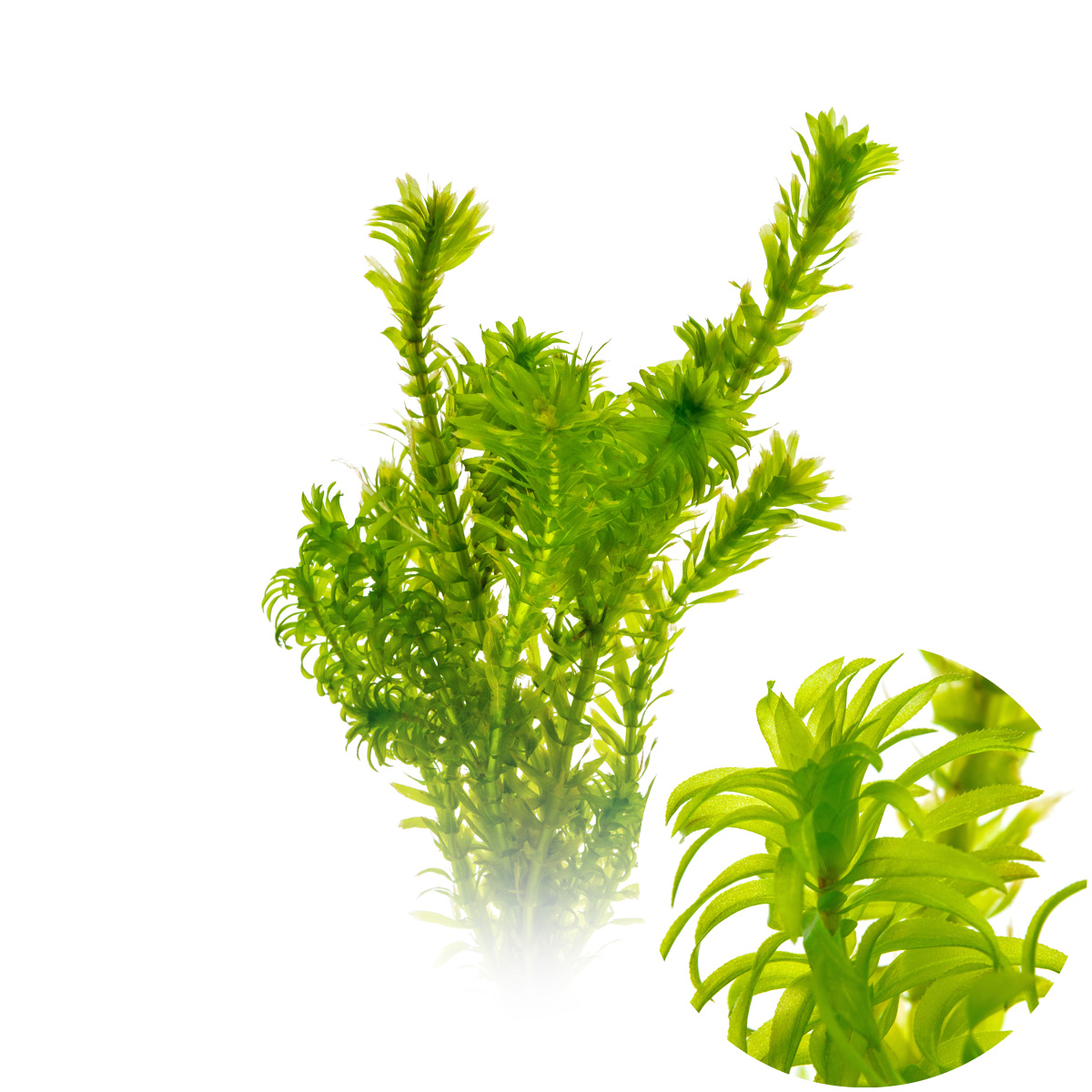
Egeria Densa
An ideal choice for beginner aquarium enthusiasts. Low-maintenance and adaptable, it resembles common waterweed but with more leafy stems. It can float or be anchored in the substrate, tolerating various water temperatures. Highly recommended for first-time plant keepers due to its resilience.
DIFFICULTY:
LIGHTING:
PLACEMENT:
TYPE:
STEM
Eleocharis Parvulus 'Dwarf Hair Grass Mini'
A popular and easy-to-care-for foreground plant, forming a grass-like lawn under optimal conditions. With thin, bright green blades and horizontal growth via runners, it adapts well to various setups. While high lighting and CO2 aren't mandatory, they boost growth rate and density. Versatile, it thrives submerged or emersed, requiring frequent pruning to maintain a well-trimmed foreground.
DIFFICULTY:
LIGHTING:
PLACEMENT:
TYPE:
CARPETING
Eleocharis Parvulus 'Hair Grass'
Also known as Dwarf Hairgrass, is a hardy, fast-growing plant that is a popular choice for freshwater aquariums. It is native to North America and can be found in other parts of the world, including Europe, Asia, and South America. It is a low-growing, light green plant with hair-thin leaves that can form a dense lawn. It is shorter than most other hairgrass species and requires moderate to high lighting.
DIFFICULTY:
LIGHTING:
PLACEMENT:
TYPE:
CARPETING
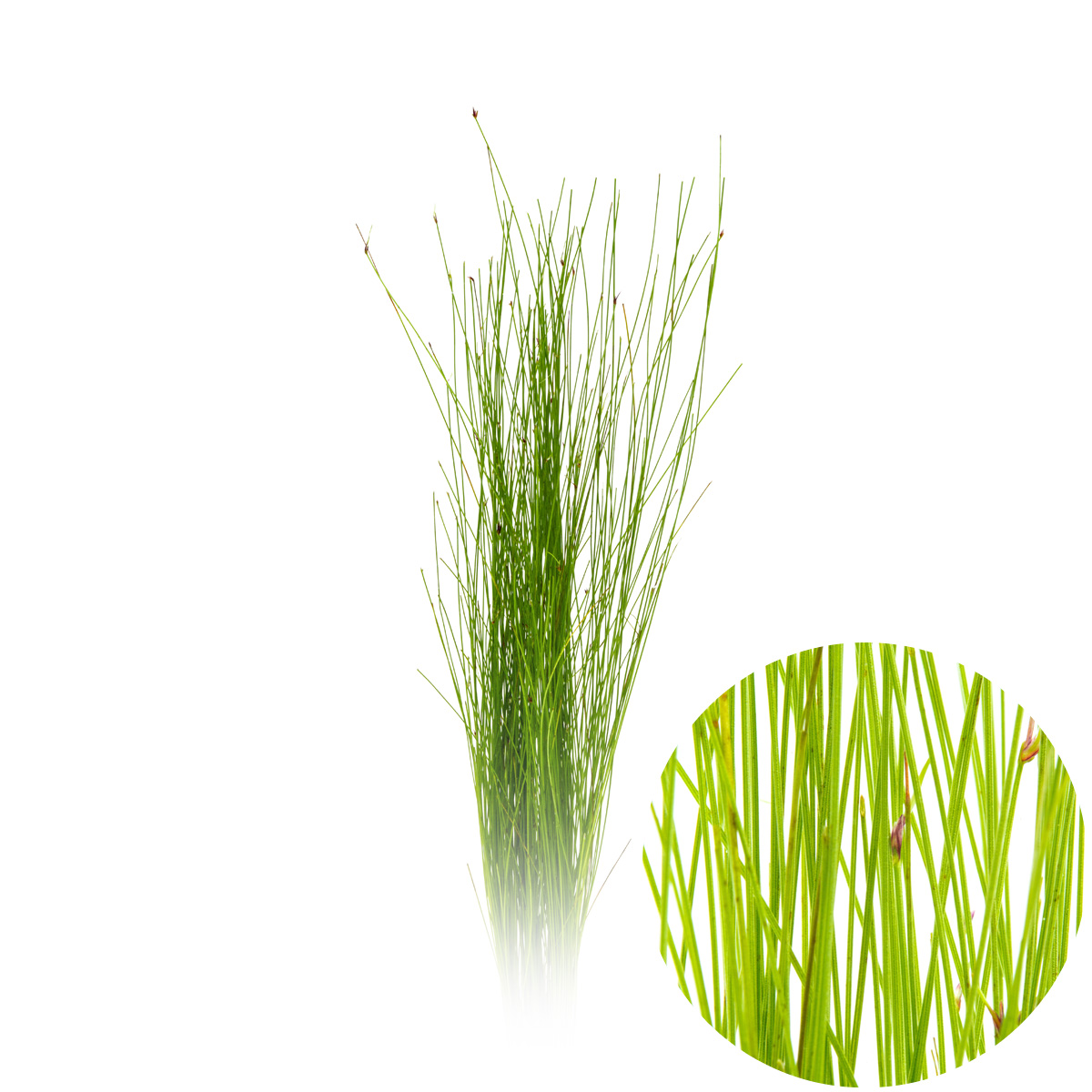
Eleocharis Vivipara 'Umbrella Hair Grass'
A taller version of Eleocharis Parvula, offering beautiful background coverage in aquariums. Ideal for river or nature-style setups, it provides a natural, semi-chaotic appearance. While a CO2 system isn't necessary, it encourages faster growth. Once established, it spreads prolifically, needing regular trimming. A preferred choice for background plants in diverse aquascapes.
DIFFICULTY:
LIGHTING:
PLACEMENT:
TYPE:
CARPETING
Elodea Najas
Also known as Egeria densa, is an aquatic plant that is often used in aquariums. It is a good plant for beginners and can help create balance in the aquarium. It can also help prevent algae by absorbing nutrients from the water. The plant also secretes antibiotic substances that can help prevent blue-green algae. Elodea najas can grow floating on the surface or planted in the ground.
DIFFICULTY:
LIGHTING:
PLACEMENT:
TYPE:
STEM
Elodea Sp
A genus of six aquatic plant species, also known as waterweeds. Elodea is a submerged plant that can grow in a wide range of conditions, from very shallow to deep water. Elodea is a submerged plant that can grow in a wide range of conditions, from very shallow to deep water. Elodea can even survive as floating fragments after being uprooted.
DIFFICULTY:
LIGHTING:
PLACEMENT:
TYPE:
STEM
Glossostigma Elatinoides
commonly known as Glosso, is a classic, low-growing foreground plant ideal for Iwagumi-style and nature aquariums. With a bright green hue, it suits various tank sizes. Simple care is needed, but it requires high light, CO2 injection, and nutrient-rich soil to maintain its desired low-growing carpet appearance. Inadequate lighting may cause it to grow upward.
DIFFICULTY:
LIGHTING:
PLACEMENT:
TYPE:
CARPETING
Hemianthus Callitrichoides 'Cuba' (Dwarf Baby Tears)
The smallest carpeting plant, perfect for lush foregrounds in aquascapes. Known as dwarf baby tears, it requires patience for its miniature roots to anchor into the substrate. The dry start method is advised to aid in rooting. Successful growth often relies on CO2 injection, with consistent fertilization recommended for long-term thick carpets.
DIFFICULTY:
LIGHTING:
PLACEMENT:
TYPE:
CARPETING
Hydrocotyle Leucocephala
Also known as Brazilian pennywort, is a low-maintenance aquatic plant that's often used in aquariums. It's native to Central and South America, where it grows in wet, boggy areas.
DIFFICULTY:
LIGHTING:
PLACEMENT:
TYPE:
STEM
Hydrocotyle Leucocephala Variegated
A varient of the well known Brazilian Pennywort. Hybrocotyle leucocephala 'Variegated' has similar features but with the addition of white marks on leaves, this makes it an excellent background plant and provides a unique texture with many large round green leaves.
DIFFICULTY:
LIGHTING:
PLACEMENT:
TYPE:
STEM
Hydrocotyle Sibthorpioides
With clover-like leaves, forms dense green bushes. Resembling Hydrocotyle Japan but with rounder leaves, it's versatile for foreground, midground, or background use. Low-maintenance and fast-growing, it may overtake the tank if not trimmed. Regular pruning, high light, and CO2 can maintain a low, carpeting effect in the foreground.
DIFFICULTY:
LIGHTING:
PLACEMENT:
TYPE:
STEM
Hydrocotyle Tripartita
Popularized by aquascapers like Takashi Amano, features clover-like leaves forming compact green bushes. Versatile for foreground, midground, or background, it's undemanding and fast-growing. Regular trimming, high light, and CO2 help maintain a low, carpeting effect in the foreground.
DIFFICULTY:
LIGHTING:
PLACEMENT:
TYPE:
STEM
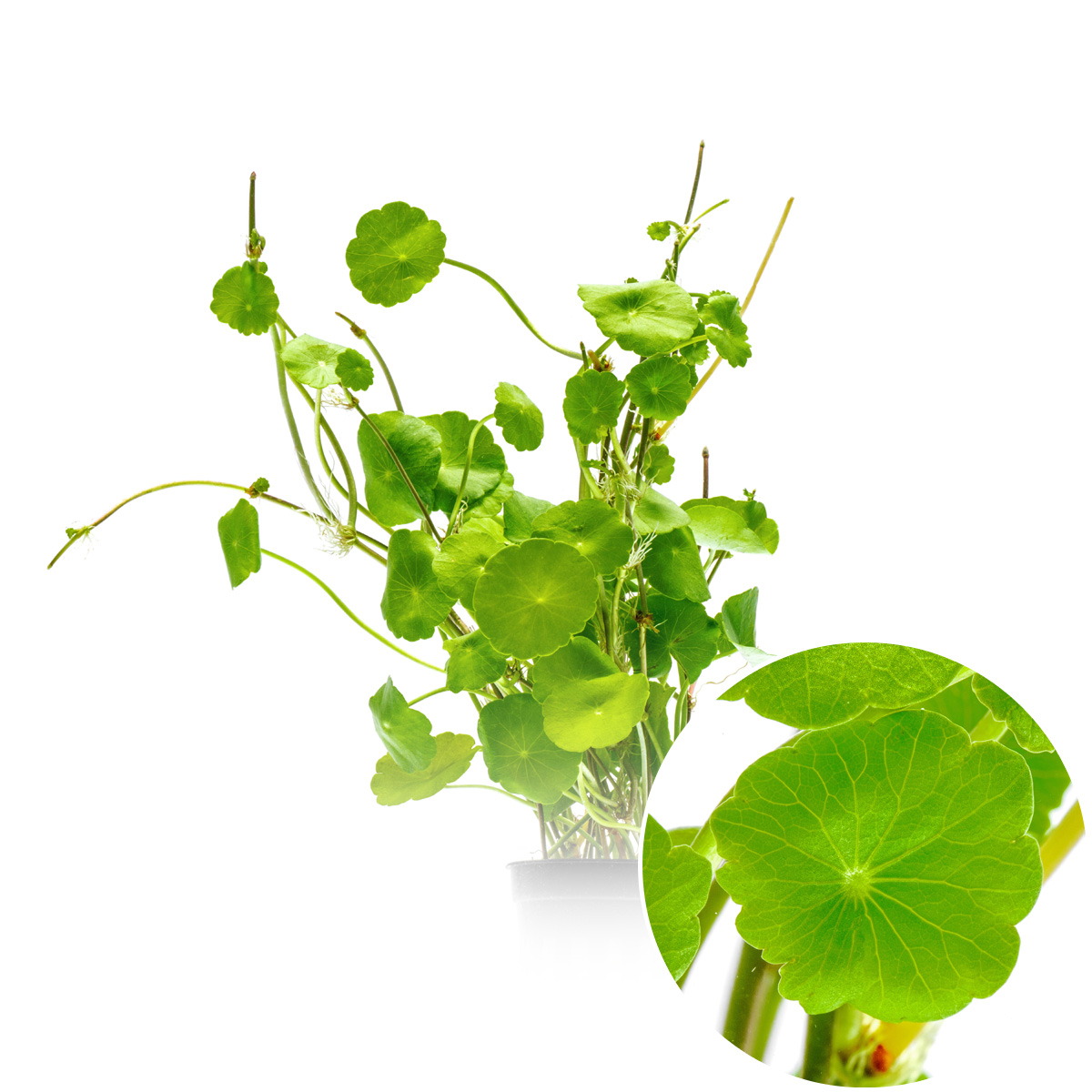
Hydrocotyle Verticillata
A flowering hydrocotyle native to North and South America as well as the West Indies. It is characterized by its half-dollar like leaves which can grow into compact bushes of green.
DIFFICULTY:
LIGHTING:
PLACEMENT:
TYPE:
STEM
Lilaeopsis Novaezelandiae/ Micro Sword
Also known as Micro Sword or Carpet Grass, is a green, grass-like plant that is native to Central. It is a good choice for beginners who want to grow a carpeting plant for the first time.
DIFFICULTY:
LIGHTING:
PLACEMENT:
TYPE:
CARPETING
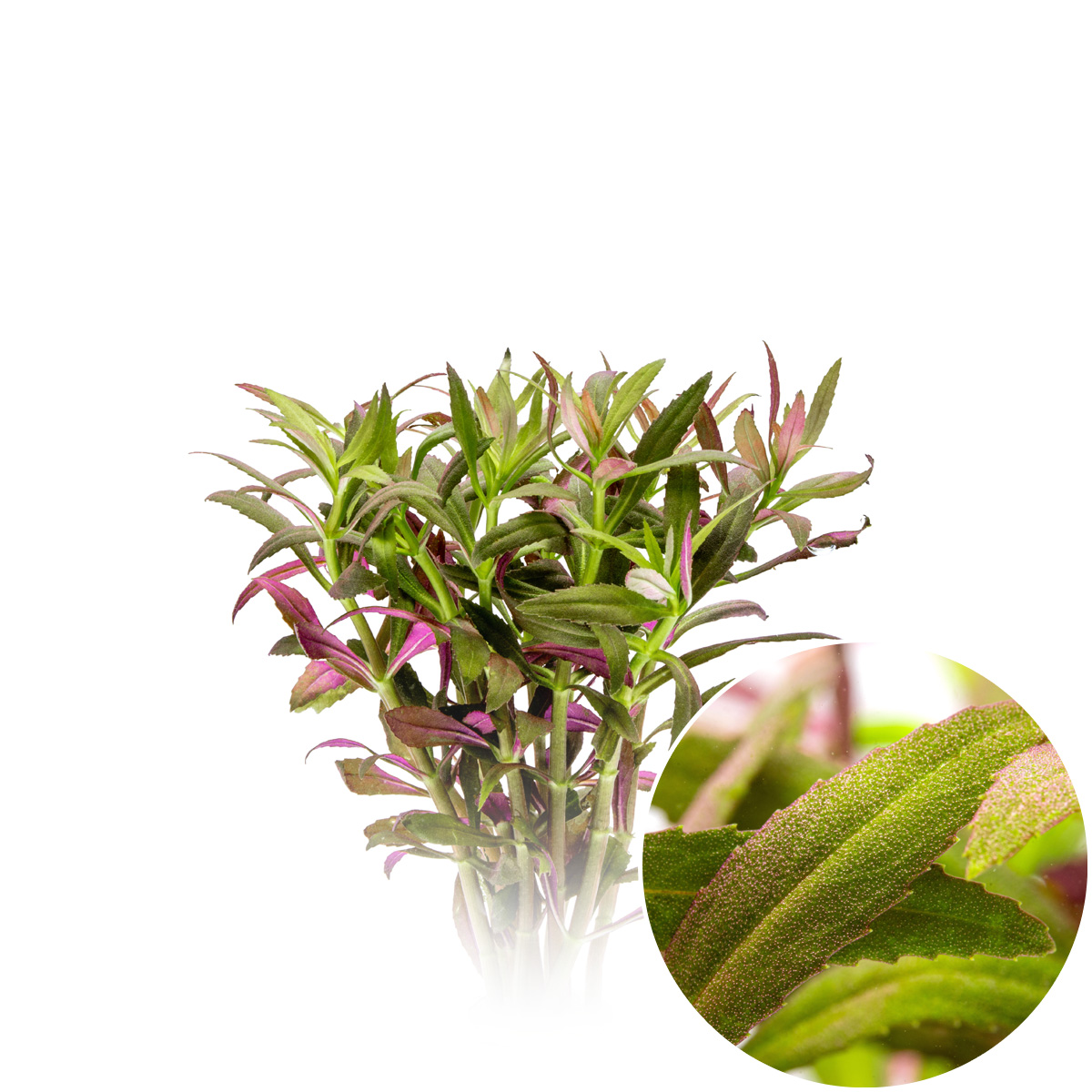
Limnophila Aromatica
A perennial plant with thin, pointy leaves, offers varied colors from green to red to pink. Frequent pruning creates a bushy mid- or background filler. Bright red hues require high lighting and nutrient levels, with optional CO2 injection for robust growth. Thrives submerged or emersed.
DIFFICULTY:
LIGHTING:
PLACEMENT:
TYPE:
STEM
Limnophila Belem
A rare and attractive stem plant ideal for mid to background placement. With serrated leaf edges, it exhibits lovely color and texture. Regular pruning is necessary due to rapid growth. While it can survive without CO2, its presence enhances growth and color. Quality LED lighting and nutrient-rich substrate are recommended.
DIFFICULTY:
LIGHTING:
PLACEMENT:
TYPE:
STEM
Limnophila Heterophylla
An easy-to-care-for stem plant adaptable to various aquarium conditions. Ideal for beginners and low-tech setups, it thrives with or without CO2 injection. For optimal results, maintain a nutrient-rich and clean environment. This plant, suitable for background placement, can be grown both submersed and emersed. Regular trimming is necessary once established.
DIFFICULTY:
LIGHTING:
PLACEMENT:
TYPE:
STEM
Limnophila Mini Vietnam
An exotic and rare aquatic stem plant with star-shaped, bright green foliage. Perfect for midground placement, it stays relatively small, making it ideal for planted aquariums. With quality lighting, it may exhibit a faint purplish-red color. Quick growth requires regular trims to achieve a bushy appearance.
DIFFICULTY:
LIGHTING:
PLACEMENT:
TYPE:
STEM
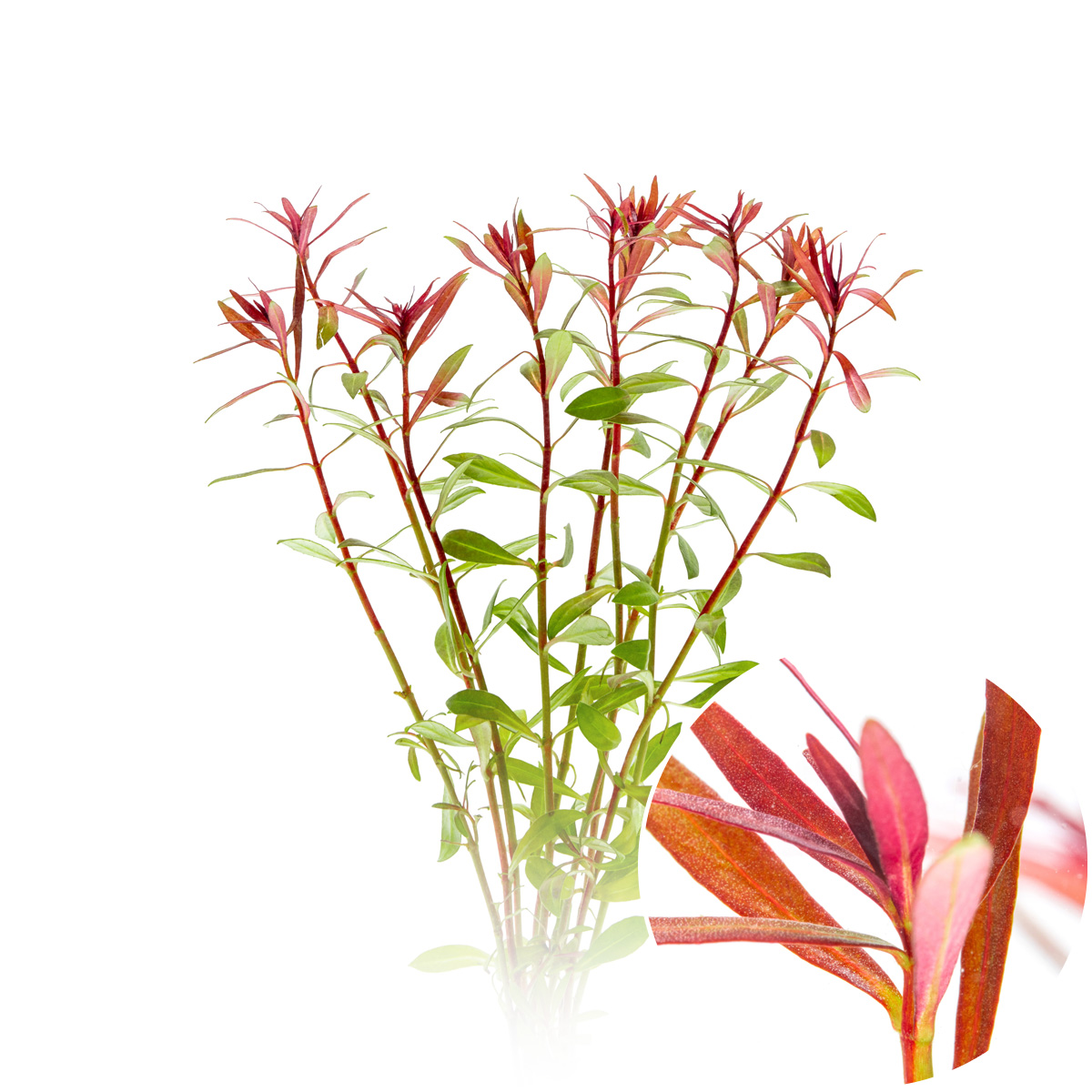
Ludwigia Arcuata
An easy-to-care-for plant with delicate green and red leaves, adding movement and dimension to the aquarium. Its thin, pointed leaves grow in opposite pairs along the stem, with color variations based on iron levels. Frequent pruning encourages branching, creating a bushy mid- or background filler.
DIFFICULTY:
LIGHTING:
PLACEMENT:
TYPE:
STEM
Ludwigia Glandulosa var. Diamond
A unique variation with distinct coloration. In low-tech conditions, leaves can be green on top and red underneath, adding dimension to the mid-ground. With CO2 and high light, they turn deep purplish red, creating a vivid focal point. Oval, pointed leaves grow in opposite pairs along the stem, varying in colors from green to red based on tank conditions. Planting in bunches of 10-12 stems enhances their appearance.
DIFFICULTY:
LIGHTING:
PLACEMENT:
TYPE:
STEM
Ludwigia Inclinata
Has distinctive gold and red leaves, creating a contrast to green foliage. Though challenging to maintain, its unique shape and color are rewarding. The plant has oblong, rounded leaves with a wavy texture, growing in opposite pairs along the stem. Regular pruning encourages branching, suitable for mid- or background use. In small tanks, frequent pruning prevents rapid growth to the tank's top.
DIFFICULTY:
LIGHTING:
PLACEMENT:
TYPE:
STEM
Ludwigia Inclinata Cuba
A classic and vibrant aquatic stem plant known for its bright hues. With long stems and narrow leaves, it displays marbled orange and red colors when submerged. Thriving in optimal conditions, it requires quality lighting, CO2 injection, and nutrient-rich substrate. Careful planting is essential due to its potential for rapid growth.
DIFFICULTY:
LIGHTING:
PLACEMENT:
TYPE:
STEM
Ludwigia Inclinata Green
A demanding aquarium plant with wavy, pale green leaves. It is a highly variable herb from Central and South America that can grow above or below water.
DIFFICULTY:
LIGHTING:
PLACEMENT:
TYPE:
STEM
Ludwigia Inclinata Pink
A rare variant in the Ludwigia family, is sought after for its unique coloration. Ideal for experienced hobbyists, it demands a nutrient-rich substrate, CO2 injection, quality lighting, and balanced fertilizers. Although challenging, successful growth is rewarded with a striking appearance. Suitable for both submerged and emersed cultivation, Ludwigia White can be propagated by cutting and replanting stems in a quality substrate.
DIFFICULTY:
LIGHTING:
PLACEMENT:
TYPE:
STEM
Ludwigia Marilia
Originating from Marilia in Sao Paulo, Brazil, is a vibrant aquatic plant with round leaves displaying green hues, intensified with red and orange colors in high light and CO2 conditions. Fast-growing and versatile, it can transition to emersed growth, featuring more compact leaves. Ideal for background placement in aquascaping, regular trimming maintains a compact form, and trimmings can be replanted for propagation.
DIFFICULTY:
LIGHTING:
PLACEMENT:
TYPE:
STEM
Ludwigia Natans Super Red
Also known as Ludwigia Palustris, is an aquatic plant that can add dimension and contrast to the background or mid-section of an aquarium. It has small, round, pointed leaves that grow in opposite pairs along the stem. The leaves can be green or red.
DIFFICULTY:
LIGHTING:
PLACEMENT:
TYPE:
STEM
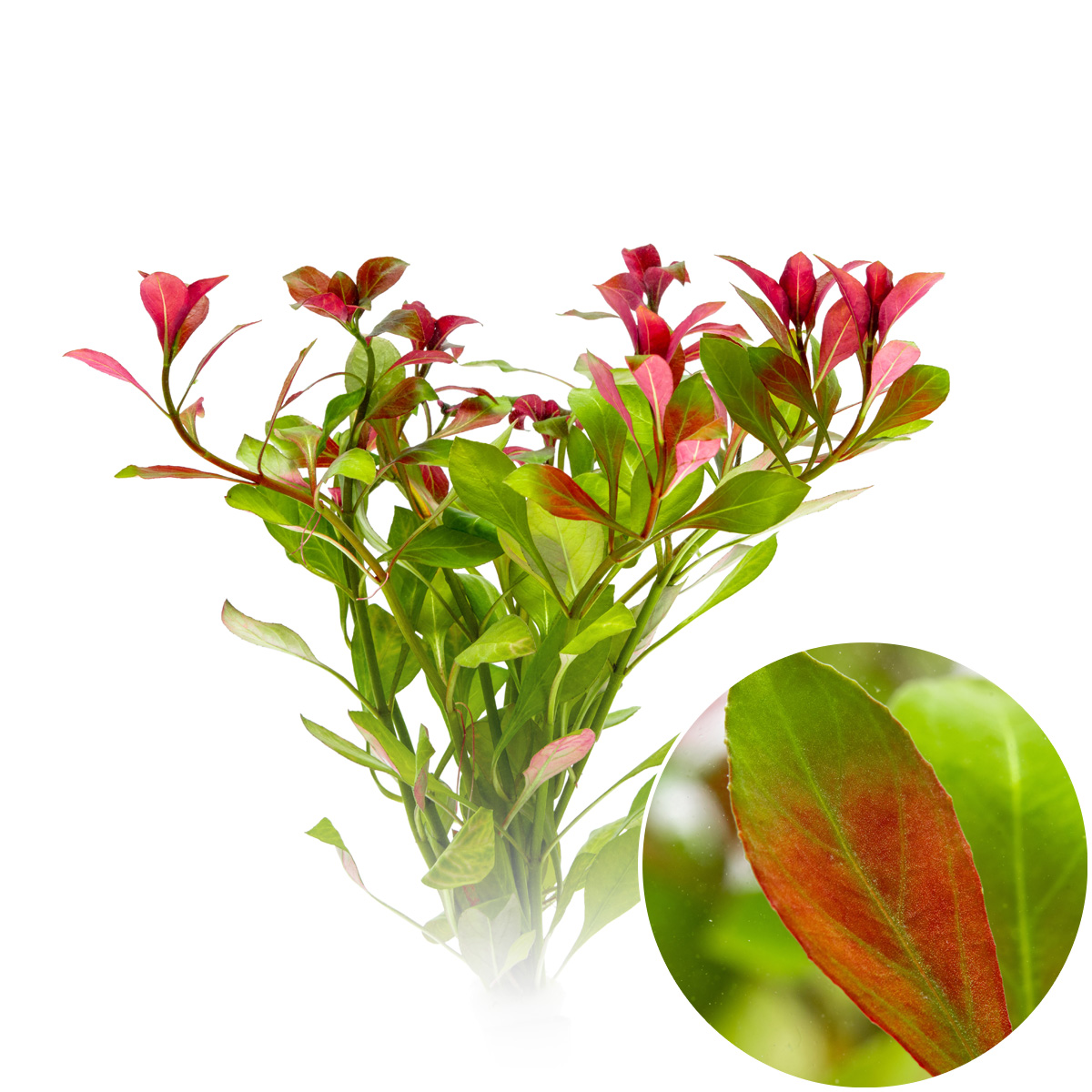
Ludwigia Ovalis
A flowering plant native to the southeastern United States and Southeast Asia. It's a mid-ground or background plant that can grow up to 4–8 inches tall. t has bright green, oval-shaped leaves that are slightly pointed at the tips. The leaves are arranged oppositely along the stems, which can grow up to 20–30 cm in length. Ludwigia ovalis is a relatively hardy and low-maintenance stem plant that can tolerate different water parameters. It can display great coloration and form in relatively low-tech setups. The leaves are gold, orange, or red, depending on tank conditions.
DIFFICULTY:
LIGHTING:
PLACEMENT:
TYPE:
STEM
Ludwigia Palustris
A vivid aquatic plant suitable for mid- or background placement. Plant it in groups of 10-12 stems for added dimension and contrast. It's known for its red color, grows quickly, and is easy to care for, making it popular among aquascapers. The plant is adaptable, thriving in various regions throughout the year.
DIFFICULTY:
LIGHTING:
PLACEMENT:
TYPE:
STEM
Ludwigia Palustris Green
A stem plant that is native to Central America. It has small, elliptical leaves and inconspicuous greenish flowers. The stems are round to square and can grow to be 10–40 cm long. The leaves can range in color from green to reddish-brown, and can turn bright red when grown in high light and nutrient conditions.
DIFFICULTY:
LIGHTING:
PLACEMENT:
TYPE:
STEM
Ludwigia Palustris Red
A beautiful plant with beautiful pale red leaves that displays unique oval edges. This plant is sought after due to its red leaves that can add a pop of color to any aquarium. These plants are truly an eye-catcher when grown in bunches of 10-12 stems in the frontal point of tanks.
DIFFICULTY:
LIGHTING:
PLACEMENT:
TYPE:
STEM
Ludwigia Palustris Super Red
An easy-to-care-for aquatic stem plant, perfect for adding color to your aquascape. Ideal for the background, it fills large vertical spaces, creating a vibrant focal point. The oval-shaped leaves grow in alternating pairs along the stem, displaying colors like gold, orange, or red based on tank conditions. Suitable for Dutch-style scapes.
DIFFICULTY:
LIGHTING:
PLACEMENT:
TYPE:
STEM
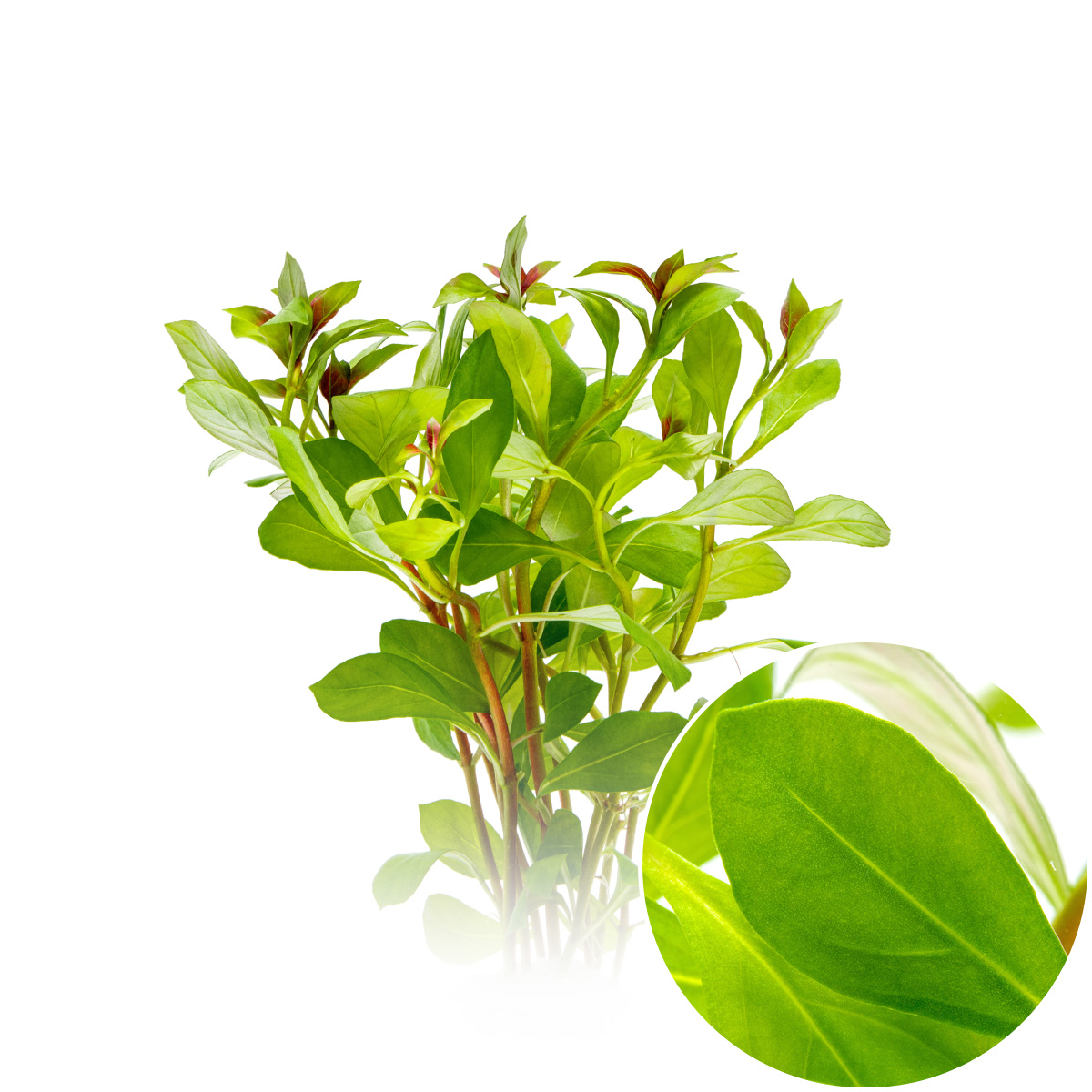
Ludwigia Repens
An easy-to-keep plant, perfect for tank enthusiasts seeking hassle-free color in their aquascape. Ideal for the front zones, its vibrant hues create a striking focal point. With oval leaves in gold, orange, or red, their beauty is enhanced in bunches of 10-12 stem
DIFFICULTY:
LIGHTING:
PLACEMENT:
TYPE:
STEM
Ludwigia Repens Rubin
A low-maintenance aquatic plant with dark red leaves and stalks. It's a North American variety of Ludwigia repens. The plant's leaves and stalks can grow to be 20–50 cm long and 4–6 cm wide.
DIFFICULTY:
LIGHTING:
PLACEMENT:
TYPE:
STEM
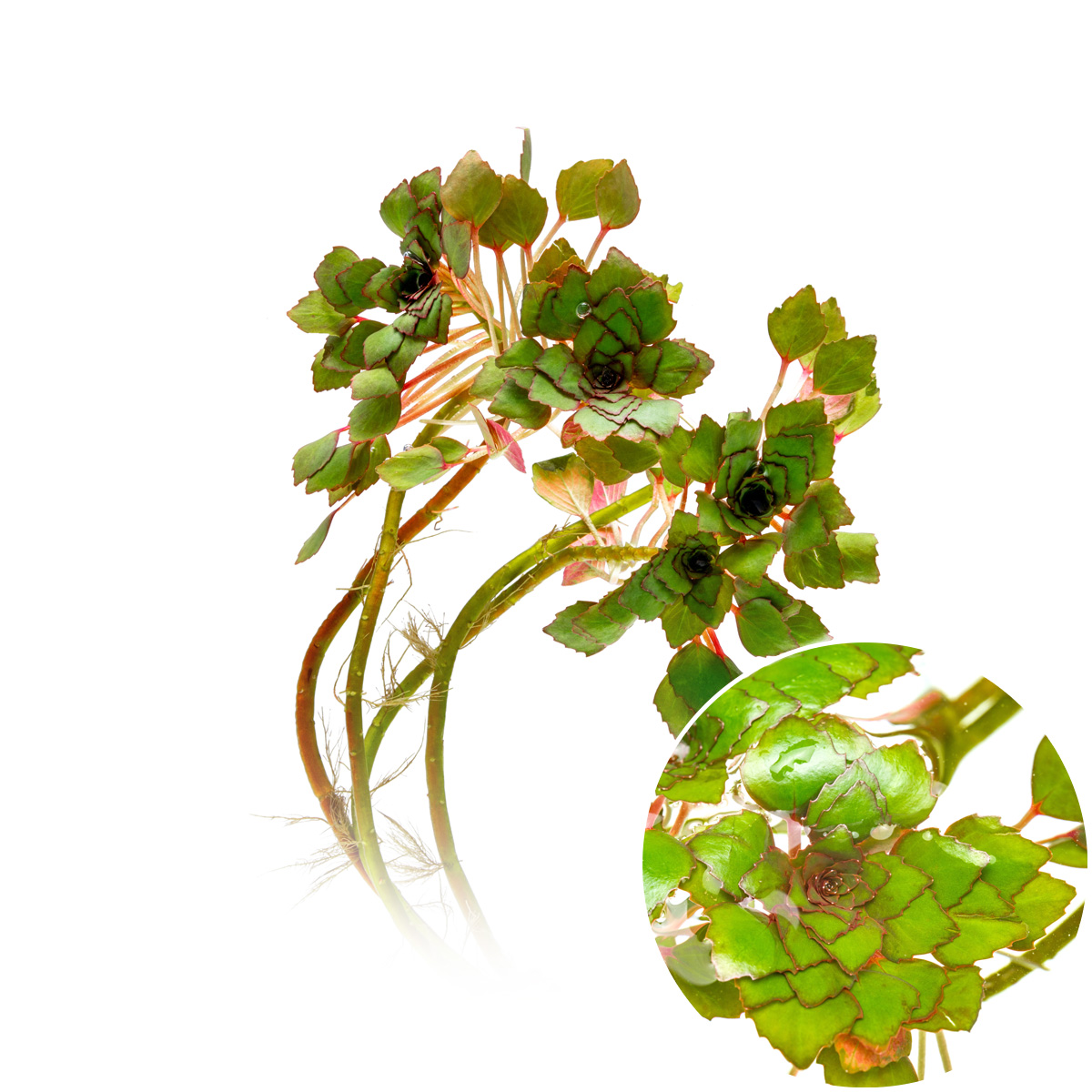
Ludwigia Sedioides
Also known as the mosaic flower or false loosestrife, is a perennial plant native to Brazil and Venezuela. It has bright yellow flowers that bloom from June to August. This aquatic plant forms rosettes of red and green diamond-shaped leaves that float on the water's surface. The leaves contract at night and spread out during the day.
DIFFICULTY:
LIGHTING:
PLACEMENT:
TYPE:
STEM
Ludwigia Senegalensis 'Guinea'
A rare addition to the aquarium hobby, stands out with a unique leaf pattern. With a deep red hue and distinctive green and light-colored veins, it's highly sought after. Formerly Ludwigia Sp. Guinea, it can thrive submerged or emersed, displaying creeping behavior when grown above water. Not recommended for beginners, this plant demands high lighting, CO2 injection, and a consistent, balanced fertilizer regimen. Adequate spacing between stems is crucial, and prompt correction of nutrient deficiencies is essential to prevent rapid deterioration.
DIFFICULTY:
LIGHTING:
PLACEMENT:
TYPE:
STEM
Ludwigia Sphaerocarpa
A slow-growing plant that is best suited to high-tech setups with high light and a nutrient-rich substrate. The addition of CO2 can also help to maintain its health and enhance its growth.
DIFFICULTY:
LIGHTING:
PLACEMENT:
TYPE:
STEM
Micranthemum 'Monte Carlo'
A low-growing aquatic plant that can be grown in a variety of lighting conditions. It can thrive in medium to high light, but can also survive in lower lighting and nutrient conditions. It prefers a neutral pH and a temperature range between 68°F and 82°F.
DIFFICULTY:
LIGHTING:
PLACEMENT:
TYPE:
CARPETING
Micranthemum Micranthemoides
Also known as pearl weed, pearl grass, or baby tears, is a popular aquatic plant. It is native to Central and North America, and is often used in planted aquariums. Micranthemum micranthemoides has bright green stems and long, semi-sharp leaves. It can grow to be 2–6 inches tall, and is often used to create dense bushes in nano tanks.
DIFFICULTY:
LIGHTING:
PLACEMENT:
TYPE:
CARPETING

Micranthemum Umbrosum
Also known as Giant Baby Tears, is a low-growing aquarium plant native to the US. It has small, round, light green leaves that grow to about 0.5 cm in size. The stems can grow to be 10–25 cm long and 1–2 cm wide. Micranthemum umbrosum is a versatile plant that can be used in the foreground, midground, or background of an aquarium. It's relatively demanding when it comes to light, and adding CO2 can help it grow. The plant can't tolerate high temperatures and may turn brown if it doesn't have enough light or nutrients.
DIFFICULTY:
LIGHTING:
PLACEMENT:
TYPE:
CARPETING
Microsorium Pteropus Needle Leaf
A rare and beautiful aquatic plant. With exceptionally narrow foliage, it stands out in planted tanks. Its compact growth makes it suitable for various aquariums, either as a standalone or as an accent plant. Known for its forgiving nature, it thrives in a wide range of aquarium conditions, making it a favorite for both beginner and experienced aquarists.
DIFFICULTY:
LIGHTING:
PLACEMENT:
TYPE:
EPIPHYTE
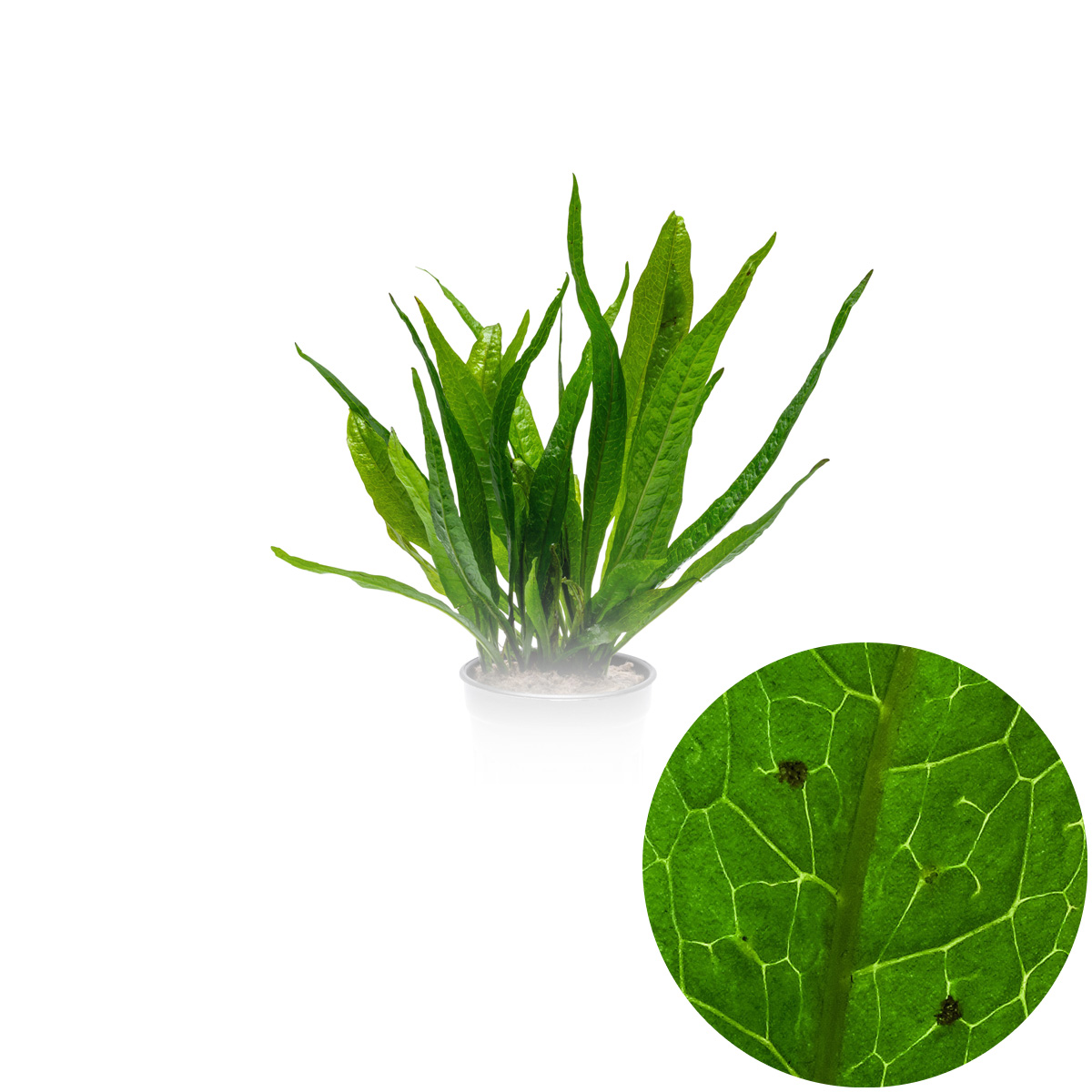
Microsorum Pteropus Black Forest
A unique and sought-after aquarium plant, known for its bold leaf vein pattern and slender shape. Care is easy – attach it to driftwood, rocks, or decor using thread or glue, ensuring rhizomes stay above the substrate. Propagation is simple; cut or pull apart rhizomes for replanting.
DIFFICULTY:
LIGHTING:
PLACEMENT:
TYPE:
EPIPHYTE
Microsorum Pteropus Broad Leaf
A popular and easy-to-care-for plant, thriving in low light and various water conditions. Ideal for larger aquariums, it can be attached to driftwood or decor using thread or glue. Keep rhizomes above the substrate to prevent rot. Propagation is simple; cut or pull apart rhizomes for replanting.
DIFFICULTY:
LIGHTING:
PLACEMENT:
TYPE:
EPIPHYTE
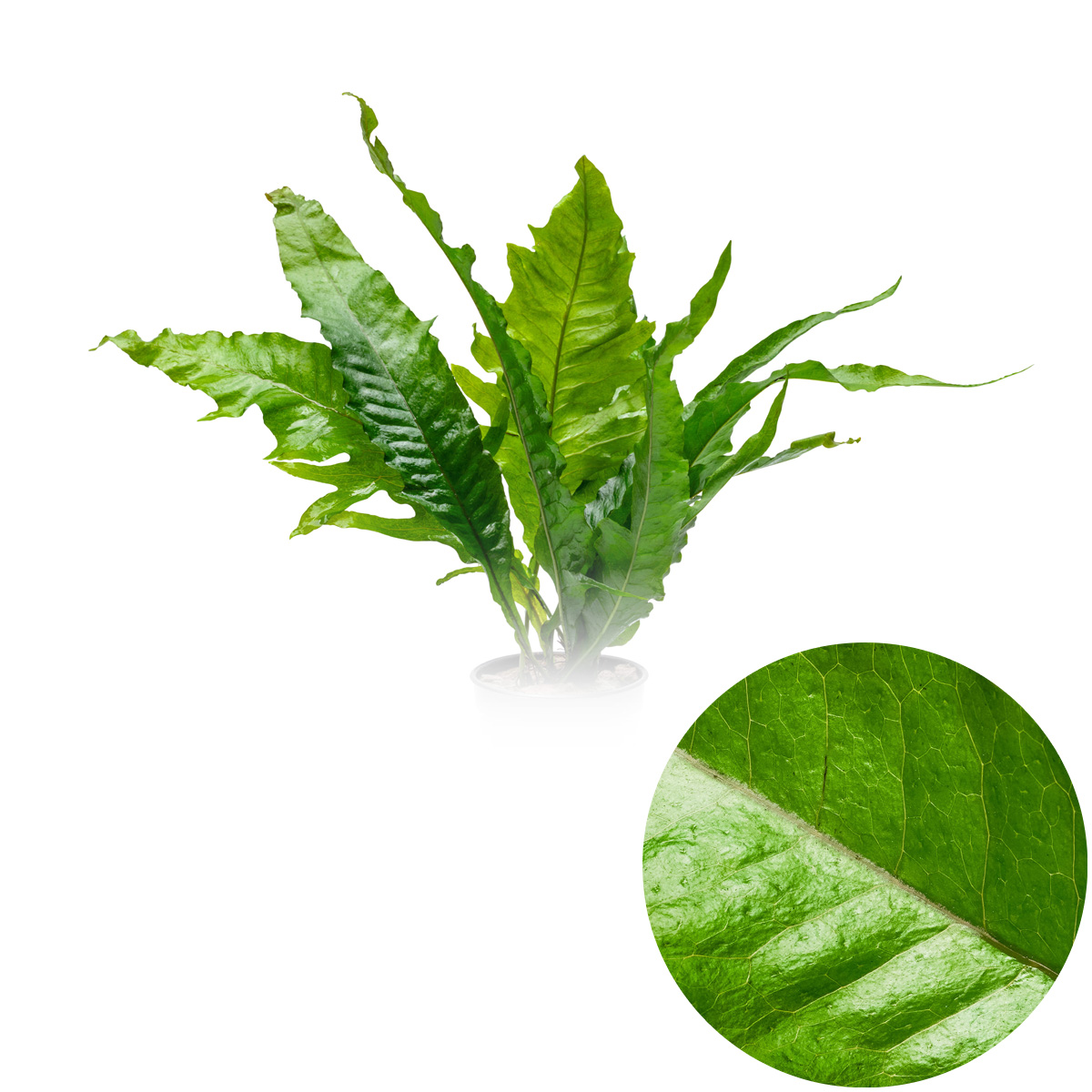
Microsorum Pteropus Coral
A newer variation known for its random leaf splits, akin to Java Fern Trident. With primarily green tones and hints of pink-orange in new growth, it's beginner-friendly but thrives with stable conditions, CO2, and nutrients. Ideal for nano tanks, it can be attached to decor using thread or glue, with rhizomes above the substrate to prevent rot. Propagation is simple; cut or pull apart rhizomes for replanting.
DIFFICULTY:
LIGHTING:
PLACEMENT:
TYPE:
EPIPHYTE
Microsorum Pteropus Fish Tail
A rare variety of the original Java Fern, features a forked shape resembling a fish's tail. Under ideal conditions, its leaves develop vibrant orange to amber tips, creating a striking contrast with bright light green leaves.
DIFFICULTY:
LIGHTING:
PLACEMENT:
TYPE:
EPIPHYTE
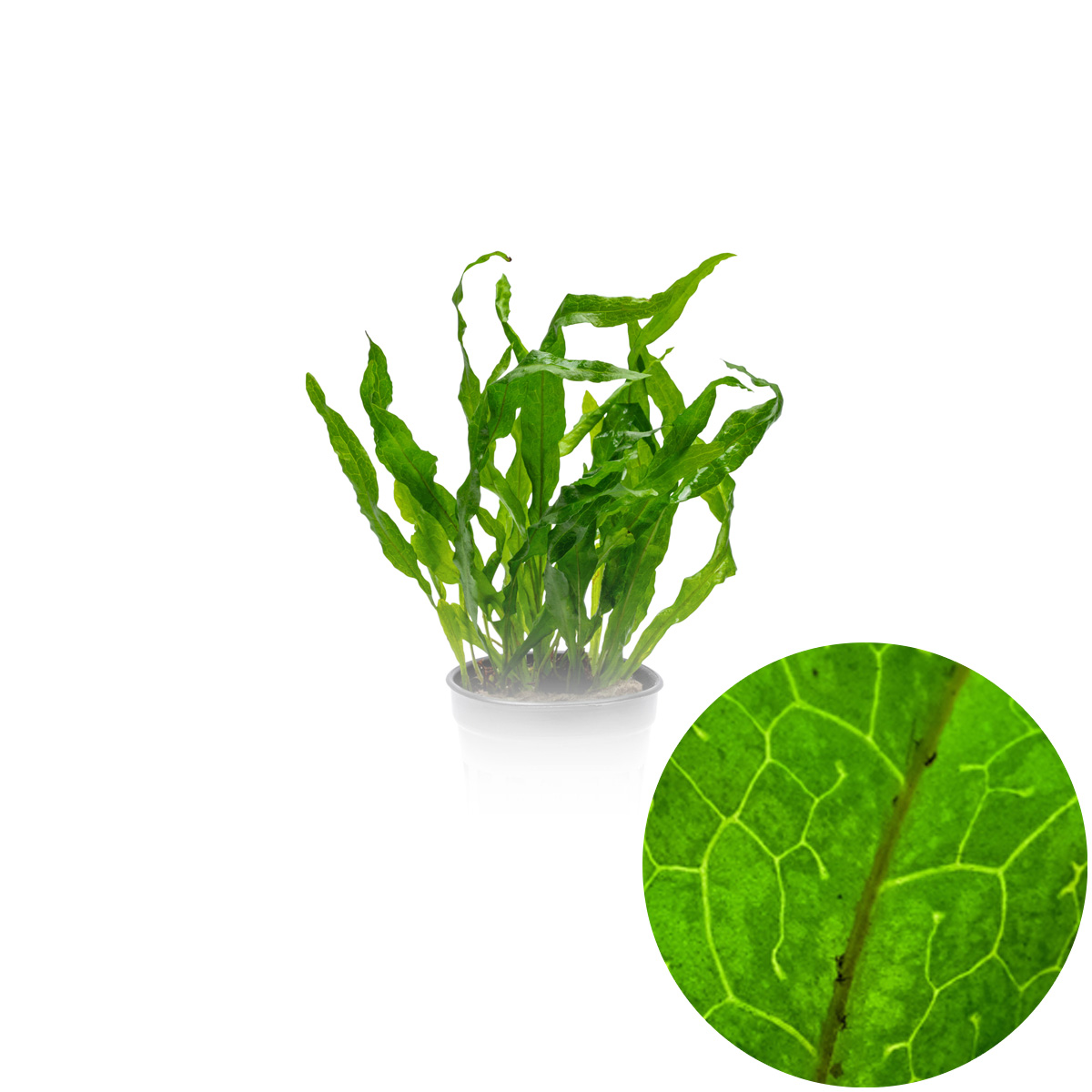
Microsorum Pteropus Flaming
A stunning aquatic plant with ruffled bright green leaves, ideal for planted aquariums. Known for its easy care, it thrives in low light and diverse water conditions. Attach it to driftwood or decorations using thread or glue, keeping rhizomes above the substrate to prevent rot. Propagation is simple—cut or pull apart rhizomes for replanting.
DIFFICULTY:
LIGHTING:
PLACEMENT:
TYPE:
EPIPHYTE
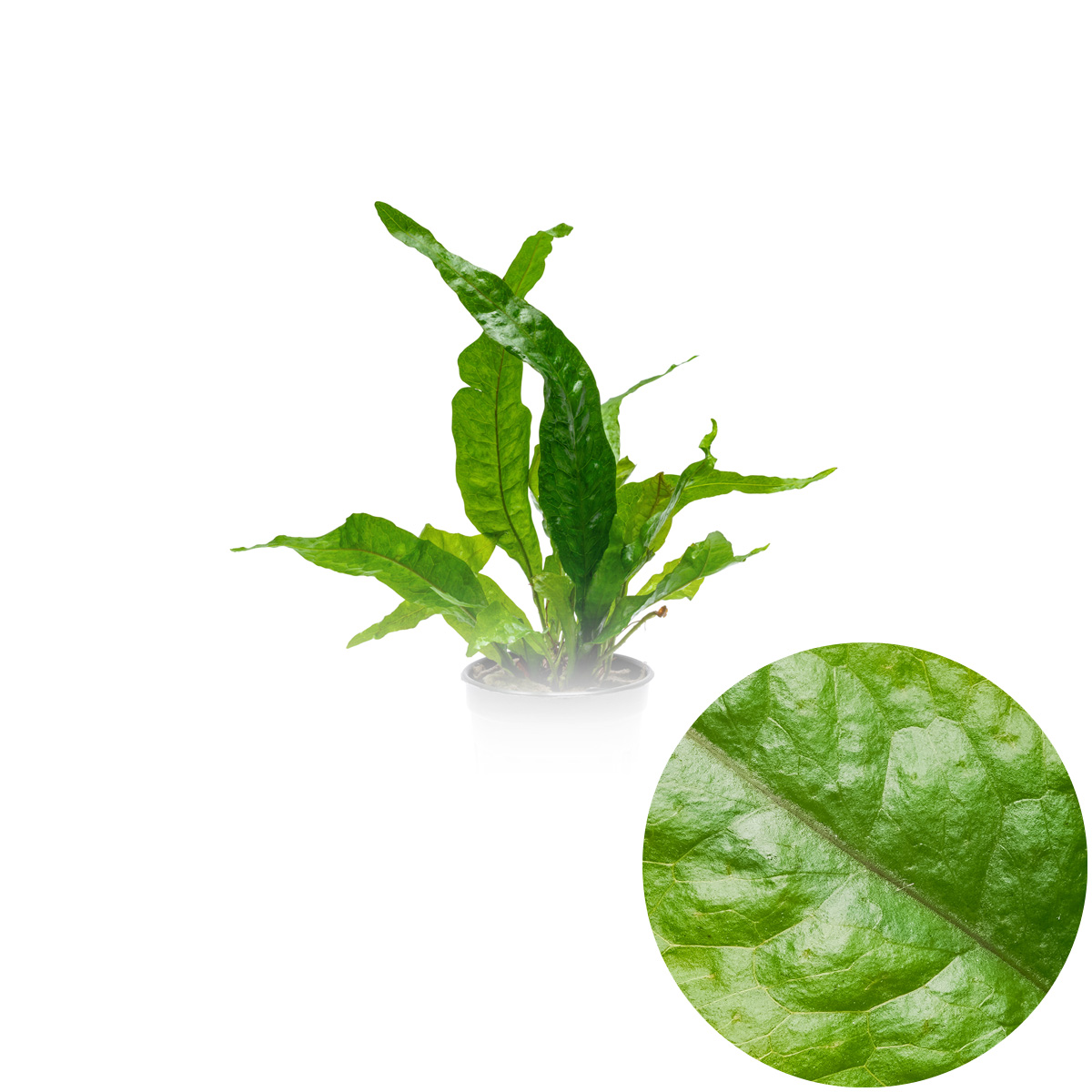
Microsorum Pteropus Gold Sparkle
A beginner-friendly aquarium fern with a hardy nature, adapting easily to diverse tank conditions. Its varying shades of green add visual interest, with newer leaves lighter and gradually darkening over time. Ideal for filling empty spaces in aquascapes, it attaches via its rhizome and doesn't require soil planting. Suitable for low to moderate lighting, CO2 injection enhances health and growth rates.
DIFFICULTY:
LIGHTING:
PLACEMENT:
TYPE:
EPIPHYTE

Microsorum Pteropus Java Fern
A low-maintenance aquatic plant that is a member of the Polypodiaceae family. It is a popular aquarium plant due to its beauty and ease of care. Java Ferns can grow in a wide range of water conditions and low light conditions. They are also hardy plants that can grow in all conditions.
DIFFICULTY:
LIGHTING:
PLACEMENT:
TYPE:
EPIPHYTE
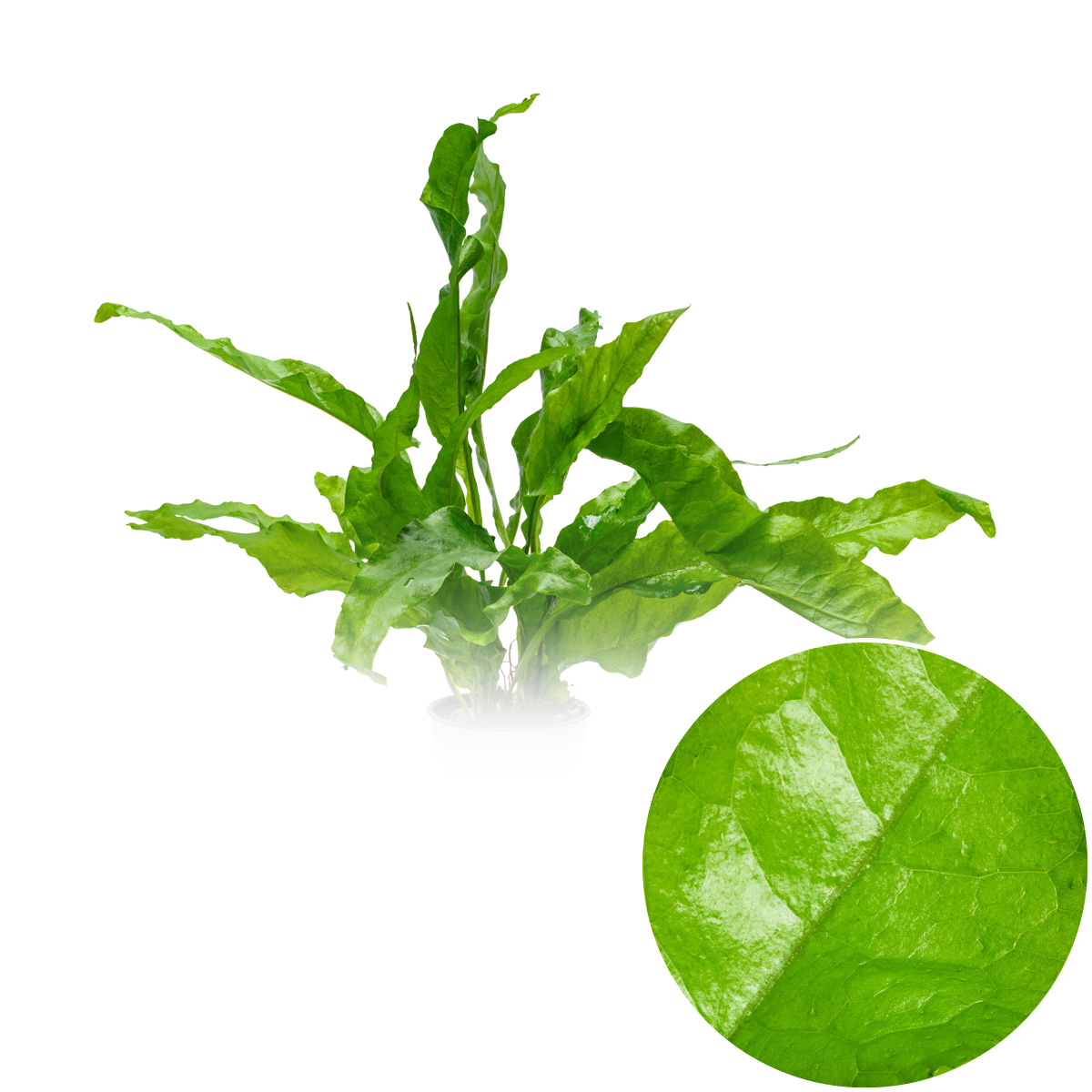
Microsorum Pteropus Latifolia
Favored for its large, ruffled leaves and easy care, making it ideal for beginners. Attach it to driftwood, rocks, or decor using thread or glue. Herbivorous fish won't typically eat it. Keep rhizomes above the substrate to prevent rot. Propagation is simple; cut or pull apart rhizomes for replanting.
DIFFICULTY:
LIGHTING:
PLACEMENT:
TYPE:
EPIPHYTE
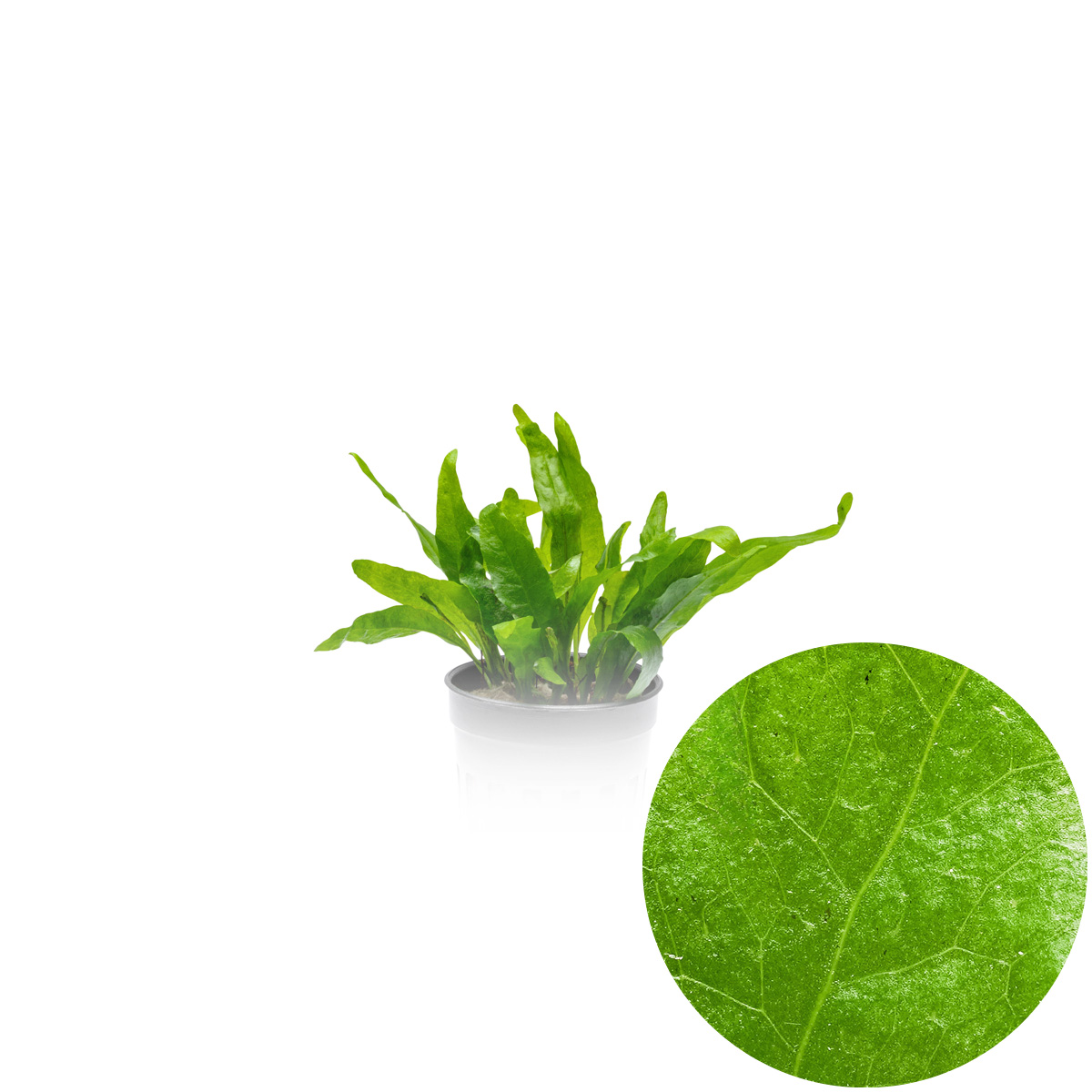
Microsorum Pteropus Narrow
Combines features of regular Java Fern and Java Fern Needle Leaf, with thinner leaves (approximately 1/2" wide). Ideal for direct placement in the aquarium or attachment to wood/stone, this plant is popular for its beauty and easy care. Thriving in low light and various water parameters, its mini version suits tanks of any size with smaller leaves.
DIFFICULTY:
LIGHTING:
PLACEMENT:
TYPE:
EPIPHYTE
Microsorum Pteropus Petite
A smaller variant of the classic Java Fern, is also known as Microsorum Mini. With wavier foliage similar to Java Fern Narrow, this easy-care plant is loved by aquarists for its vibrant hues and full appearance. Ideal for nano or larger tanks, it fills spaces beautifully. Its epiphytic nature allows versatile placement, making it perfect for tying to driftwood or stones in aquascapes.
DIFFICULTY:
LIGHTING:
PLACEMENT:
TYPE:
EPIPHYTE
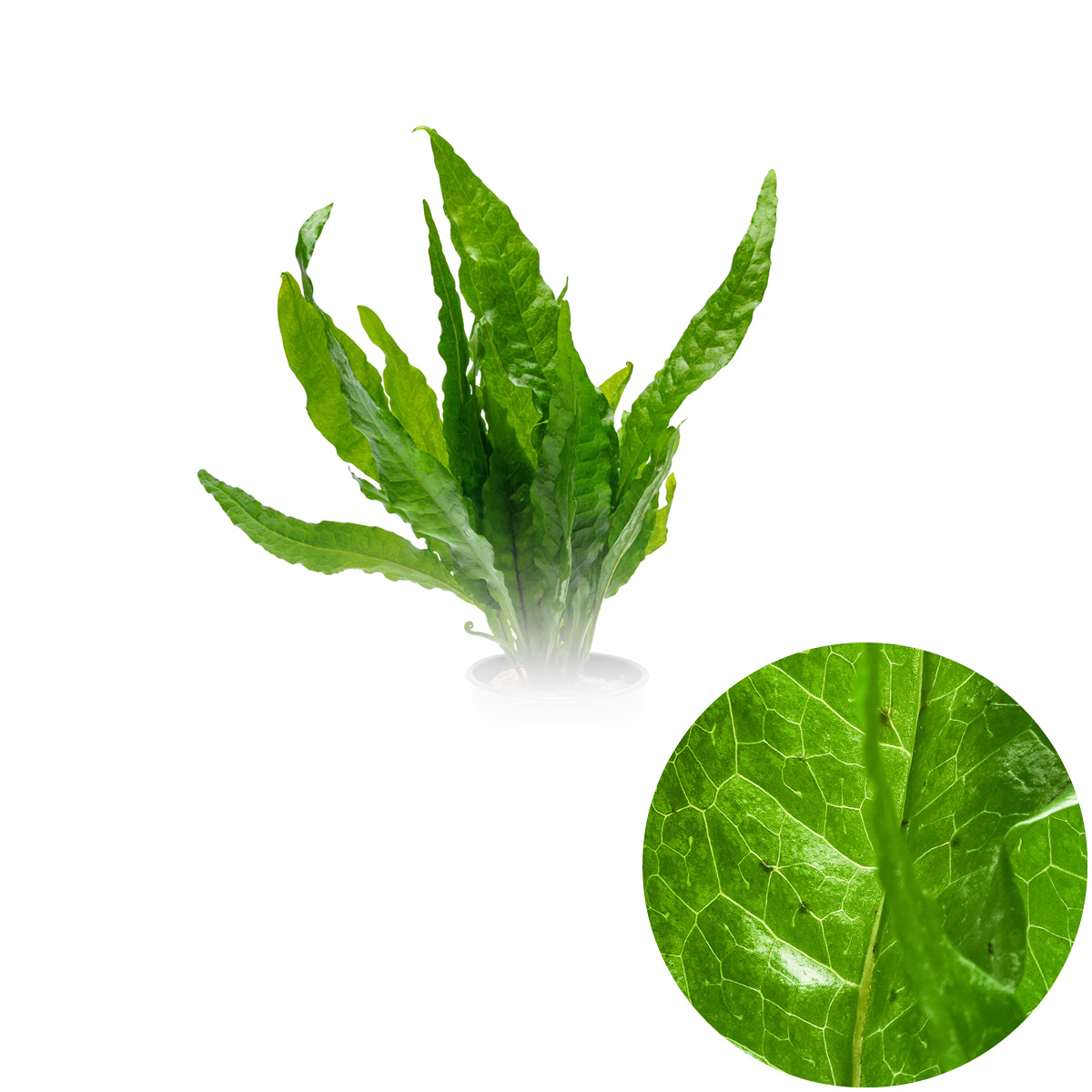
Microsorum Pteropus Philippine
A low-maintenance plant for the freshwater aquarium. It has long, bright green leaves that provide an attractive aquascape as well as important refuge and grazing area for shrimp and fish as well as fry.
DIFFICULTY:
LIGHTING:
PLACEMENT:
TYPE:
EPIPHYTE
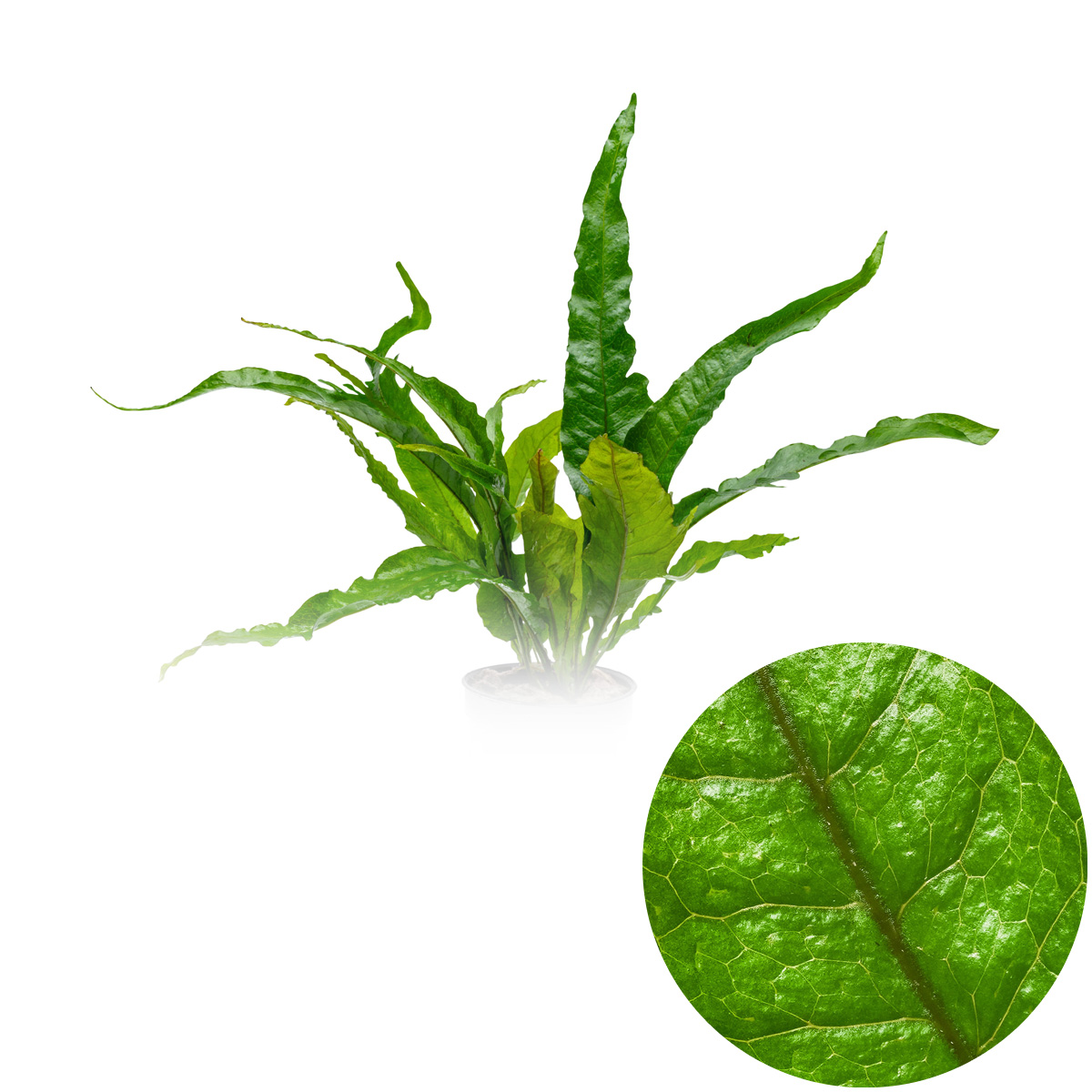
Microsorum Pteropus Sunrise
A rare variety of Java fern with ruffled leaves and reddish-orange tips. It's a popular aquarium plant because of its beauty and low maintenance.
DIFFICULTY:
LIGHTING:
PLACEMENT:
TYPE:
EPIPHYTE
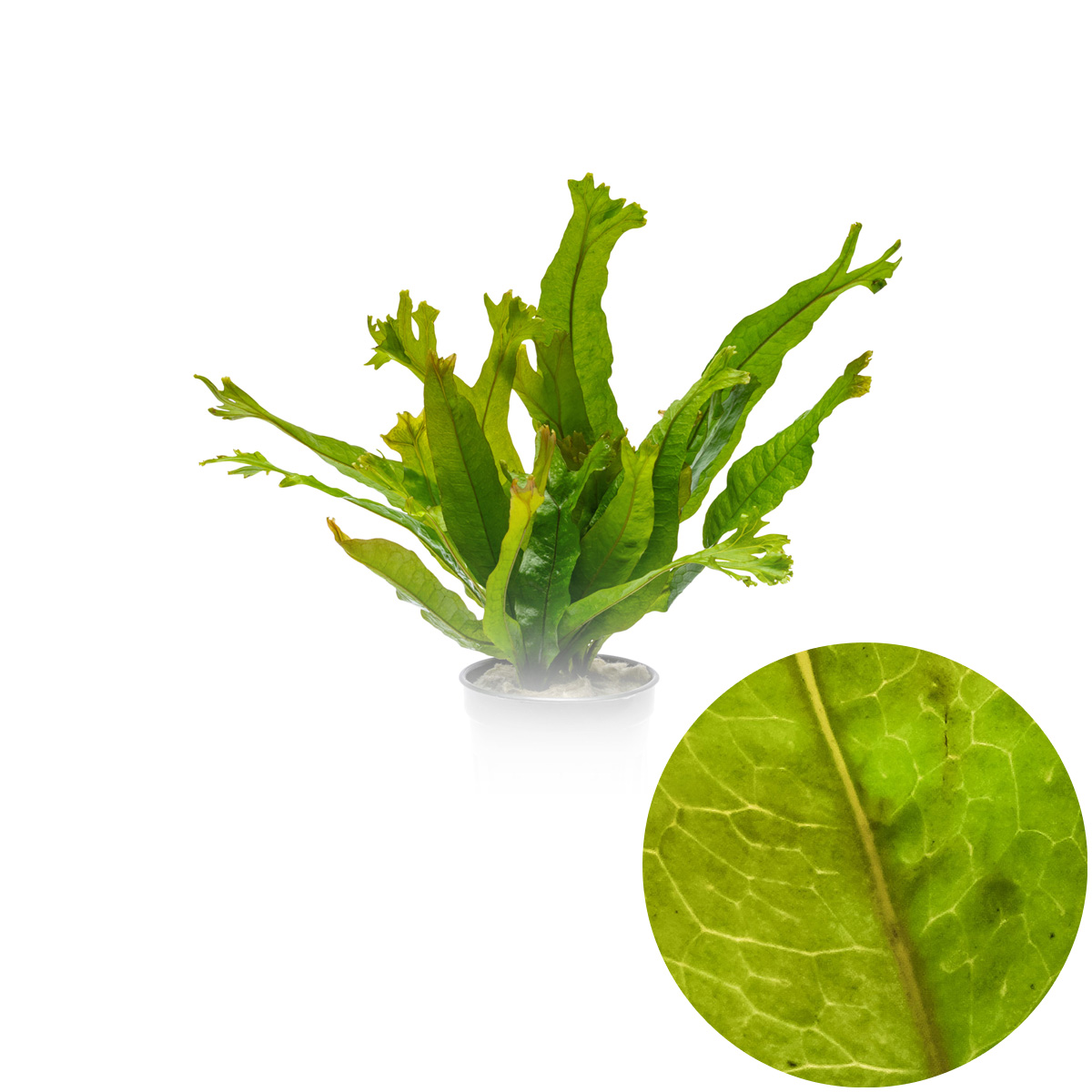
Microsorum Pteropus Thor's Hammer
A rare variant from Poland with thin leaves and unique tips. Thriving in low light and various water conditions, it can be attached to driftwood or decorations using thread or glue. Keep rhizomes above the substrate to prevent rot. Propagation is simple—cut or pull apart rhizomes to replant.
DIFFICULTY:
LIGHTING:
PLACEMENT:
TYPE:
EPIPHYTE
Microsorum Pteropus Trident
Displays long, thin, fork-like foliage similar to other Java Fern variants. Thriving in low light and adaptable to various water parameters, it can be attached to driftwood or rocks using thread or glue. Keep the rhizomes above the substrate to prevent rot. Easy to propagate, simply cut or pull apart rhizomes for replanting.
DIFFICULTY:
LIGHTING:
PLACEMENT:
TYPE:
EPIPHYTE
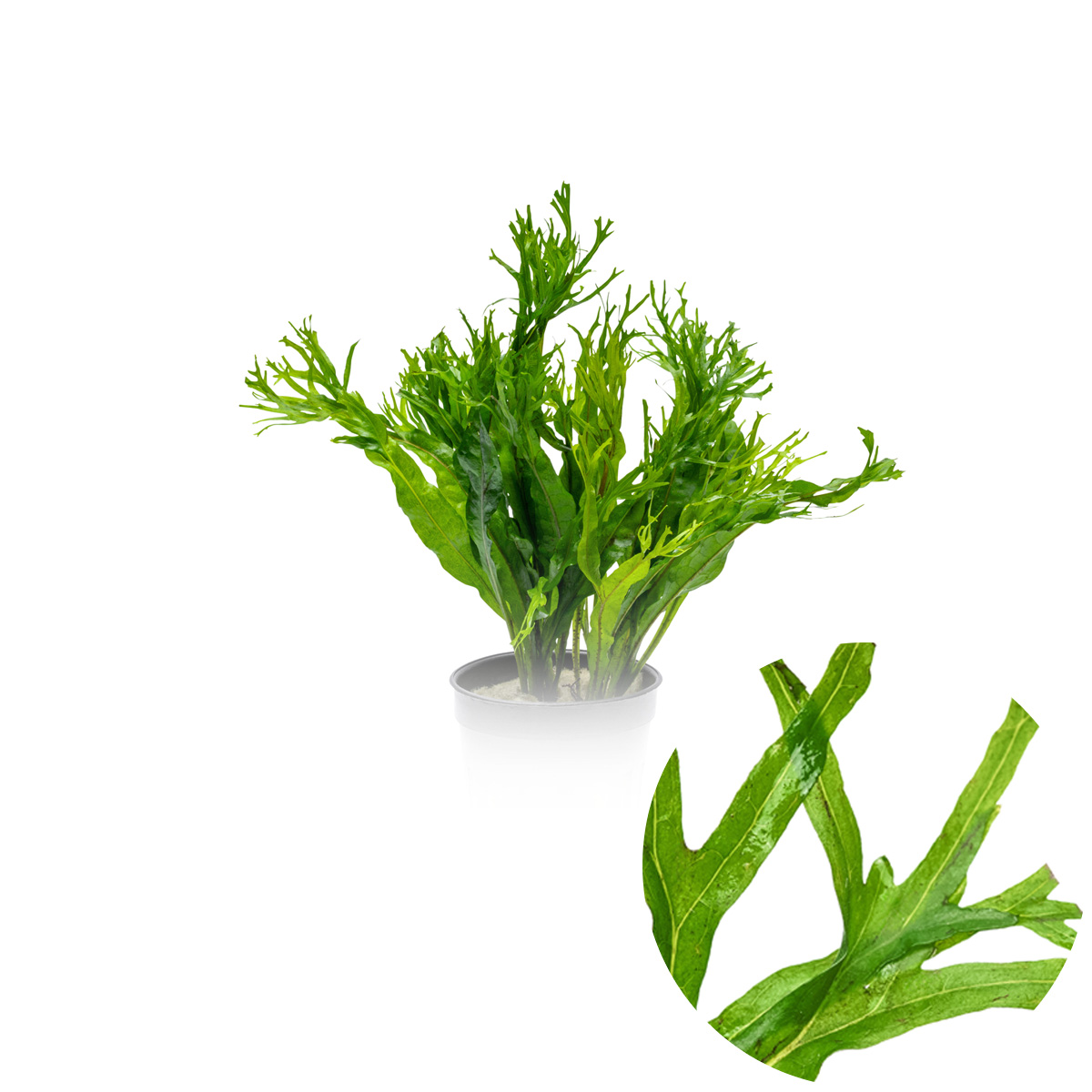
Microsorum Pteropus Windelov
A popular Tropica variant, thrives in low light and diverse water conditions. Its split leaves create a lush, bushy effect when fully grown. Attach it to driftwood, rocks, or decorations using thread or glue, ensuring the rhizomes stay above the substrate to prevent rot. Propagation is simple; cut or pull apart rhizomes for replanting.
DIFFICULTY:
LIGHTING:
PLACEMENT:
TYPE:
EPIPHYTE
Microsorum Windelov Twisted
Akin to Widelov but on a larger scale, exhibits fine-branched tips. As a Microsorum Pteropus species, it is herbivore-resistant. Java Fern, renowned for its beauty and low-maintenance, thrives in low light and diverse water conditions.
DIFFICULTY:
LIGHTING:
PLACEMENT:
TYPE:
EPIPHYTE
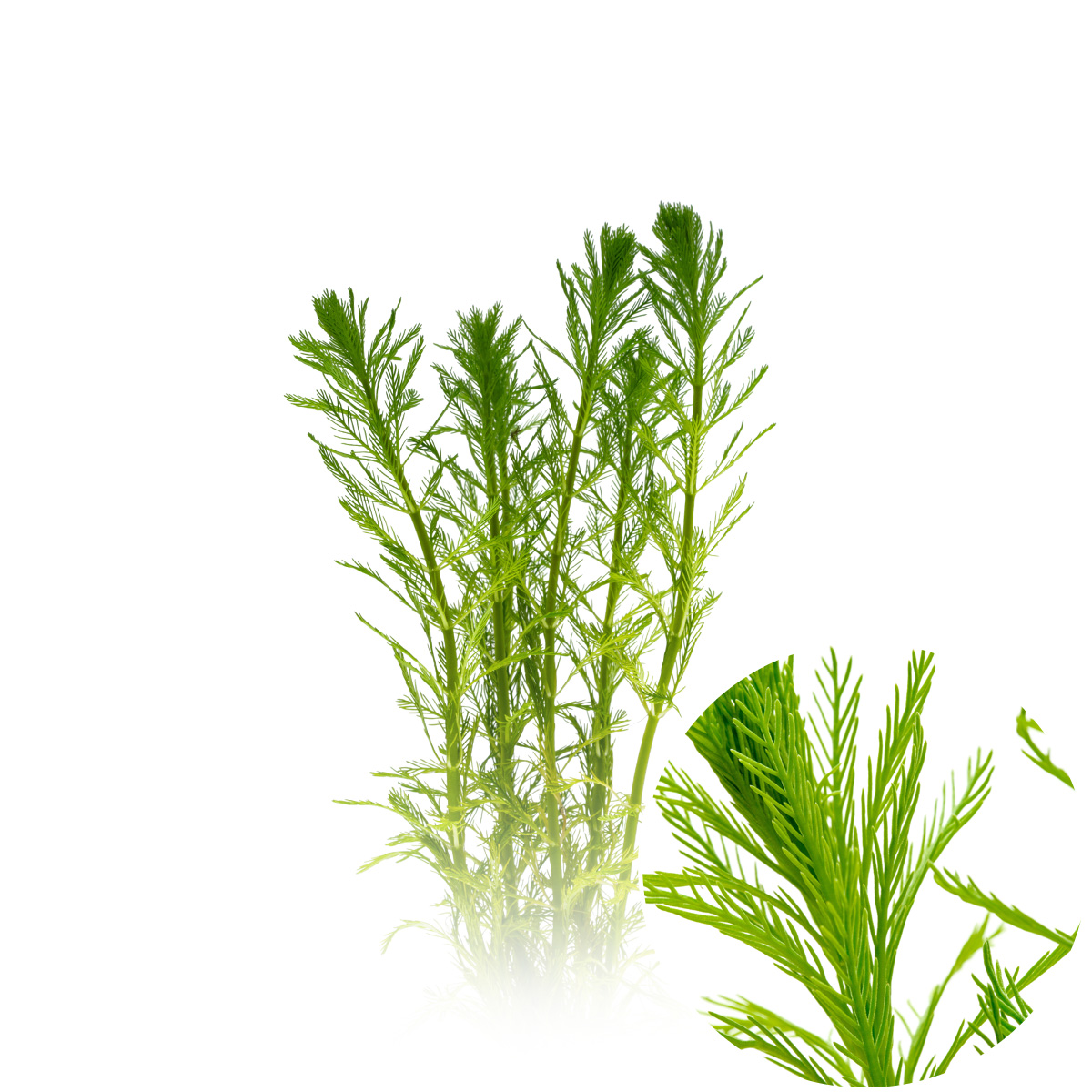
Myriophyllum Aquaticum (Parrot's Feather)
Native to the Amazon River, thrives along water bodies like streams and ponds. With feather-like stems more pronounced when grown emersed, it's a perennial plant suitable for both submerged and emersed growth. Commonly used in ponds and aquariums, it's a popular choice for aquatic gardens.
DIFFICULTY:
LIGHTING:
PLACEMENT:
TYPE:
STEM
Myriophyllum Elatinoides
A popular aquarium plant with fine, feather-like foliage, thrives with a nutrient-rich substrate and clean water. While it prefers hard water, it can adapt to various water conditions. Ideal for the background, its vibrant green color complements other stem plants. Provide medium to high lighting for optimal growth.
DIFFICULTY:
LIGHTING:
PLACEMENT:
TYPE:
STEM
Myriophyllum Propinquum
Also known as spiked water milfoil, is an aquatic plant native to Central and South America. It's a perennial plant with hair-like leaves and small, dull-red flower spikes that grow above the water in the summer.
DIFFICULTY:
LIGHTING:
PLACEMENT:
TYPE:
STEM
Myriophyllum Tuberculatum
Type of aquatic stem plant that is also known as Red Watermilfoil, Red Foxtail, Red Myriophyllum, and Red Watermilfoil. It has feather-like leaves that are vibrant red to orange-red in color and grow diagonally upward.
DIFFICULTY:
LIGHTING:
PLACEMENT:
TYPE:
STEM
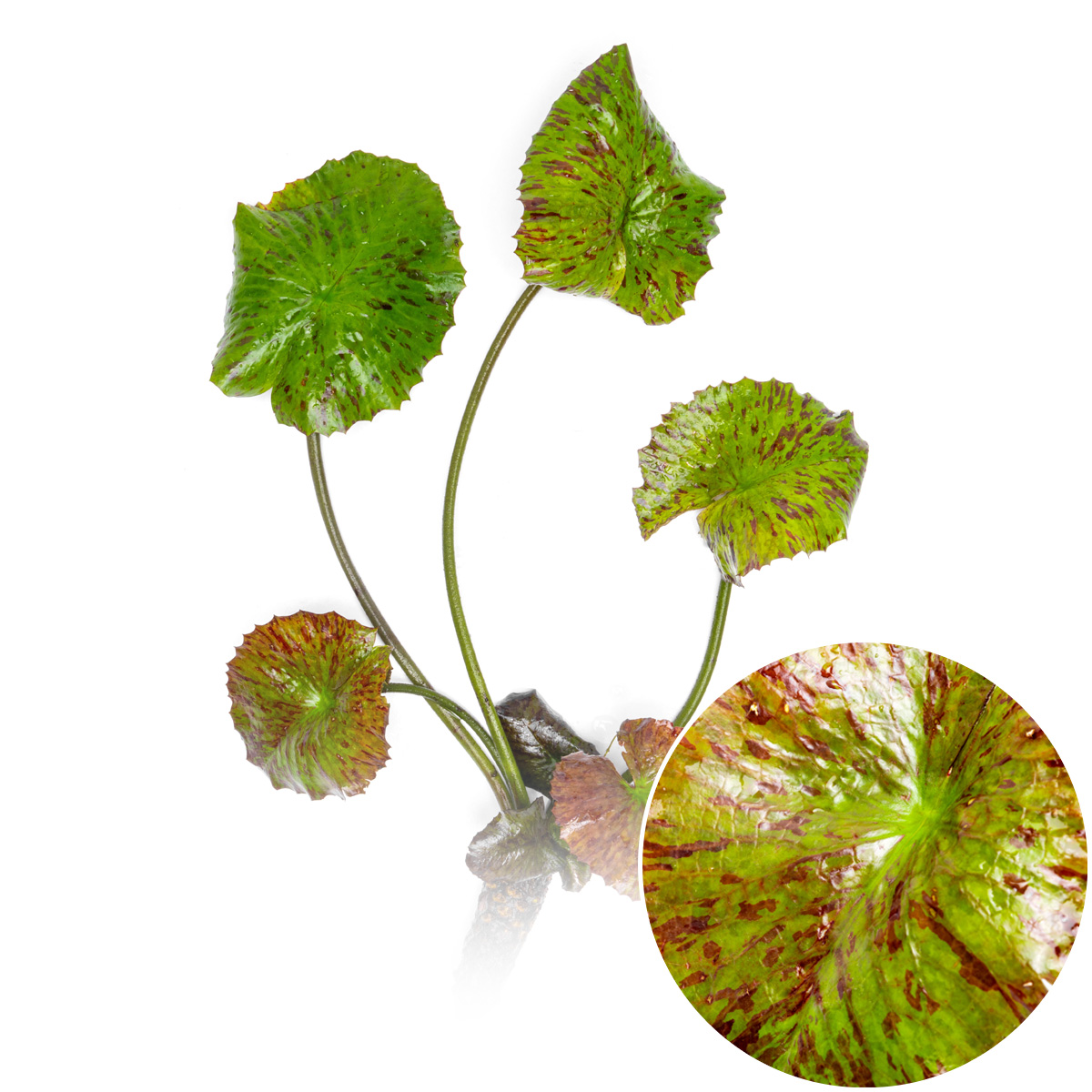
Nymphaea Tiger Lotus
A water lily used in aquascaping, features bright red leaves that can grow large and stunning when planted with green stem and carpet plants. High light, CO2, and fertilizers enhance deep red color with orange and brown speckles. It can grow in lower light, but leaves may appear drab and bronze-colored. This plant can send leaves to the water surface, similar to other water lilies.
DIFFICULTY:
LIGHTING:
PLACEMENT:
TYPE:
FLOATING
Nymphea stellata (Nouchali BULBS)
Also known as the dwarf water lily, is a water lily native to Asia. It is also known by the common names blue lotus, star lotus, red and blue water lily, blue star water lily, or manel flower. Nymphaea stellata is a popular aquarium plant due to its ease of care. It is known for its triangular leaves that develop green, red, and pink coloration as the plant grows. It typically grows to a size of less than 5 inches (12.7 cm), making it a good choice for the aquarium foreground or midground of smaller aquariums.
DIFFICULTY:
LIGHTING:
PLACEMENT:
TYPE:
FLOATING
Nymphiodes Aquatica/ Banana Plant
Also known as the banana plant, banana lily, and the big floatingheart, is an aquatic plant native to the southeastern United States. It is most commonly called the banana plant because of its banana-shaped roots. The banana plant is an easy beginner plant. In tanks with areas of stronger water current, hobbyists may be tempted to bury the tubers in the substrate to help keep the Aquarium Banana Plant in place. If this path is taken, it's important to not bury any more than 1/4 inch of the tubers in the substrate.
DIFFICULTY:
LIGHTING:
PLACEMENT:
TYPE:
FLOATING
Pogostemon Helferi 'Downoi'
Also known as Downoi, was found in Thailand, near the Burmese border. Its name, meaning "little star" in Thai, reflects its unique compact and curly leaf appearance with vibrant green coloration. With proper care, lighting, and substrate, Downoi develops side shoots and small roots, forming a lush foreground carpet in aquariums.
DIFFICULTY:
LIGHTING:
PLACEMENT:
TYPE:
STEM
Pogostemon Helferi Downoi Red
A rare variation of P. Downoi, features distinctive red-toned striations in its unique leaves. Compact growth is maintained with medium to high lighting, CO2 injection, and proper nutrition. Ideal for midground placement, it suits experienced hobbyists due to its specific care needs.
DIFFICULTY:
LIGHTING:
PLACEMENT:
TYPE:
STEM
Pogostemon Sampsonii
A rare and sought-after aquatic plant, features compact growth, crisp green leaves with waved, softly serrated edges. Ideal for creating bushy midground sections in a planted aquarium, it resembles Limnophila Aromatica Wavy but varies in color and care requirements.
DIFFICULTY:
LIGHTING:
PLACEMENT:
TYPE:
STEM
Pogostemon Stellata Octopus
An easy-to-grow aquarium stem plant with rapid growth and semi-long, wispy green leaves. It thrives with quality LED lighting, optional CO2 injection, and nutritious aquarium soil. Suitable for nano and larger tanks, it makes a great mid-to-background choice, especially when paired with other stem plants. Frequent pruning encourages bushy growth, and propagation is simple by replanting stem cuttings in quality aquarium soil.
DIFFICULTY:
LIGHTING:
PLACEMENT:
TYPE:
STEM
Rotala Blood Red
A demanding variation of Rotala Rotundifolia, showcases vibrant red hues under optimal conditions. High demands include CO2 injection, intense lighting, soft water, nutrient-rich substrate, and quality fertilization. Its slower growth and upright pattern require frequent trimming for a bushy appearance. Not recommended for beginners, but successful cultivation promises rewarding visual appeal.
DIFFICULTY:
LIGHTING:
PLACEMENT:
TYPE:
STEM
Rotala Bossii
A rare variant of the Rotala plant that originates from Southeast Asia. It's a good starter plant that looks best when planted in large groups. For healthy growth, it should be pruned frequently.
DIFFICULTY:
LIGHTING:
PLACEMENT:
TYPE:
STEM
Rotala Ceylon
Also known as Rotala Pink, is a robust and fast-growing stem plant. It exhibits a pink hue in high lighting and a lighter lime green color in moderate lighting. Ideal for creating a dense and bushy background in a planted aquarium.
DIFFICULTY:
LIGHTING:
PLACEMENT:
TYPE:
STEM
Rotala Fujian
A newer variant of Rotala Rotundifolia originating from South China. It features orange tones and exhibits robust growth with thicker stems and broader leaves compared to the original form. While relatively easy to care for, regular pruning is essential to prevent it from becoming unruly. Vibrant coloration is achieved with good LED lighting, CO2 injection, softer water, and nutrient supplementation.
DIFFICULTY:
LIGHTING:
PLACEMENT:
TYPE:
STEM
Rotala H'Ra
Also known as Rotala Gia Lai, is a stem plant that can be used as a mid-ground or back accent in an aquarium. It has narrow leaves and an overhanging or creeping growth pattern. When grown submerged, the leaves are thin, pointed, and red or orange.
DIFFICULTY:
LIGHTING:
PLACEMENT:
TYPE:
STEM
Rotala Indica
Known for its round leaves and vibrant color, is a popular choice for both beginners and advanced hobbyists. Easy to cultivate, it forms beautiful bushes and can develop red tops with high lighting and CO2. Regular trims are essential for maintaining its shape and growth pattern.
DIFFICULTY:
LIGHTING:
PLACEMENT:
TYPE:
STEM
Rotala Indica Green
Often confused with Rotala Indica Green, is a vibrant aquarium stem plant that stays green even in high-light setups. A fast grower, regular maintenance is needed for the desired appearance. Plant in groups in the background of the aquarium, preferably in soft water, for optimal results.
DIFFICULTY:
LIGHTING:
PLACEMENT:
TYPE:
STEM
Rotala Indica Red - Bunch
A favored tall background plant for planted aquariums. With high light, CO2, and fertilization, its leaf tips can turn reddish. Its round leaves on tall stems create a striking effect, especially in dense bushes. Regular trimming is essential for this effect. Propagation is simple—cut the stem and replant.
DIFFICULTY:
LIGHTING:
PLACEMENT:
TYPE:
STEM
Rotala Indica Red - Pot
A favored tall background plant for planted aquariums. With high light, CO2, and fertilization, its leaf tips can turn reddish. Its round leaves on tall stems create a striking effect, especially in dense bushes. Regular trimming is essential for this effect. Propagation is simple—cut the stem and replant.
DIFFICULTY:
LIGHTING:
PLACEMENT:
TYPE:
STEM
Rotala Macrandra Mini
A delicate, small-leaved variant of the common Rotala macrandra. The leaves can be longish-ovoid with a higher middle and the leaf margins turned upwards, or roundish-ovoid. Rotala Macrandra Mini Butterfly is a mini version of Rotala Macrandra. It is a highly sought-after species that is characterized by its unique leaf shape and deep red to magenta hues. The intricate and feathery foliage of this plant resembles a butterfly, adding a touch of elegance to freshwater aquariums. This aquatic plant requires great care and attention. It requires high lighting to develop its beautiful red color. A constant inflow of CO2 and soft water are also vital to ensure reasonable growth.
DIFFICULTY:
LIGHTING:
PLACEMENT:
TYPE:
STEM
Rotala Macrandra Mini Pink
A red stem plant that can be used as a dramatic mid-ground or background stem plant. It has a pinkish red hue, and is similar to the standard form of Rotala Macrandra, but with more pink hues. Rotala Macrandra Mini Pink is a difficult plant to grow in an aquarium, and requires proper care. It prefers soft water, nutrient-rich soil, high lighting, and plenty of CO2.
DIFFICULTY:
LIGHTING:
PLACEMENT:
TYPE:
STEM
Rotala Manipurensis
Resembling Rotala Sp. 'Green', likely a variation of Rotala Rotundifolia, showcases narrow leaves and creeping growth. In optimal conditions, it develops warm orange tones, offering striking contrast in nano or larger planted aquariums.
DIFFICULTY:
LIGHTING:
PLACEMENT:
TYPE:
STEM
Rotala Nanjenshan
A hybrid of Rotala Rotundifolia and Rotala Wallichii, boasts dense stems and thin leaves for a bushy appearance. Thriving with high-quality lighting and CO2 injection, it demands careful placement with smaller, non-aggressive fish due to its fragility. Regular pruning is essential for maintaining its dense growth.
DIFFICULTY:
LIGHTING:
PLACEMENT:
TYPE:
STEM
Rotala Narrow Leaf Red
Showcases bright reddish hues with narrow leaves. Undemanding and easy to grow, it resembles Rotala Rotundifolia but with slightly longer leaves. For optimal results, provide nutritious soil, quality LED lighting, CO2 injection, and regular fertilizing. Ideal for Dutch-style or nature aquariums, it requires consistent pruning to maintain vibrant, bushy growth. Propagate by snipping and replanting along the stem.
DIFFICULTY:
LIGHTING:
PLACEMENT:
TYPE:
STEM
Rotala Red Cross
Also known as Rotala Araguaia Red Cross, is an advanced aquarium plant with thin leaves showcasing greens, yellow, and red tones. Its unique growth pattern and potential leaf twist add distinctiveness. Ideal for mid to background placement in a nature aquarium, it thrives with ample LED lighting, CO2 injection, and quality soil. Simple propagation involves trimming along the stem and replanting in quality aquarium soil.
DIFFICULTY:
LIGHTING:
PLACEMENT:
TYPE:
STEM
Rotala Rotundifolia Green
Often confused with Rotala Indica Green, is a vibrant aquarium stem plant that stays green even in high-light setups. A fast grower, regular maintenance is needed for the desired appearance. Plant in groups in the background of the aquarium, preferably in soft water, for optimal results.
DIFFICULTY:
LIGHTING:
PLACEMENT:
TYPE:
STEM
Rotala Rotundifolia Orange Juice
Originating from Italy, is a mutation of the popular Rotala Rotundifolia. It features varying shades of orange hues and can thrive submerged or emersed. With high lighting, CO2, and fertilization, it displays vibrant colors. Regular pruning is necessary for optimal growth and to maintain a lush appearance.
DIFFICULTY:
LIGHTING:
PLACEMENT:
TYPE:
STEM
Rotala Rotundifolia Red
A Southeast Asian stem plant known for its delicate stems and thin, round leaves. With high iron and Plant Food fertilizer, it can develop intense red coloration. Ideal for background placement, it adds contrast to green plants. Plant densely for a lush, red bush effect. Propagation involves cutting anywhere along the stem. Regular pruning is recommended for optimal growth and to prevent bottom leaves from lacking light.
DIFFICULTY:
LIGHTING:
PLACEMENT:
TYPE:
STEM
Rotala Vietnam
A sought-after stem plant known for its thin leaves, resembling Rotala Wallichii but with red stems and green leaves. Ideal for creating lush clusters, it works well in nano tank backgrounds or larger aquarium midgrounds. Thriving with high lighting, CO2, and fertilization, it delivers vibrant results.
DIFFICULTY:
LIGHTING:
PLACEMENT:
TYPE:
STEM
Rotala Wallichii
Known for its delicate thin leaves, is ideal for creating lush clusters resembling a woodland forest. Thriving in high lighting, CO2, and fertilization, it displays vibrant pink, red, yellow, and orange hues. A beautiful choice for the background in aquariums.
DIFFICULTY:
LIGHTING:
PLACEMENT:
TYPE:
STEM
Rotala Wallichii 'Green'
A vibrant green aquarium plant from Southeast Asia. It thrives in high light, nutrient-rich substrate, and benefits from CO2 supplementation. Known for fast growth, regular pruning is necessary. Propagate through stem cuttings. Ideal for aquascaping backgrounds or midgrounds. Ensure balanced nutrients and water quality for optimal health. Compatible with various aquarium inhabitants.
DIFFICULTY:
LIGHTING:
PLACEMENT:
TYPE:
STEM
Sagittaria Pusillus
Sagittaria pusillus is a swamp plant that can grow 20–50 cm tall from the Mississippi River valley. It has submerged leaves that are 10–25 cm long and up to 3 cm wide. Emerged leaves are oval to heart-shaped and usually 5–10 cm long.
DIFFICULTY:
LIGHTING:
PLACEMENT:
TYPE:
CARPETING
Sagittaria Subulata
Native to South America, is an ideal foreground plant with compact growth. Low-maintenance and undemanding, it spreads through runners in the substrate. Regular pruning is necessary to control height, as it tends to grow tall. This plant is adaptable to various lighting and does not require CO2 injection. Simple propagation involves trimming and replanting horizontal shoots. It may produce small white flowers above the water's surface.
DIFFICULTY:
LIGHTING:
PLACEMENT:
TYPE:
CARPETING
Salvinia Cucullata
A floating fern with cup-like green leaves. It's easy to care for and won't disrupt your aquarium layout. However, it multiplies quickly and can cover the water surface, so regular pruning is necessary to ensure light reaches other plants. These floating ferns also help filter water by absorbing excess nutrients and provide shelter for small aquatic life, making them suitable for planted tanks.
DIFFICULTY:
LIGHTING:
PLACEMENT:
TYPE:
FLOATING
Salvinia Natans/ Floating Fern
A floating plant with pocket-like leaves. It doesn't have long roots but can create thick mats, blocking light and preventing algae. Its unique look, short roots, and slow growth make it suitable for low-light aquariums and paludariums.
DIFFICULTY:
LIGHTING:
PLACEMENT:
TYPE:
FLOATING
Staurogyne Bihar
A rare find in the global aquarium hobby, was initially thought to be a Hygrophila species but reidentified due to its flowering capabilities. Resembling Hygrophila Pinnatifida when grown submerged, it offers lush variations in deep green to reddish brown, making it a unique addition to your planted tank.
DIFFICULTY:
LIGHTING:
PLACEMENT:
TYPE:
CARPETING
Staurogyne Porto Velho
Originating from South America, is a rare but beautiful aquatic plant with narrow, pointed leaves in a greyish-green hue with subtle purple undertones. Thriving under optimal conditions, including quality lighting, CO2 injection, and nutrient-rich substrate, it exhibits moderate growth. Comparable to Staurogyne Repens, it's gaining popularity
DIFFICULTY:
LIGHTING:
PLACEMENT:
TYPE:
CARPETING
Staurogyne Repens
A popular low-growing aquatic plant from South America. It's commonly used in midground and nano-sized aquariums due to its compact growth and bright green color. Consider tank conditions like lighting, nutrients, and CO2 for its growth. It can also be used in the foreground with regular pruning for the desired look. For optimal growth, use medium to high lighting and consider CO2 injection. Propagation is simple; trim along the stems and replant in nutrient-rich aquarium soil.
DIFFICULTY:
LIGHTING:
PLACEMENT:
TYPE:
CARPETING
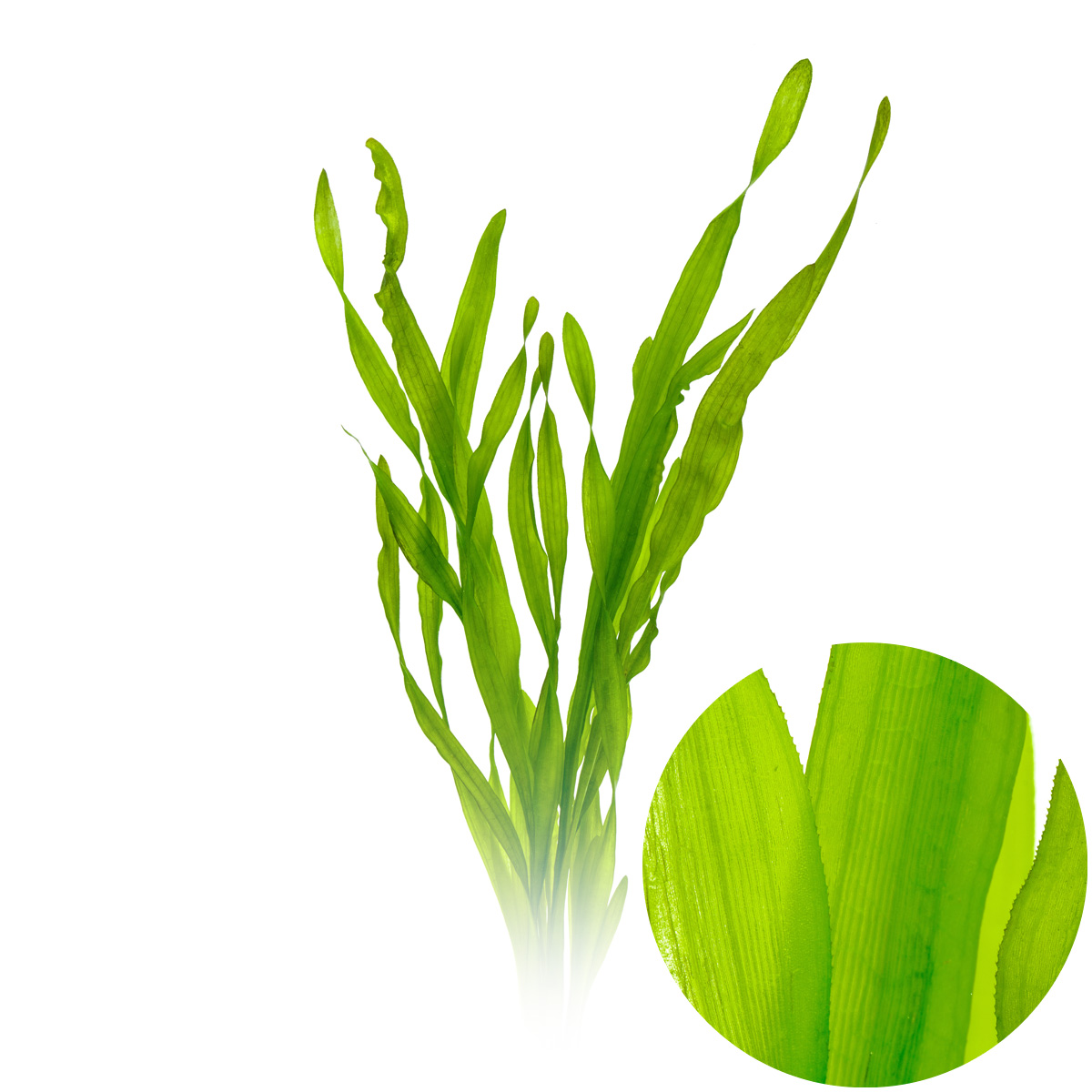
Vallisneria Americana
A popular background plant for aquariums, growing fast and tall. It spreads quickly, and its long, twisted leaves create a spectacular effect when fully grown. Tolerant to some salinity, it may survive in a brackish environment. Propagation is easy—cut and replant the lateral shoots it produces.
DIFFICULTY:
LIGHTING:
PLACEMENT:
TYPE:
ROSULATE
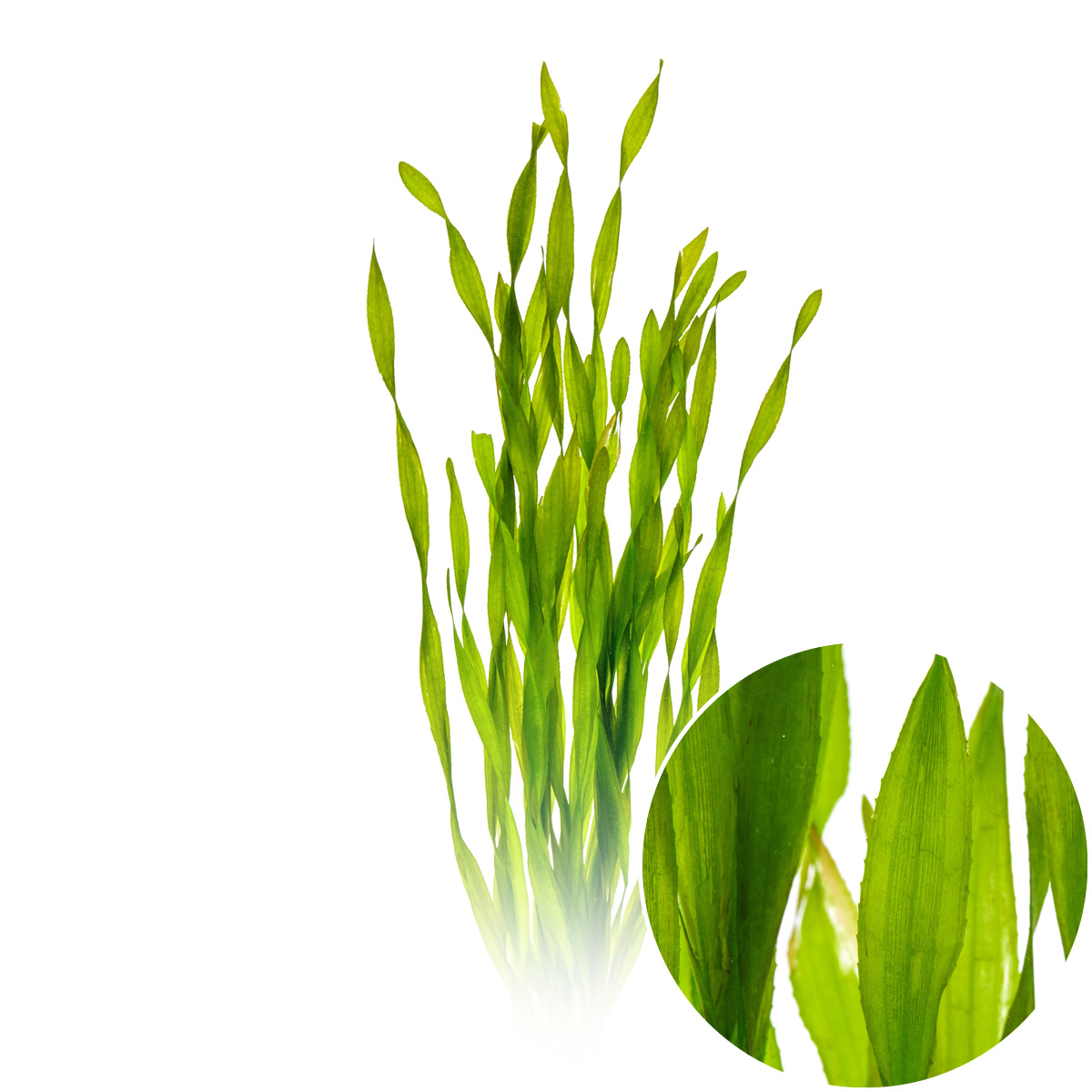
Vallisneria Contortionist/ Corkscrew Vallisneria
Has twisted vertical leaves, suitable for the aquarium background. Growing tall and fast, it creates a jungle-like appearance. These grass-like plants spread with side shoots, anchoring deep into the substrate and reaching the height of your aquarium.
DIFFICULTY:
LIGHTING:
PLACEMENT:
TYPE:
ROSULATE
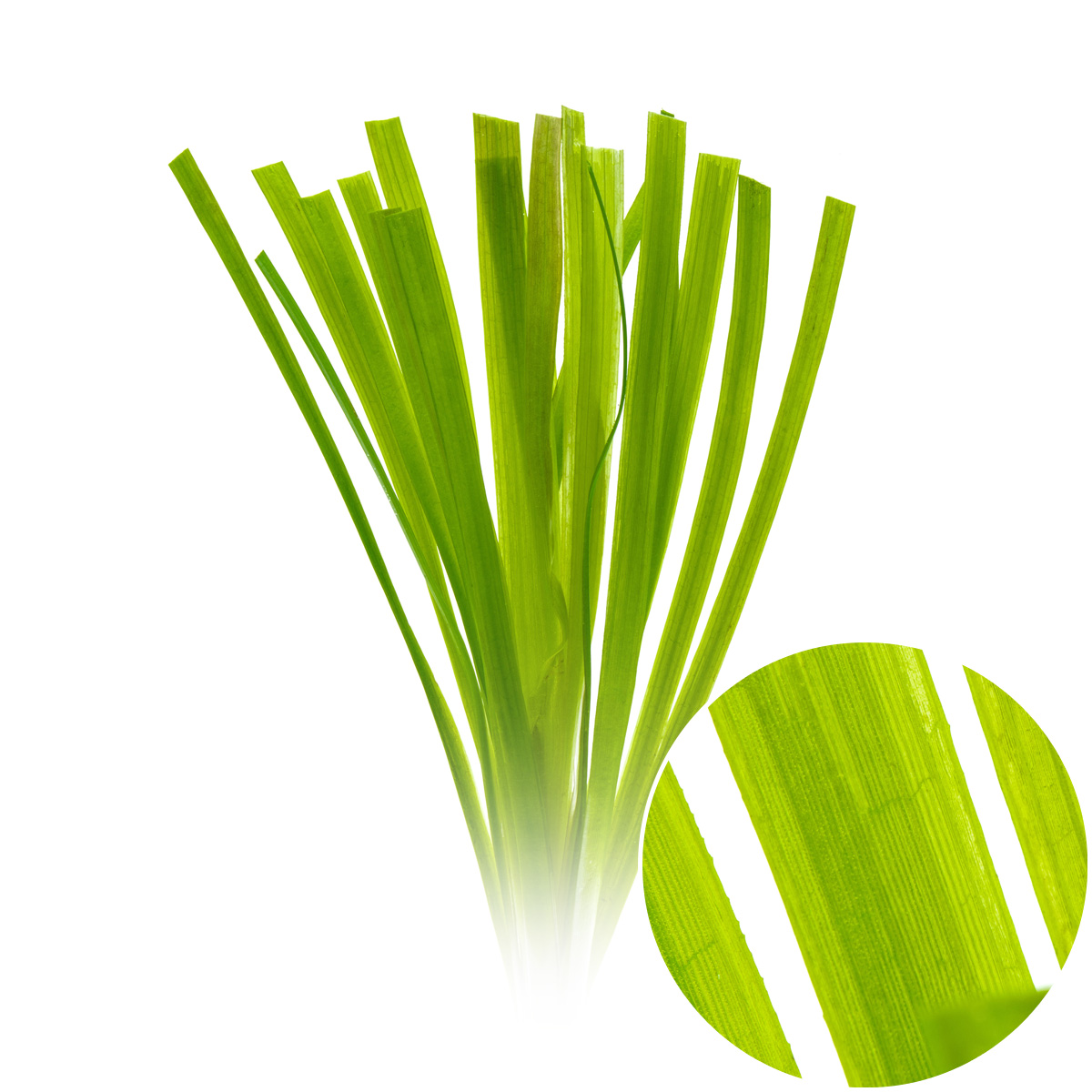
Vallisneria Gigantea
A larger variant of Vallisneria, is ideal for the aquarium background. Growing tall and fast, it creates a jungle-like look. Vals, as grass-like plants, spread with side shoots, anchoring deep into the substrate and reaching the height of your aquarium.
DIFFICULTY:
LIGHTING:
PLACEMENT:
TYPE:
ROSULATE

Vallisneria Gigantea 'Rubra'
A variant of giant vals, has leaves that may turn reddish. Ideal for the aquarium background, it grows tall and fast, creating a jungle-like look. Vals, grass-like plants, spread with side shoots, anchoring deep into the substrate and reaching the height of your aquarium.
DIFFICULTY:
LIGHTING:
PLACEMENT:
TYPE:
ROSULATE
Vallisneria Nana
A thin-leaf, grass-like type of Vallisneria, resembling tall hairgrass. Ideal for the aquarium background, it grows tall and fast, creating a jungle-like look. Vals, grass-like plants, spread with side shoots, anchoring deep into the substrate and reaching the height of your aquarium.
DIFFICULTY:
LIGHTING:
PLACEMENT:
TYPE:
ROSULATE
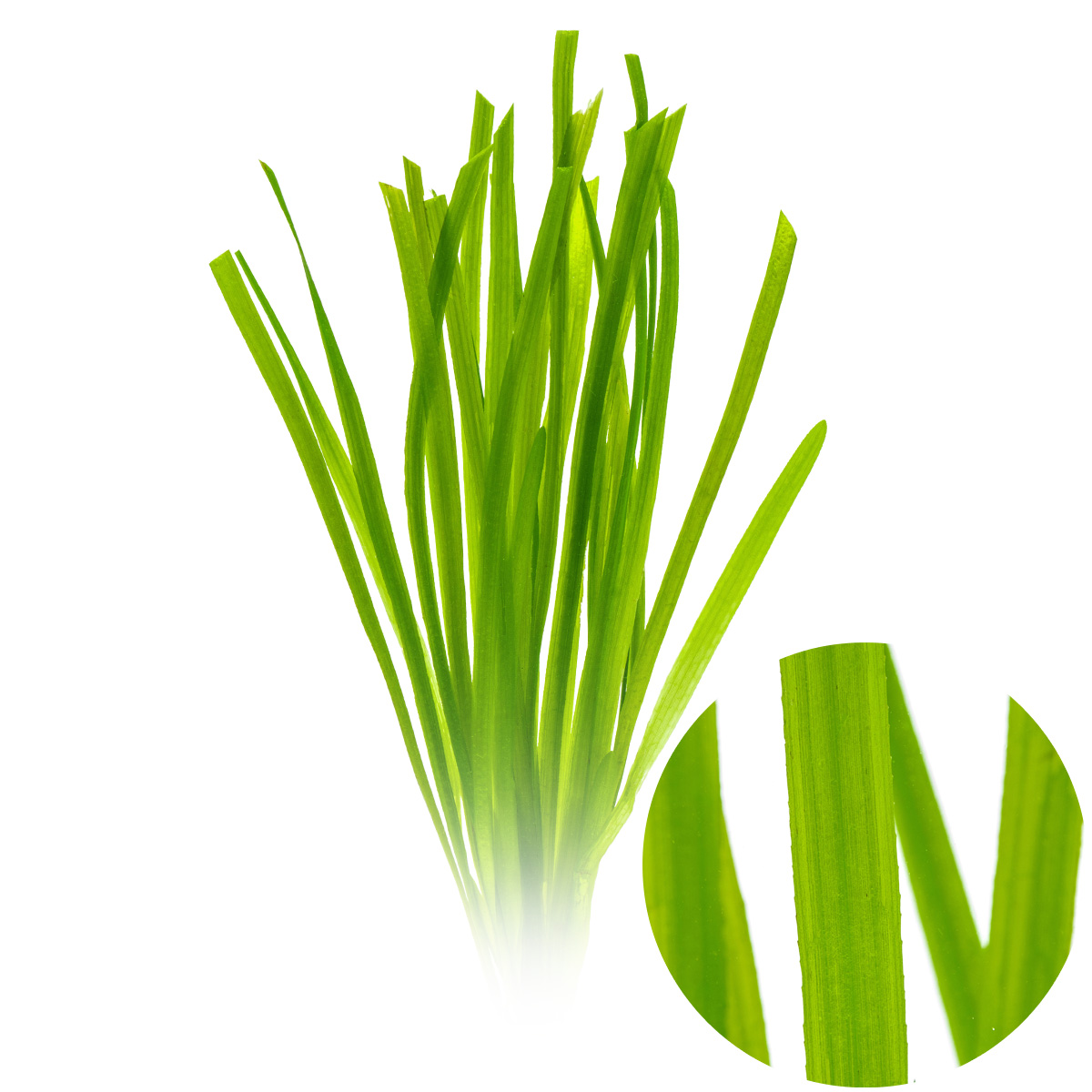
Vallisneria Spiralis
Also known as straight vallisneria, tape grass, or eelgrass, is a common aquatic plant used in aquariums. It's native to Asia and can be found in tropical and subtropical regions around the world. Vallisneria spiralis is a popular aquarium plant that prefers good light and a nutrient-rich substrate. It has ribbon-like leaves that can grow up to 24 inches long.
DIFFICULTY:
LIGHTING:
PLACEMENT:
TYPE:
ROSULATE
Vallisneria Torta
Widely known in the aquarium hobby, is a common background plant that grows tall and fast, creating a jungle-like appearance. These grass-like plants, known as Vals, spread with side shoots, anchoring deep into the substrate and reaching the height of your aquarium.
DIFFICULTY:
LIGHTING:
PLACEMENT:
TYPE:
ROSULATE
Vesicularia Dubyana
A widely used aquarium moss known for its deep green color and thin fronds. It's commonly wrapped around rocks or driftwood for an aged look. Often used in breeding projects, it offers coverage for fry. Aquarium moss is diverse, with variations in growth patterns. Loved for its hardiness, Java Moss is an excellent choice for beginners entering the world of live aquatic plants.
DIFFICULTY:
LIGHTING:
PLACEMENT:
TYPE:
MOSS
Vesicularia Montagnei
Also known as Xmas Moss and Vesicularia montagnei, is a staple in the planted aquarium hobby. It's a versatile and hardy moss that can grow on almost any surface with adequate moisture. Christmas Moss is commonly used as a carpeting plant in aquariums and terrariums.
DIFFICULTY:
LIGHTING:
PLACEMENT:
TYPE:
MOSS
LOOKING FOR TISSUE CULTURE AQUARIUM PLANTS?
Submit the form below to let us and your favorite local fish store know you’re interested.


TC Plants for a Small Terrarium in a UNS 25TM Prism